
Share your love
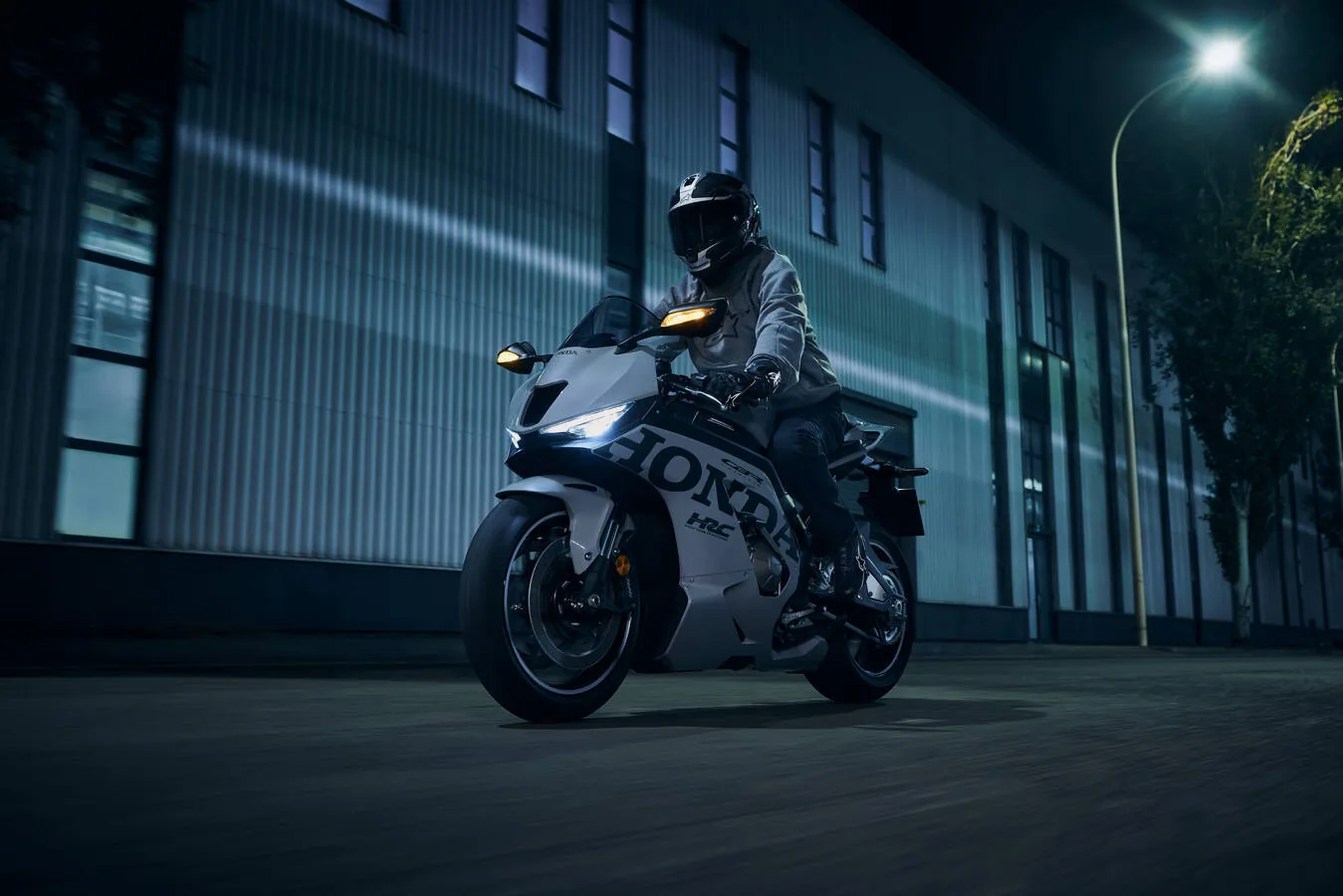
Honda’s 2027 Fireblade Was Built for the Race Track First. Here’s What That Means on the Road
Honda's 2027 Fireblade: 215 hp, a new HRC-developed chassis, the SP and HRC Works Edition, and Honda South Africa's word that it arrives here in 2027.
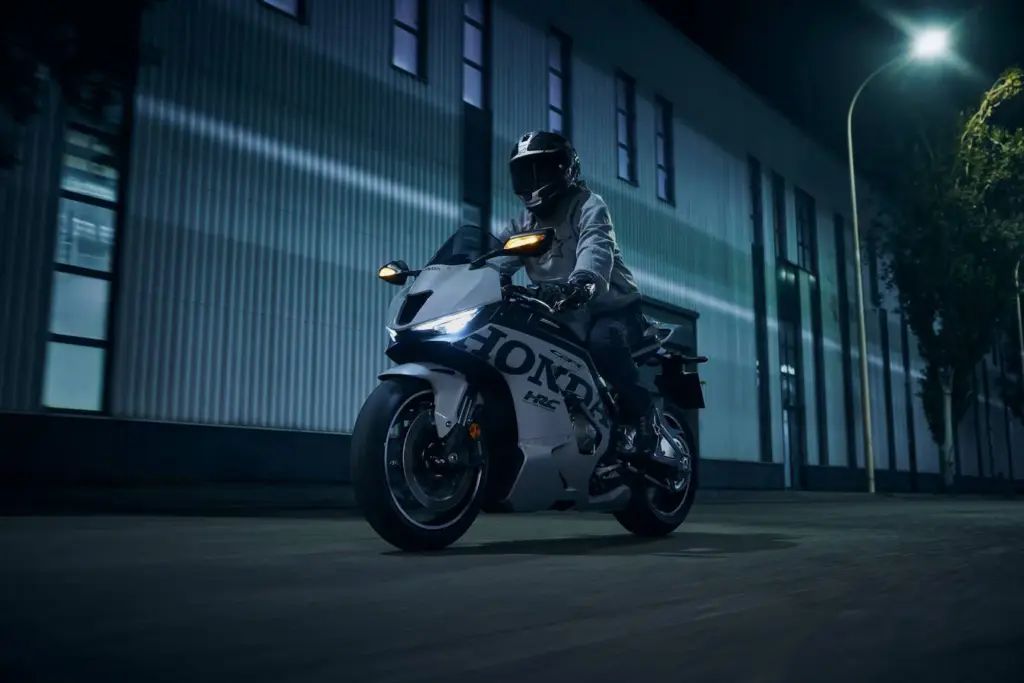
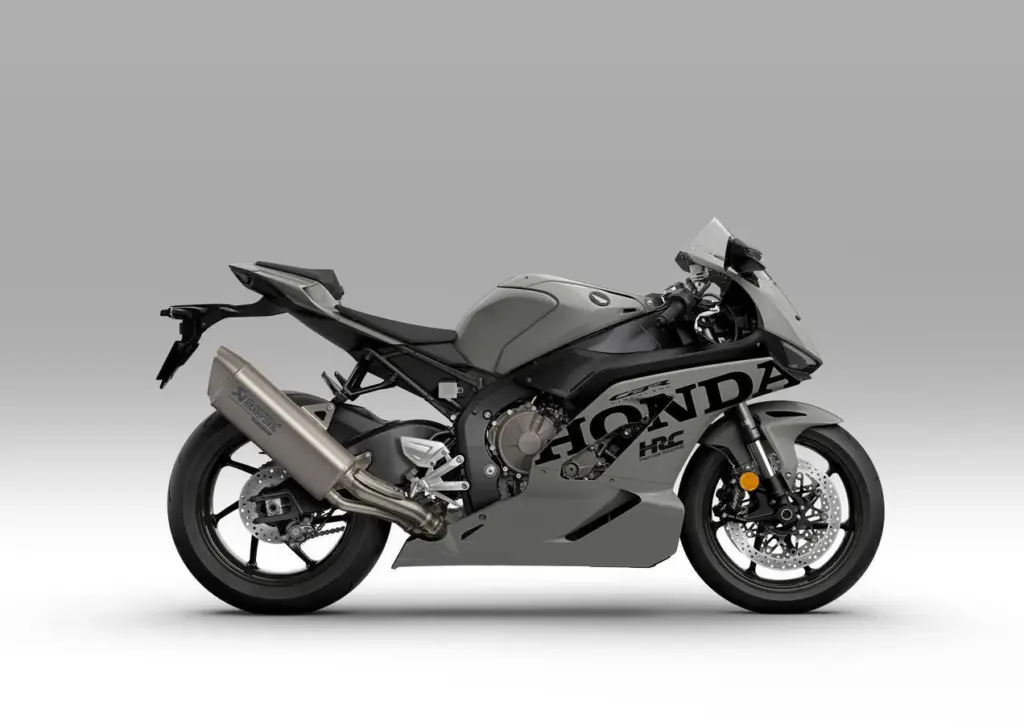
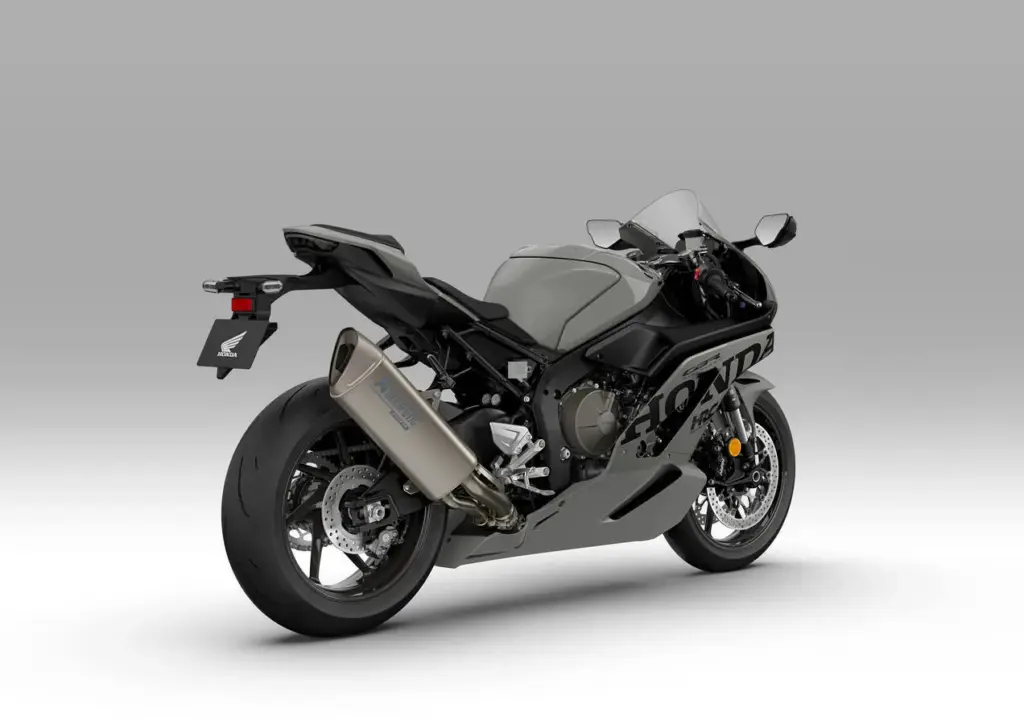
Most superbikes claim a racing pedigree. Honda’s new 2027 Fireblade makes a more specific claim: that the company ran its normal development process backwards. According to Honda’s European press release, engineers worked with the HRC WorldSBK team to define what a race machine needs first, and only once those requirements were met did development of the road bike begin. Honda’s own shorthand for the goal is “Build for the win.”
It matters here because Honda South Africa has confirmed the new Fireblade is coming to this market in 2027, while saying local specifications, prices and dates are still to be confirmed. We will not guess at a rand figure. What we can do is work through the European announcement, alongside the other launches in our EICMA 2026 round-up, and ask what a race-first road bike means for a South African rider, and which of the three versions to wait for.
Honda started with the WorldSBK bike and worked backwards
The targets Honda set were corner entry, mid-corner speed, corner-exit acceleration and weight. Notice what is missing: a headline power target. Visordown points out that peak output is unchanged, with the work going into the mid-range and the chassis instead.
For a road rider that is good news. Peak power is something you touch for a few seconds on an empty stretch of the N1 and then regret when you see the speed camera. Corner entry, mid-corner stability and exit traction are things you use on every ride. A bike developed around those phases of a corner should be easier to place, easier to trust and quicker to settle when the surface turns ugly.
Why a less stiff frame can be a better one
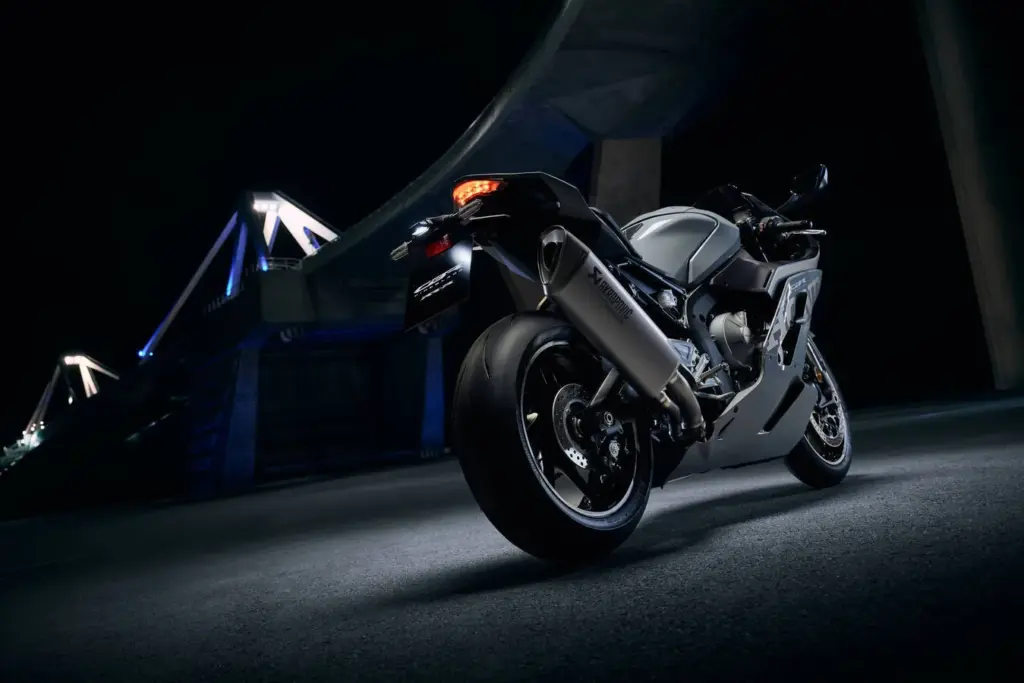
The all-new aluminium diamond frame is made with thin-wall gravity die casting, and the headline detail is that Honda has made it less stiff, not more. Lateral stiffness is down 20%, and the pressed aluminium swingarm, 200 g lighter, is less rigid sideways too. Visordown reports the softer swingarm is meant to improve feedback from the rear tyre.
We find this the most credible part of the race-first story, because a rigid chassis is easy to brag about, while one that flexes in the right place tells the rider what the tyres are doing. On a smooth circuit that is a lap-time tool. On a patched Karoo tar road or a Gauteng street with a pothole hiding in the shade, it is the difference between a bike that feels nervous and one that feels informative.
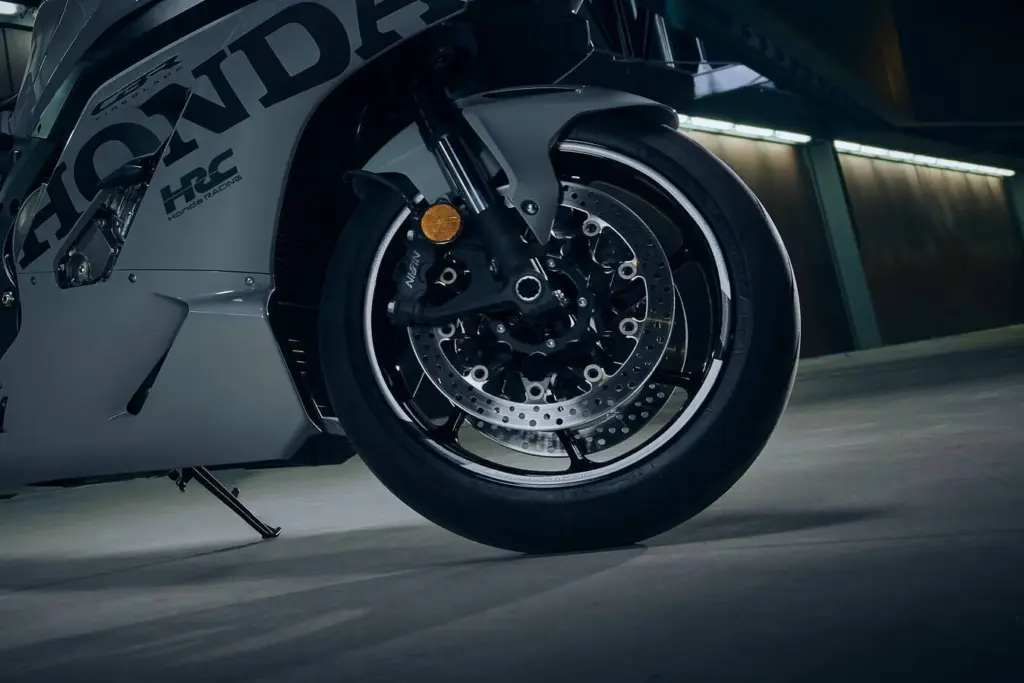
The geometry has moved too. Wheelbase is 1,455 mm, with 24.0° of rake (from 24.1°) and 101 mm of trail (from 101.9 mm), weight distribution shifts to 53.3% at the front from 52.8%, and the crankshaft centreline rises 5.2 mm. Seat height goes from 831.5 mm to 843 mm, which shorter riders should note before they meet a camber at a robot. The chain moves from 525 to 520, saving 270 g, and the new seven-spoke hollow wheels are 190 g lighter at the front and 590 g lighter at the rear. Unsprung weight is what a bike feels like over bad tar, so the rear saving is the one we would value most.
Same 215 hp, but a different way of getting there
The engine is familiar on paper: a 1,000cc inline four making 215 hp (160 kW) at 14,000 rpm and 114 Nm at 10,500 rpm. The changes sit underneath. Honda has revised the cam timing and valve springs, lifted compression from 13.6:1 to 13.8:1, fitted new pistons and valve train parts, and added two-stage variable air funnels that switch at 11,750 rpm, a first on a Honda production bike. The aim, Honda says, is a stronger mid-range.
Think about where that matters here. At Highveld altitude every engine breathes thinner air, so a bike that pulls harder in the middle of the rev range gives back some of what Joburg takes away. It also helps on a Lesotho pass in third gear, or in a fast overtake on the N3 when you do not want to downshift twice. First gear is 5% taller, the two-motor throttle-by-wire carries over, and an Akrapovič titanium muffler is standard. Those are the details that make a litre bike easier to ride slowly, which we value more than any dyno sheet.
Downforce without the wings
The previous Fireblade wore winglets. This one does not, and Honda says the redesigned fairing and front spoiler make the same downforce as before without them. Visordown reports input from HRC and Honda’s MotoGP aero team, including new lower-cowl sidepods aimed at stability in fast direction changes and better protection for the rider.
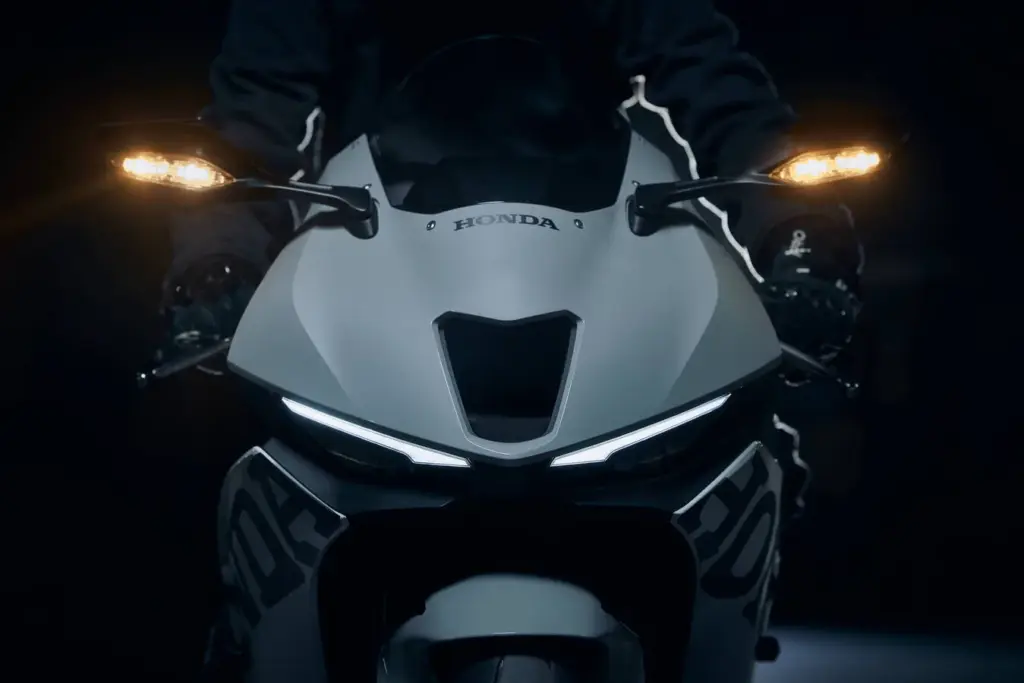
This is a clever move for a road bike. Winglets are fragile, expensive when a bike is dropped, and hard to ignore in a car park. The trade-off is a larger frontal area, which Honda says has increased. We would like to see how that behaves in a crosswind on the open N1 near Beaufort West, where a big fairing and a light bike can get pushed around.
Titanium and magnesium: what 199 kg is made of
Honda quotes 199 kg ready to ride. Part of the saving comes from a painted titanium fuel tank with the plastic outer cover removed, which Visordown says saves 1.4 kg. Magnesium covers for the head, right crankcase, clutch and oil pan help, as do 35 aluminium fasteners that save 215 g, and forged titanium con-rods that Honda says are 50% lighter than steel.
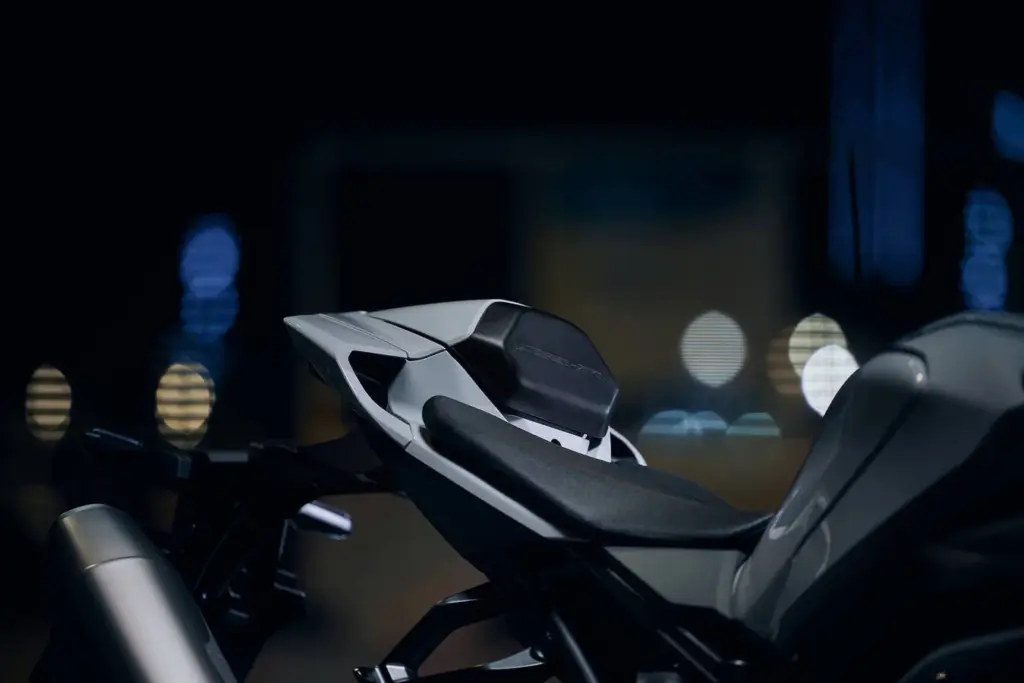
Nobody feels 215 g in a fastener. But the total picture is a bike that changes direction and stops with less effort, which is what a long mountain pass or the tight infield at Zwartkops rewards. One caveat: Honda has not made clear whether the SP and Works Edition weigh the same, so treat 199 kg as the base-bike number until local specification sheets arrive.
A dash and electronics tuned for the track day
A Bosch six-axis IMU and a three-level Honda Electronic Steering Damper sit under three default riding modes that can each be adjusted. Honda lists five power levels, three engine-brake levels, three wheelie control levels plus off, and nine levels of traction control. Cornering ABS has Standard, Track and Race settings, and Race switches off rear ABS and Cornering ABS. Start Mode offers rev limits from 6,000 to 9,000 rpm, and a five-inch colour TFT is controlled from the left grip.
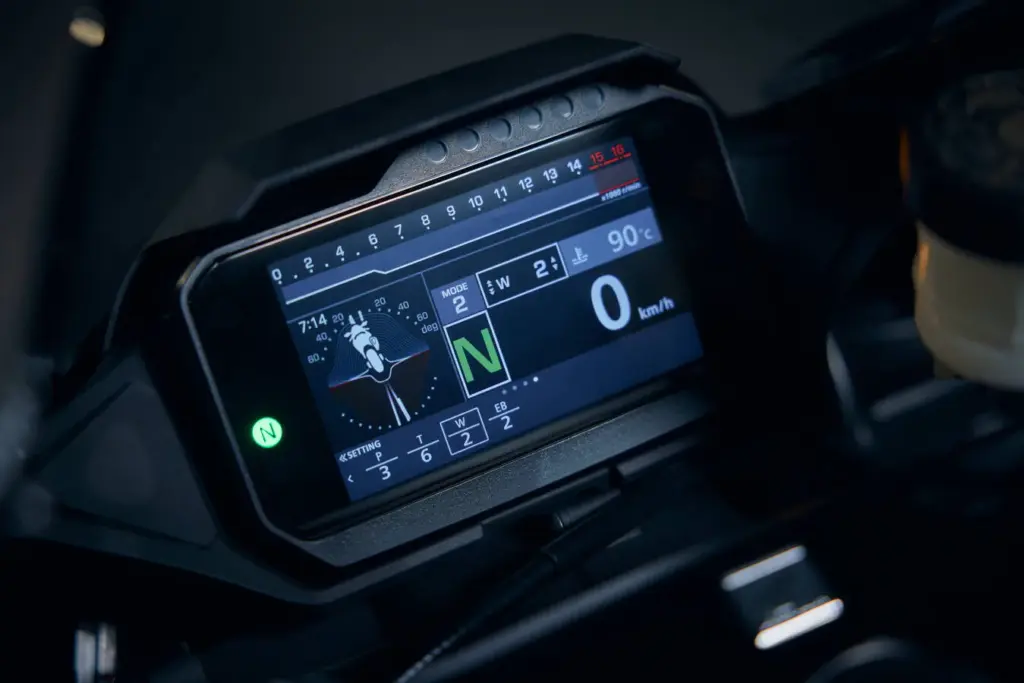
For a track day at Kyalami or Red Star, the point is that all of this can be set in the pits and then forgotten. Nine traction control levels give a rider who is still learning the circuit a wide runway between “the bike does everything” and “I am on my own.” On the road, the same range means you can soften the bike for a Highveld thunderstorm, when the first minutes of rain turn a robot-controlled intersection into an ice rink.
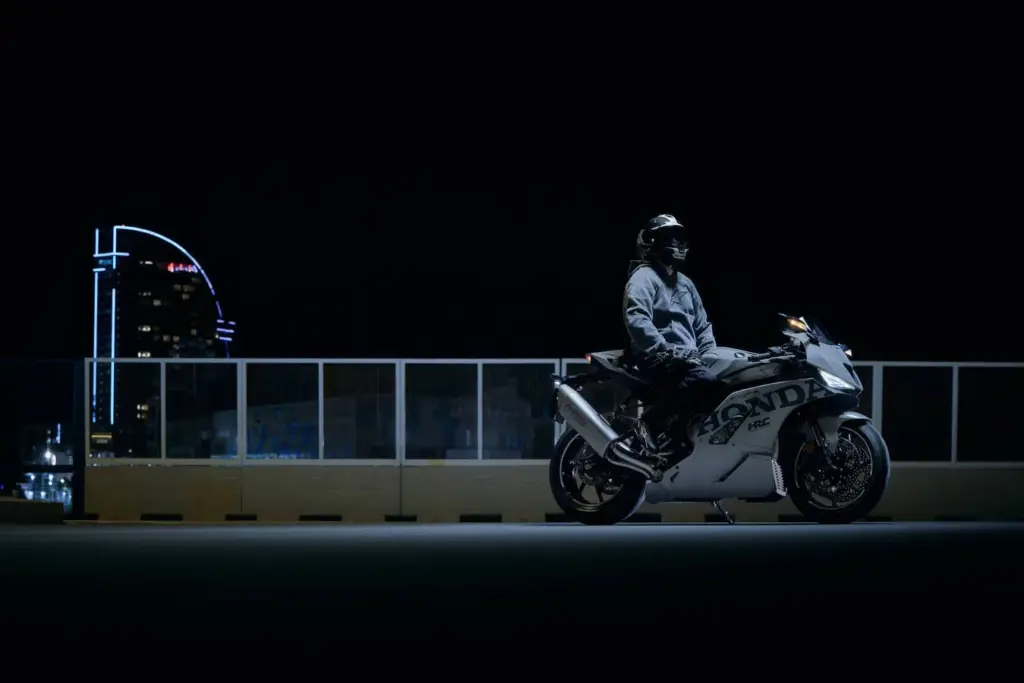
Where race-first helps on the N1 and where it does not
A bike built around WorldSBK requirements will not be a comfortable tourer. The seat is higher, the riding position is committed, and a rider who wants a relaxed road bike is better served by something that sets out to be one. Suzuki’s GSX-10R is the contrast: 150 hp (112 kW), a claimed 214 kg, and a pitch as the litre bike for the rest of us. The Fireblade is the opposite argument, with 65 hp more, 15 kg less and a tight focus on the circuit.
Yet there are road-friendly parts too: an Emergency Stop Signal as standard, a Smart Key, an LED headlight with daytime running light, and an optional quickshifter. Someone who rides 20,000 km a year with a handful of track days will not suffer for the race focus. Someone commuting daily through Sandton might.
Fireblade, SP or Works Edition: which one to wait for
All three build on the same engine and the same new chassis, so the differences are in suspension, brakes, seating and wings.
| Version | What it adds | Best for |
|---|---|---|
| Fireblade | Showa Big Piston Fork and BFRC-Lite shock, Nissin front calipers | Road riders and occasional track days |
| Fireblade SP | Öhlins semi-active suspension, Brembo Hypure brakes | Riders on bad roads who also track |
| HRC Works Edition | Single seat, carbon-fibre parts, own winglets, Öhlins mechanical suspension | Dedicated track riders and collectors |
The standard bike carries a fully adjustable Showa fork and rear shock and Nissin radial-mount calipers on 330 mm discs. That is not a budget package, and for most riders the base bike will already be more capable than they are.
The SP is the one we would pick if the local price allows. Visordown identifies its Öhlins system as Smart Electronic Control tuned through Öhlins’ Object Based Tuning interface, and says the SP has new Brembo Hypure four-piston front calipers and lighter 330 mm discs. On roads full of potholes, expansion joints and stray gravel, a semi-active system earns its money more often than a rider expects.
The HRC Works Edition is a different animal. Visordown reports carbon-fibre winglets with an upper surface 2.4 times larger than before and, at 299 km/h, 3.5 times the downforce of the standard bike. Its Öhlins suspension is mechanical, with an NPX28-30 fork and TTX36 shock, and the steering head and swingarm pivot geometry are adjustable. That is a bike for a rider who adjusts things between sessions and has no use for a passenger. At Kyalami it will look and feel right. On the road, it is hard to defend.
A frame that talks suits our roads
Race-first development sounds like marketing until you look at what Honda actually changed: a frame that gives up stiffness, a mid-range tuned over peak power, lighter wheels, and aero that no longer needs wings. Those are choices made by people who care more about how a bike behaves at the limit than how it looks in a showroom. We think that is the right instinct for a South African litre bike, because our roads punish a nervous chassis and reward one that talks. Until local specifications and a rand price arrive, the SP is the version we would wait for.