
Share your love
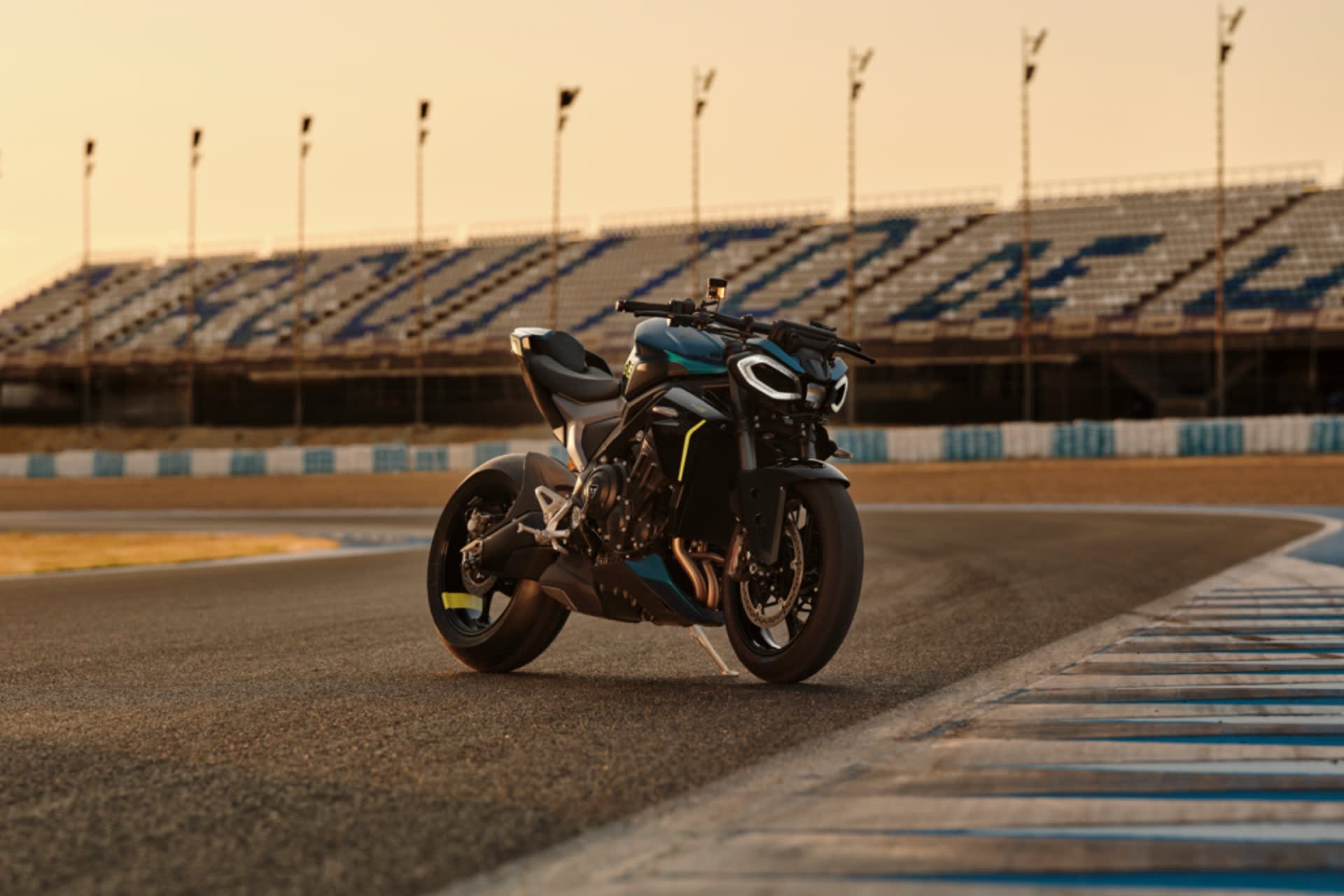
Triumph’s Street Triple 798 RS Is Almost a Moto2 Engine With Lights
Triumph's 2027 Street Triple 798 RS: a Moto2-derived triple making 133 hp (99.3 kW), 183 kg ready to ride, UK and US prices, and what it could mean for South Africa.
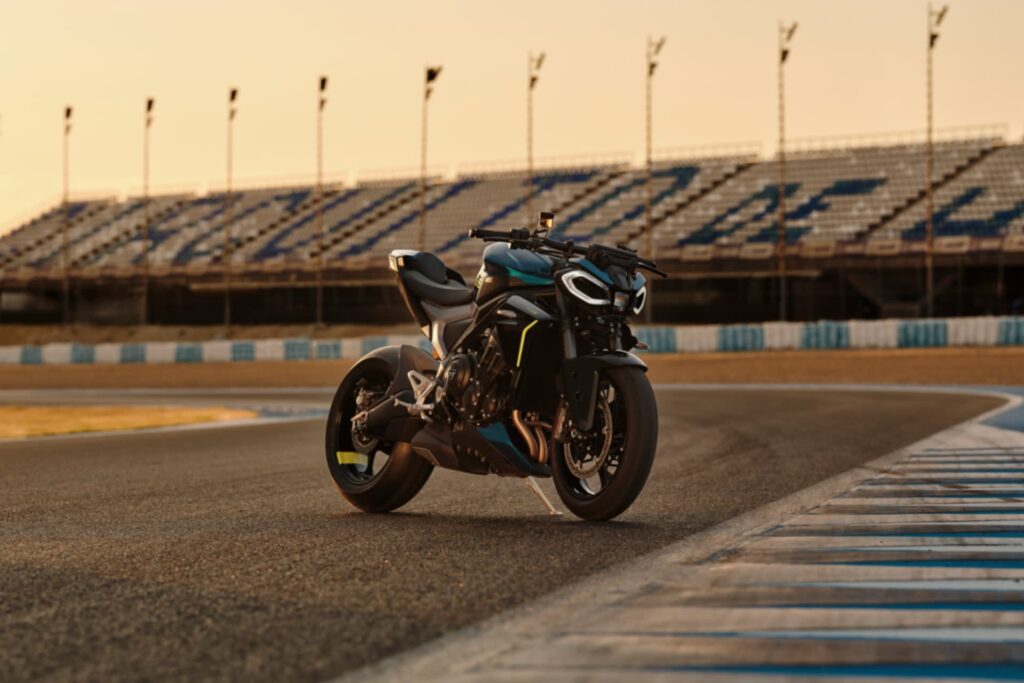
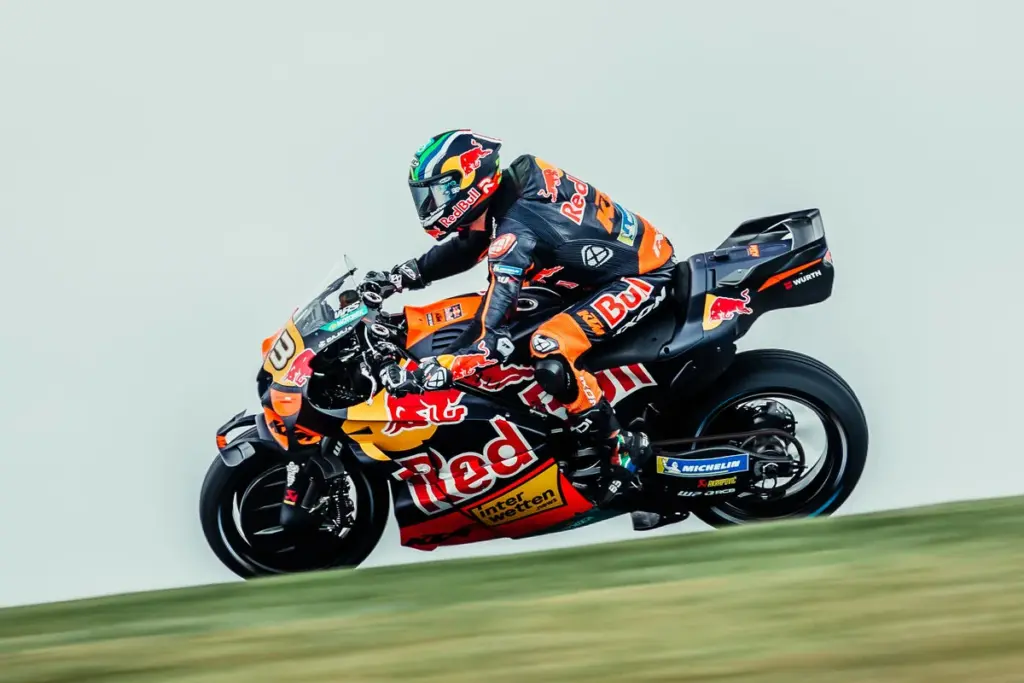
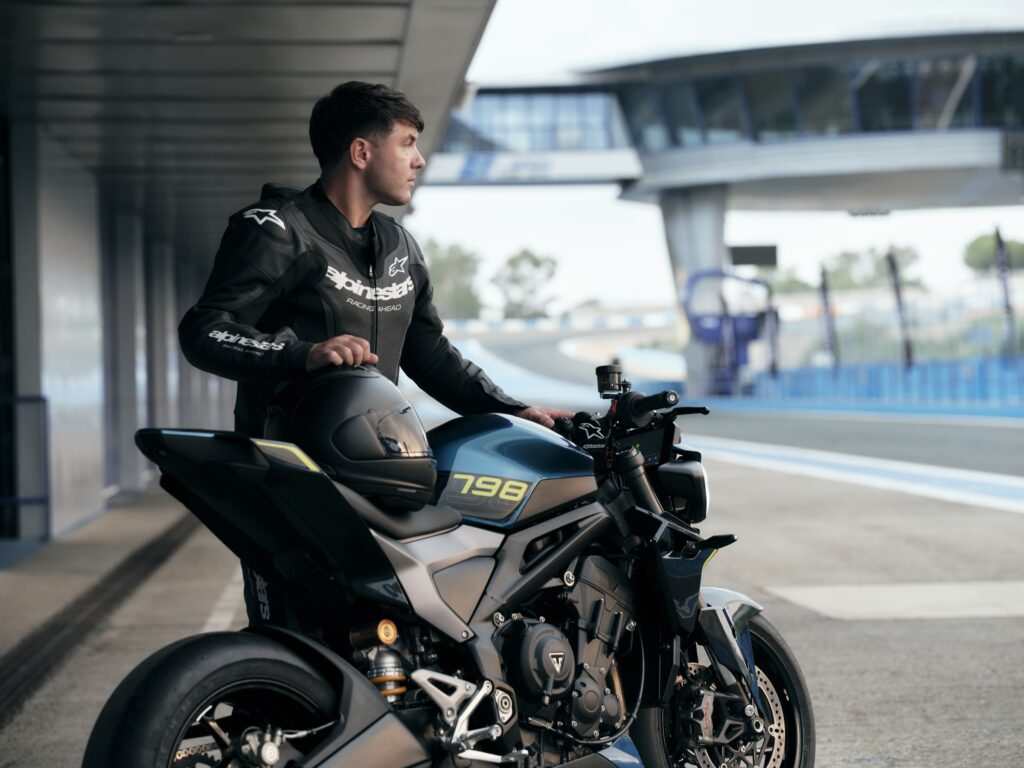
Since 2019 every bike on the Moto2 grid has raced with a Triumph triple, and for most of that time the Street Triple has been the road bike that borrowed the most from it. With the 2027 Street Triple 798 RS, Triumph has stopped borrowing and started sharing. The company says more than 90% of the new road engine is the same as the one in the Moto2 paddock, and the bike around it is new as well: frame, swingarm, electronics, screen and lights.
Triumph first showed the 798 in October and had it on its stand at EICMA in Milan, but kept the numbers back until 17 November. Now they are out, and they make the Street Triple the most serious middleweight naked Triumph has built. They also raise a question South African riders will ask straight away, because this time there is only one version, and it is the expensive one.
More than 90% shared with the race engine
The new triple grows from 765cc to 798cc, with a bore of 78.0 mm and a stroke of 55.7 mm, and almost every major part is new: the crankcase, cylinder head, valvetrain, combustion chambers, intake, exhaust and gearbox. The valves are bigger, they are now opened by lightweight DLC-coated finger followers instead of bucket tappets, and the compression ratio rises to 13.5:1. The new head alone is said to be around half a kilogram lighter than the old one.
Triumph’s figures are 135 PS at 11,500 rpm, which is 133 hp (99.3 kW), and 86 Nm at 9,250 rpm, with the limiter at 12,650 rpm. Triumph says torque is up by 10% across the whole rev range compared with the 765, which matters more on the road than the peak figure does. Twin air intakes mounted in the frame feed a bigger airbox, and the exhaust now runs from a stainless three-into-one header to a silencer tucked under the engine.
What separates the road engine from the race engine is mostly what happens at the very top of the rev range. The Moto2 unit has camshafts tuned for top-end power, stiffer valve springs, titanium intake valves, a closer-spaced gearbox and no starter motor at all. The road engine keeps the parts a rider needs to live with it every day, and Triumph quotes a fuel figure of 5.2 litres per 100 km on the European test, which would stretch the 15-litre tank to close to 290 km.
Steve Sargent, Triumph’s chief product officer, summed up how the company treats its race programme: “Every lap, every corner and every straight is a lesson.”
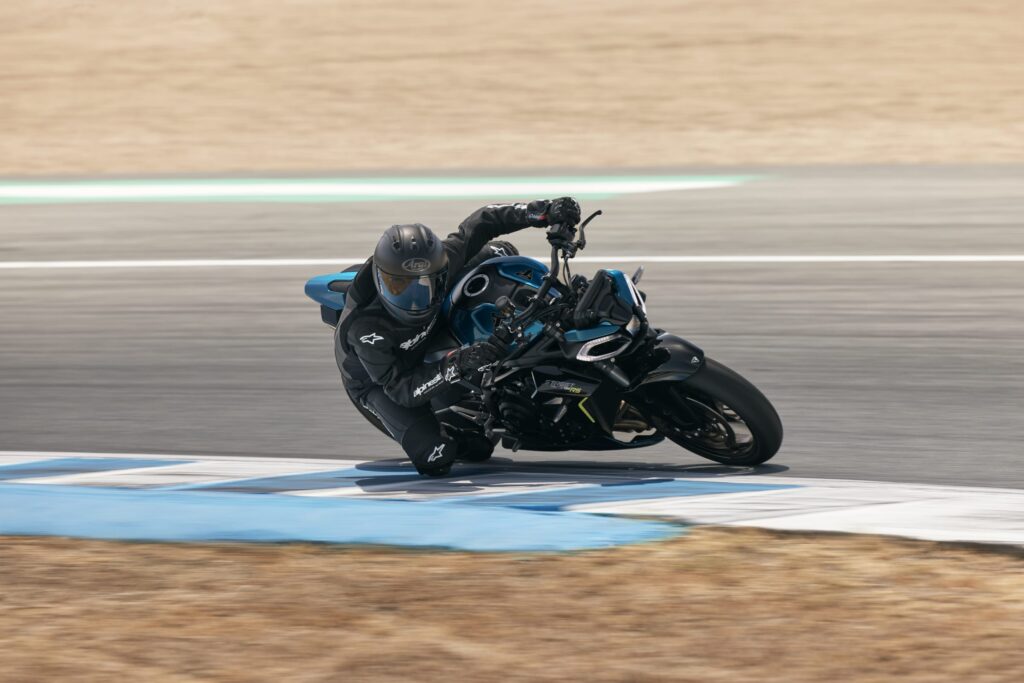
A new frame, a stiffer swingarm and 5 kg gone
The chassis is new from end to end. There is a new aluminium frame, which Triumph says is about as stiff as before, a fabricated aluminium rear subframe and a new cast aluminium swingarm that is taller and stiffer. The rear shock now sits above the swingarm rather than below it, so it stands more upright, and the handlebar is 20 mm wider and rubber-mounted.
The geometry is sharp. Rake is 23.1 degrees, trail is 92.5 mm and the wheelbase is 1,409 mm, and Triumph says it has steepened the steering and cut the trail compared with before. Suspension is the kind usually kept for limited editions: a fully adjustable Showa 41 mm Big Piston fork with 120 mm of travel, and a fully adjustable Öhlins STX46 shock with 130 mm. The front brakes are Brembo Stylema four-piston calipers on twin 310 mm discs, worked by a Brembo MCS master cylinder that lets the rider change both the lever span and the ratio, and the tyres are Pirelli Supercorsa SP V3s.
All of that comes in at 183 kg ready to ride with the hand-welded aluminium tank full, about 5 kg less than the bike it replaces. The seat is 836 mm high, which is tall for a naked bike, but Triumph’s accessory options can bring it down to 791 mm.
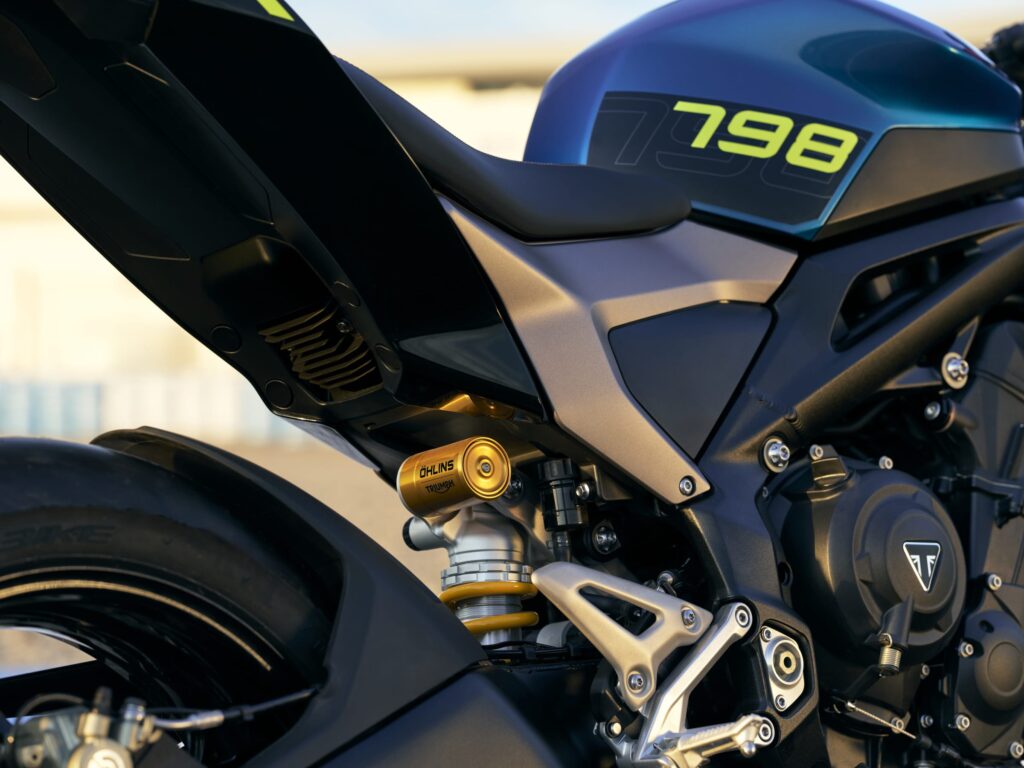
Electronics from the superbike shelf
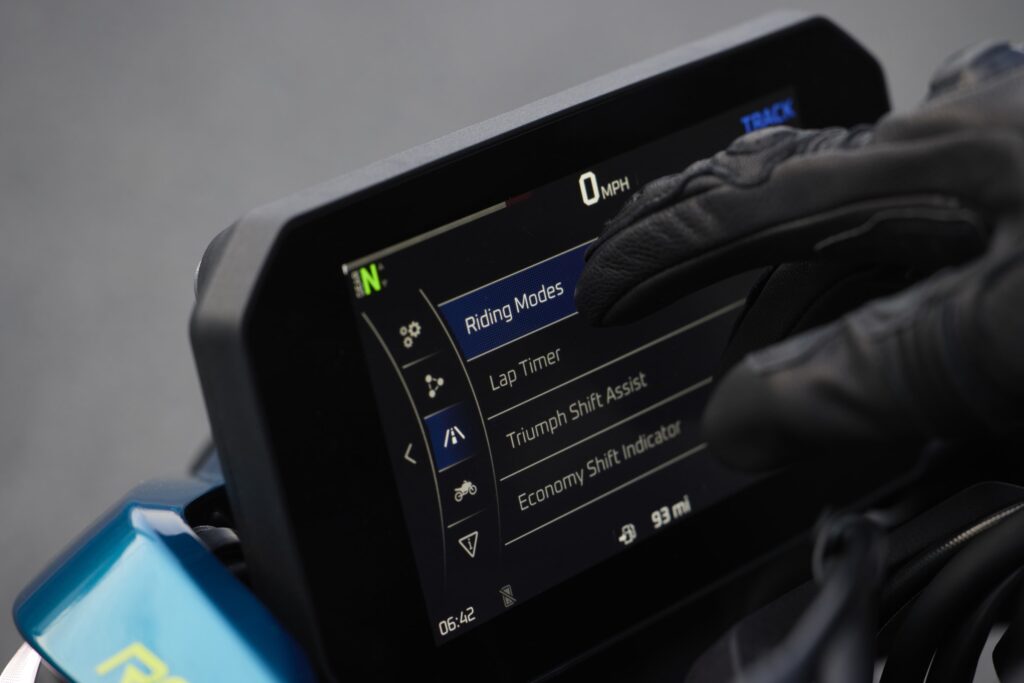
A new Bosch six-axis IMU runs cornering ABS and cornering traction control, with rear wheel slide control, wheelie control, engine braking control and launch control with three settings. The Triumph Shift Assist quickshifter works up and down the gearbox with an auto-blipper, and the cruise control can now stay engaged through gear changes. There are seven riding modes: Rain, Road, Sport, Track, Eco and two that the rider sets up, Rider A and Rider B.
The old screen is gone too. The new one is a 7-inch Bosch TFT touchscreen with wireless Apple CarPlay and Android Auto, and its menus include a lap timer, which tells you where Triumph expects some of these bikes to spend their weekends. Up front, a projector headlight is joined by adaptive cornering lights that come on at 15 and 30 degrees of lean, and an emergency deceleration warning alerts the driver behind under hard braking.
One Street Triple, and only the RS
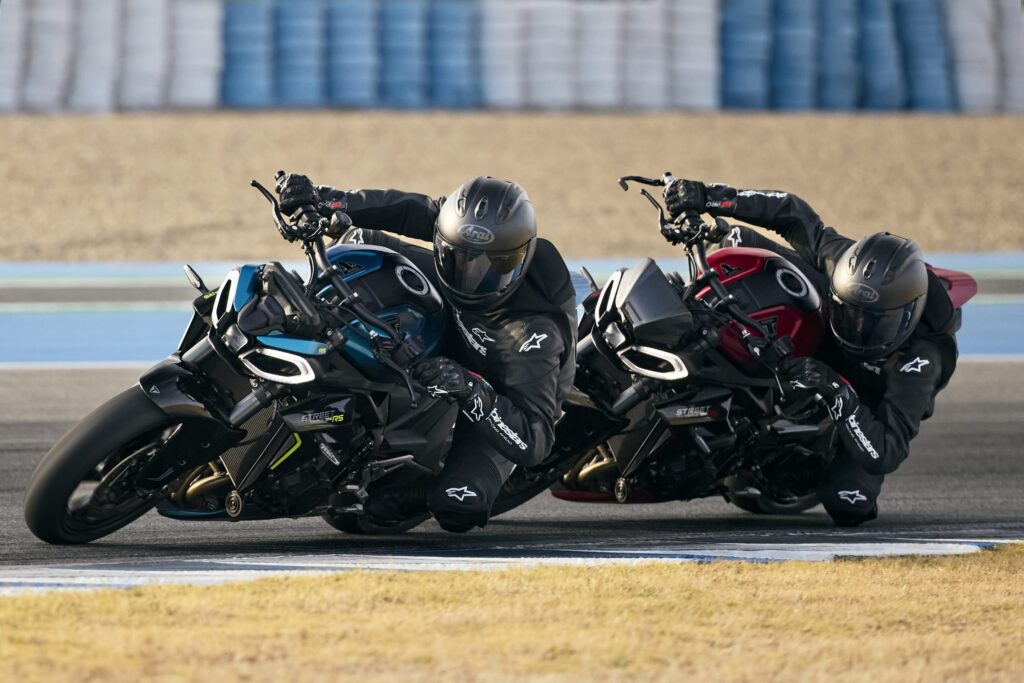
Riders who have bought Street Triples before will notice what is missing. For years there has been a ladder of versions, from a cheaper R to the RS at the top, and Triumph is not doing that with the 798. There is only the RS, in Interstellar Blue, Carnival Red or Sapphire Black, and the job of the friendlier, cheaper triple now falls to the Trident 800.
That makes the 798 RS a premium bike from the start. In the United Kingdom it costs from £12,925, in the United States from $14,295, and in Germany and Italy from €13,995. German dealers expect the first bikes at the end of January 2027 and most other markets in February. Service intervals stay at 10,000 km or 12 months, the same as the 765, and in the United Kingdom Triumph backs the bike with a three-year warranty.
What the 798 RS could mean in South Africa
Triumph South Africa has not announced the Street Triple 798 RS or a rand price yet. What we can do is show where it would sit. Triumph Cape Town lists the outgoing Street Triple 765 RS at R239,000, the Trident 800 at R199,000 and the Speed Triple 1200 RS at R364,000, so the new bike lands in a range that already stretches from sensible to serious. Kawasaki South Africa sells the Z900 at R219,995, which shows where the Japanese competition sits. Those figures are a guide to the market, not a forecast of the 798’s price.
There is also a case for the bike that is leaving. The 765 RS is still listed new at Triumph Cape Town, with Öhlins suspension at the back and Brembo Stylema brakes at the front, and with Europe’s first deliveries only due early in 2027, the 798 is unlikely to reach local showrooms before then. A rider who wants a Street Triple for this summer’s track days has a decision to make.
For many South African owners, a Street Triple RS is the bike they ride to work in the week and take to Killarney, Zwartkops or Red Star Raceway on a track day. The 798 is built around that double life: launch control, a lap timer and Supercorsa tyres on one side, cruise control, CarPlay and a quoted 290 km from a tank on the other. The new handlebar, 20 mm wider, should make it easier to steer in town traffic as well as on a circuit.
Two things are worth weighing before getting too excited. The 836 mm seat will feel tall to shorter riders, although the accessory route to 791 mm helps. And losing the cheaper R version means there may be no gentle way into the range at the dealer, so riders who wanted a Street Triple for less will probably be pointed at the Trident 800 instead. We cover the rest of what was new in Milan in our EICMA 2026 round-up, and Triumph’s Street Triple 798 RS page has the full specification.
Quick answers
How much power does the Triumph Street Triple 798 RS make?
Triumph quotes 135 PS at 11,500 rpm, which is 133 hp (99.3 kW), and 86 Nm of torque at 9,250 rpm. Triumph says torque is 10% higher than the 765’s across the rev range.
How much does the Street Triple 798 RS weigh?
Triumph gives 183 kg ready to ride with the 15-litre aluminium tank full, about 5 kg less than the Street Triple 765 RS it replaces.
Is there a cheaper Street Triple 798 R?
No. The 798 comes only as the RS, and the Trident 800 takes over as Triumph’s more affordable middleweight triple.
Is the Street Triple 798 RS coming to South Africa?
Triumph South Africa has not announced it yet. Overseas, deliveries start at the end of January 2027 in Germany and in February in most other markets, from £12,925 in the UK.