
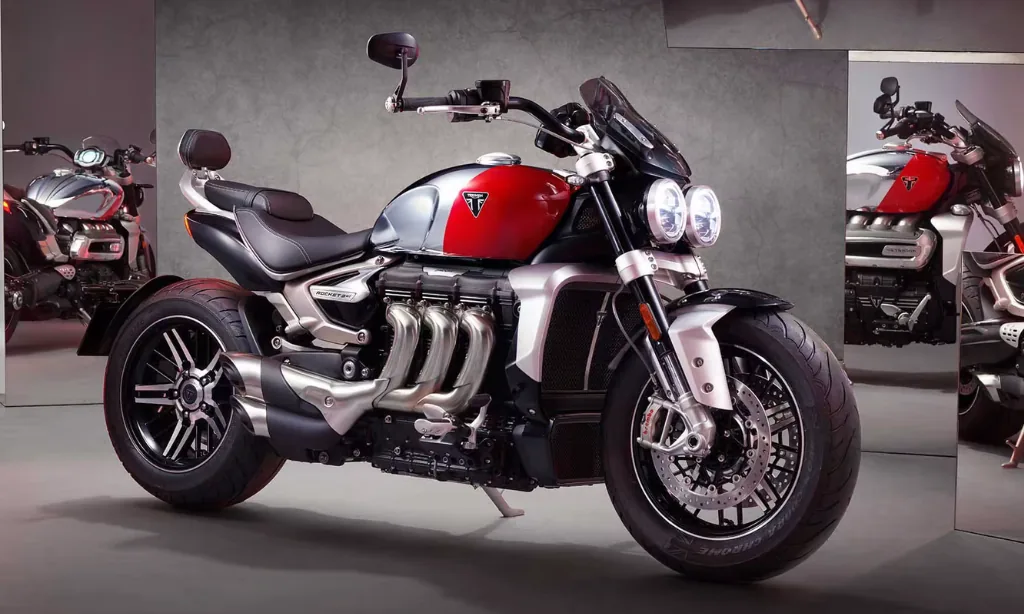
Triumph Rocket 3 in South Africa: An Honest Look at a Gloriously Excessive Motorcycle
The Triumph Rocket 3 is expensive, heavy and thirsty, and it's one of my favourite bikes. Here's an honest look at the Storm R and GT, their rivals and what owning one costs in South Africa.
Share your love
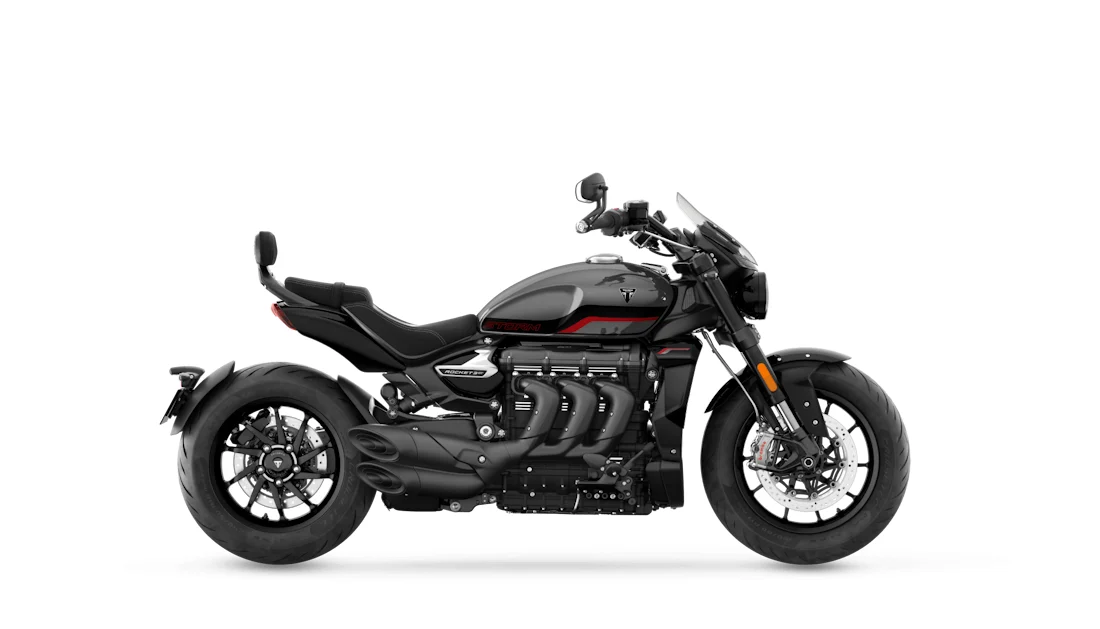
Some motorcycles make sense. They’re light, frugal and easy to live with, and they make a perfectly good case for themselves on a spreadsheet. The Triumph Rocket 3 is not one of those motorcycles. It has a 2,458 cc engine, which is bigger than the engine in a lot of family cars. It weighs more than 300 kg. It costs more than plenty of new small cars. And it is one of my favourite motorcycles on sale today.
So, full disclosure before we go any further: I love this bike. I’m going to try very hard not to let that colour the numbers, because the numbers on a Rocket 3 deserve to be looked at honestly, especially in South Africa, where a R445,000 toy is a serious decision for almost anyone.
Here’s everything you need to know about the current Rocket 3 Storm, how it stacks up against its rivals, and where it fits in a South African market that is, frankly, heading in the opposite direction.
The short version
- Engine: 2,458 cc inline triple, 182 PS and 225 Nm, the biggest engine on any production motorcycle
- Two versions: Storm R (roadster riding position) and Storm GT (more relaxed touring position, flyscreen and heated grips)
- Weight: 317 kg (R) and 320 kg (GT), wet
- South African price: from R445,000 (Storm R) and R460,000 (Storm GT), before extras and delivery
- Fuel: 18 litres at a claimed 6.6 litres per 100 km, so roughly 270 km to a tank
- Built in Hinckley, England
What makes the Rocket 3 different
The short answer is the engine, and the long answer is also the engine.
Triumph has been doing this since 2004, when the original Rocket III arrived with a 2,294 cc triple that was the biggest engine ever fitted to a production motorcycle. In 2019 Triumph replaced it with an all-new Rocket 3 and took the capacity to 2,458 cc. That’s three cylinders of roughly 820 cc each, mounted longitudinally in the frame, with the crank running front to back like a rear-wheel-drive car’s.
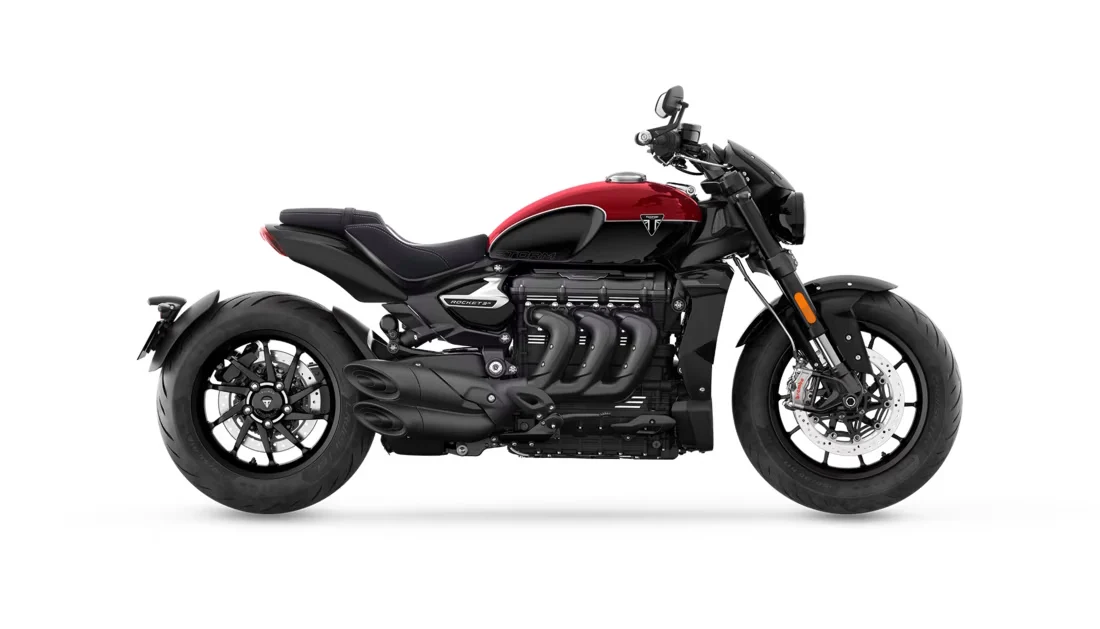
For 2024 the bike became the Rocket 3 Storm. According to Bennetts BikeSocial, the extra performance came from engine mapping rather than new hardware, lifting peak power from 167 PS to 182 PS and moving the peak up to 7,000 rpm. Torque went from 221 Nm to 225 Nm, which Triumph says is more than any other production motorcycle makes. Bennetts also notes lighter wheels and a darker finish on the engine, exhausts and headlight surrounds.
Numbers like 225 Nm are easy to read and hard to picture, so here’s some context. A typical litre-class superbike makes somewhere around half of that. The Rocket’s peak torque arrives at 4,000 rpm, and there’s a huge amount of it well before then. In practice that means one thing: it doesn’t really matter which gear you’re in.
The rest of the hardware is better than it needs to be for a cruiser. There’s a full aluminium frame, a single-sided swingarm, shaft final drive, a 47 mm Showa upside-down fork, a fully adjustable Showa rear shock with a remote preload adjuster, and Brembo Stylema monobloc calipers clamping twin 320 mm front discs. Electronics include riding modes, cornering ABS, cornering traction control, cruise control, hill hold and keyless ignition, all shown on a colour TFT dash.
Triumph’s own launch film for the Rocket 3 Storm gives a good feel for what this engine is all about.
The full numbers
| Type | Liquid-cooled inline triple, 12 valves, DOHC, mounted longitudinally |
| Displacement | 2,458 cc |
| Bore x stroke | 110.2 x 85.9 mm |
| Compression | 10.8:1 |
| Power | 182 PS (180 hp, 134 kW) at 7,000 rpm |
| Torque | 225 Nm at 4,000 rpm |
| Gearbox and drive | Six-speed, shaft final drive |
| Service interval | 16,000 km or 12 months |
| Frame | Full aluminium |
| Swingarm | Single-sided, aluminium |
| Front suspension | Showa 47 mm upside-down fork, 120 mm travel |
| Rear suspension | Showa piggyback shock, fully adjustable, remote hydraulic preload adjuster, 107 mm travel |
| Wheelbase | 1,677 mm |
| Rake and trail (GT) | 27.9 degrees, 134.9 mm |
| Front brakes | Twin 320 mm discs, Brembo Stylema M4.32 four-piston monobloc calipers |
| Rear brake | Single 300 mm disc, Brembo M4.32 four-piston monobloc caliper |
| ABS | Optimised Cornering ABS |
| Wheels | Cast aluminium, 17 x 3.5 front, 16 x 7.5 rear |
| Tyres | 150/80 R17 front, 240/50 R16 rear |
| Seat height | 773 mm (R), 750 mm (GT) |
| Wet weight | 317 kg (R), 320 kg (GT) |
| Fuel capacity | 18 litres |
| Claimed consumption | 6.6 litres per 100 km |
| Theoretical range | Roughly 270 km |
| Riding modes | Yes |
| ABS and traction control | Cornering ABS and cornering traction control |
| Cruise control | Standard |
| Hill hold | Standard |
| Ignition | Keyless |
| Instruments | Colour TFT |
| Heated grips | Standard on the GT |
| South Africa, Storm R | From R445,000, excluding extras and delivery |
| South Africa, Storm GT | From R460,000, excluding extras and delivery |
| United Kingdom | Storm R from £23,895, Storm GT from £24,595 |
| United States | Storm R from $26,695, Storm GT from $27,495 |
| Dealers in South Africa | Cape Town, Sandton, Hatfield and Centurion, plus service centres in Durban North and Gqeberha |
Storm R or Storm GT?
The two share an engine, frame and electronics. The differences are all about how you sit and what you plan to do.
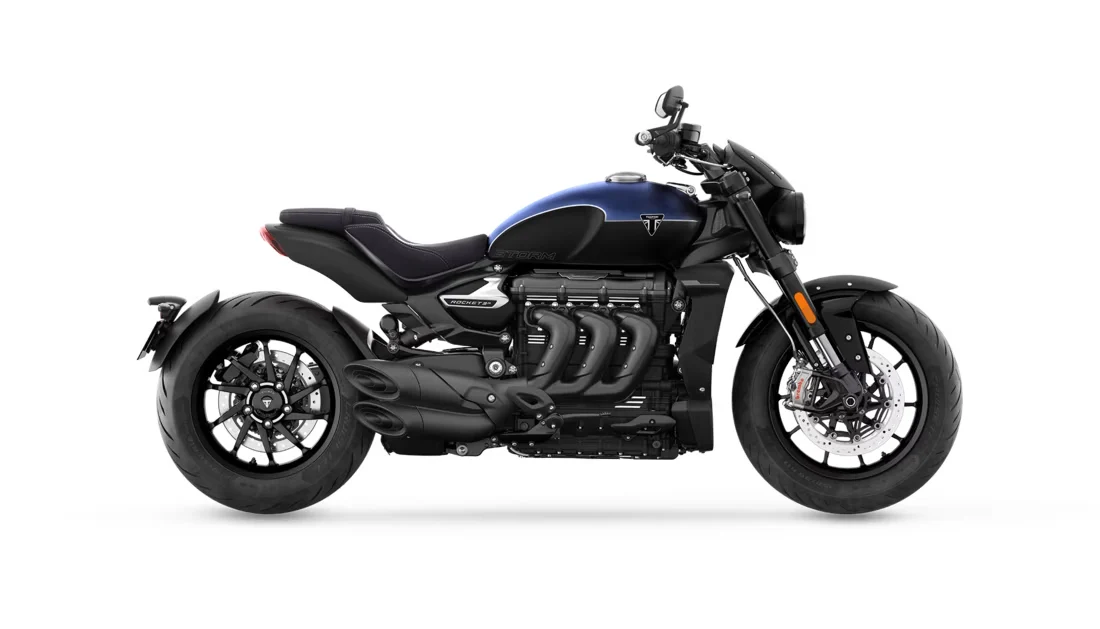
The Storm R is the roadster. Its seat sits at 773 mm and the riding position is the sportier of the two. Bennetts’ tester felt it gave better feel from the front end. It’s the one for short, fast rides and twisty roads.
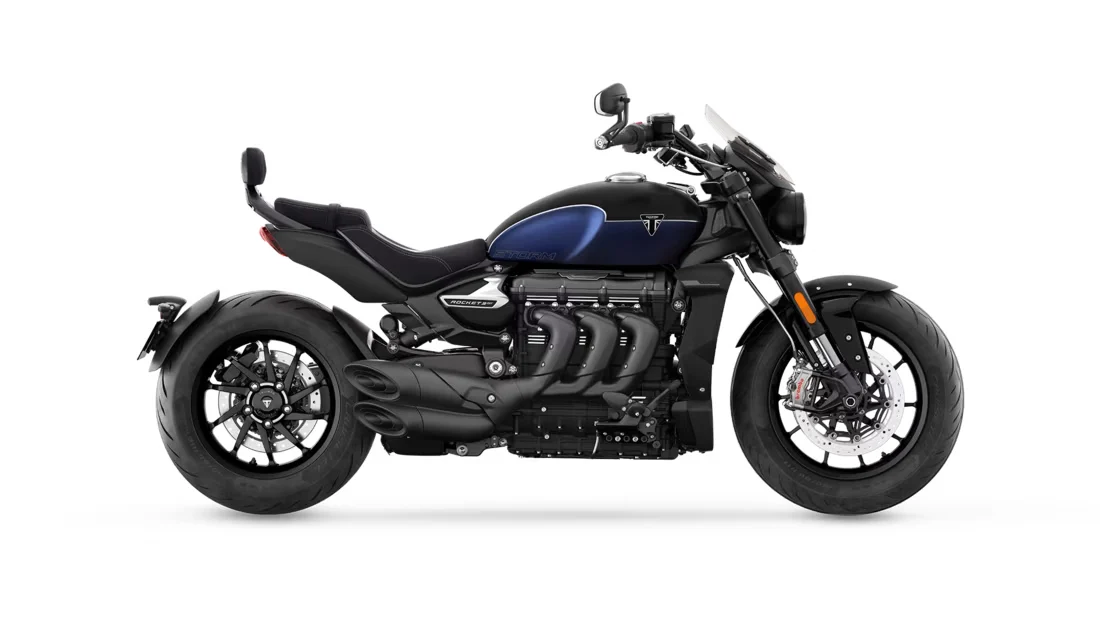
The Storm GT is the touring version. The seat drops to 750 mm, the riding position is more reclined, and it gets a small flyscreen and heated grips as standard. Bennetts’ tester found the heated grips effective, but felt the reclined position put more weight on the base of his spine over longer rides, and preferred the R’s posture for spirited riding.
Locally the gap is R15,000. If you’re planning long weekends away, the GT makes more sense. If the Rocket is your Sunday weapon, the R is the purer bike.
What the reviewers say
The Rocket 3 Storm gets remarkably consistent praise. Bennetts BikeSocial gave it five stars, called it a class of one and singled out how well a 320 kg bike corners, stops and changes direction. Its tester also found it more manageable at walking pace than the weight suggests, thanks to a forgiving clutch, a gentle throttle and a low centre of gravity.
The criticisms are just as consistent, and they’re worth taking seriously at this price:
- The switchgear and TFT layout feel dated, and the buttons are cramped for big hands or winter gloves.
- There’s no quickshifter as standard, although Bennetts argued the engine makes one largely unnecessary.
- Touring practicality depends on optional luggage, and the 18-litre tank limits how far you go between stops.
- The Storm update brought only small visual changes for a price that went up.
None of those are deal-breakers. All of them are things you’d notice if you were spending R460,000 of your own money.
The competition
| Bike | Engine | Power | Torque | US list price | SA price |
|---|---|---|---|---|---|
| Triumph Rocket 3 Storm R | 2,458 cc triple | 180 hp | 225 Nm | $26,695 | From R445,000 |
| Triumph Rocket 3 Storm GT | 2,458 cc triple | 180 hp | 225 Nm | $27,495 | From R460,000 |
| Harley-Davidson Breakout | 1,923 cc V-twin | 103 hp | 171 Nm | $22,999 | Not confirmed |
| Ducati Diavel V4 | 1,158 cc V4 | 168 hp | 126 Nm | $27,995 | Not published |
| BMW R 18 | 1,802 cc boxer twin | 91 hp | 158 Nm | $15,395 | R306,929 (offer expired March 2026) |
US prices are each manufacturer’s official starting price at the time of writing. South African prices are only shown where we could confirm them from an official source.
Harley-Davidson Breakout. The obvious alternative for most South African cruiser buyers, and the bike with the badge everyone recognises. It’s cheaper than the Rocket in the US by about $3,700, and its 1,923 cc V-twin makes 171 Nm, which is a lot by any normal standard and still well short of the Triumph. If you want the classic cruiser experience and the Harley community, it’s the safer buy. If you want the most outrageous engine on two wheels, it isn’t.
Ducati Diavel V4. The Rocket’s closest rival in spirit, if not in shape. It’s a muscle bike with a 1,158 cc V4 making 168 hp, far lighter than any cruiser here, and sharper to ride. It costs slightly more than the Rocket in the US. The Diavel is the better sports bike. The Rocket has nearly twice the torque and far more theatre.
BMW R 18. A very different idea: a 1,802 cc boxer twin built for style and slow, relaxed riding, with 158 Nm and 67 kW. It’s much cheaper than the Rocket in the US, and BMW South Africa’s last advertised offer was R306,929, although that offer expired in March 2026. If the Rocket feels like too much bike and too much money, the R 18 is the more sensible European cruiser.
The honest summary? Nothing else does what the Rocket 3 does. The Harley is more of a cruiser, the Ducati is more of a sports bike, and the BMW is more of a style piece. The Rocket is the only one built around being completely and deliberately excessive.
The Rocket 3 in South Africa
The price
Triumph South Africa lists the Rocket 3 Storm R from R445,000 and the Storm GT from R460,000, excluding factory extras and delivery. There’s no softening that. It’s a lot of money for a motorcycle in this country.
It’s also landing in a market that is moving the other way. Figures from AMID, the Association of Motorcycle Importers and Distributors, show South Africa sold 43,144 new motorcycles in 2025, the best year since 2014. But in 2025, sub-500 cc leisure bikes outsold the 500 cc-plus machines for the first time, while the bigger bikes slipped slightly. The premium segment did bounce back in the second quarter of 2026, up 15%, and Chinese brands now hold just over 10% of it. Buyers are clearly still willing to spend on big bikes. They’re just thinking harder about it.
The Rocket isn’t trying to win that argument. Nobody buys one because it’s good value. People buy one because nothing else feels like it.
Running costs
Fuel first, because it’s the cost you’ll notice most. Triumph claims 6.6 litres per 100 km, which gives a theoretical range of around 270 km from the 18-litre tank. Ride it the way the engine encourages you to and you’ll see less than that. October’s fuel adjustment, due on 7 October, was projected to push 95 unleaded to around R30 a litre inland. At that price, filling the Rocket from empty costs about R540, and every 100 km at the claimed consumption costs about R200.
Tyres are the other big one. The Rocket runs a 150/80 R17 front and a massive 240/50 R16 rear, and a 317 kg bike with 225 Nm going through that rear tyre won’t let it last as long as a sensible commuter’s would. Budget for it.
The good news is in the servicing. The shaft drive means no chain to clean, adjust or replace, and the service interval is 16,000 km or 12 months. Triumph’s standard warranty is two years with unlimited mileage, but confirm the local terms with your dealer before you sign.
Dealers and support
This is the most practical South African consideration, and it’s easy to overlook. Triumph South Africa lists four dealers, in Cape Town, Sandton, Hatfield and Centurion, plus approved service centres in Durban North and Gqeberha. If you live in Gauteng or Cape Town, you’re well covered. If you live in Bloemfontein, Mbombela or East London, think about where your services and warranty work will happen before you buy a 320 kg motorcycle that can’t just be strapped onto a bakkie by one person.
Where it makes sense here
South Africa is actually a good country for a Rocket 3, in the right hands. Long, open N-roads suit an engine with this much torque in reserve. Breakfast runs to the Magaliesberg, Clarens or the Cape’s mountain passes suit a bike that’s as much about the occasion as the riding. And the GT’s touring setup makes a long weekend away perfectly realistic, as long as you plan fuel stops around that 270 km range.
Where it makes less sense is daily life. Parking a 317 kg bike on a sloped driveway, filtering through Joburg traffic or squeezing into a tight complex garage are all things you’ll do more carefully than you would on almost any other motorcycle.
Who should buy one, and who shouldn’t
The Rocket 3 makes sense if you:
- Are an experienced rider who wants the biggest engine in production motorcycling.
- Love the idea of a cruiser but want one that handles, stops and accelerates like something far lighter.
- Live near a Triumph dealer or service centre.
- See your bike as a long-term keeper rather than something you’ll trade in two years.
Think twice if you:
- Are a newer rider. The weight and the torque are both a lot to manage.
- Need one bike to do everything, including commuting and gravel roads.
- Are watching running costs closely, from fuel to tyres to insurance.
- Want maximum resale value. Niche, expensive bikes have a smaller pool of second-hand buyers.
The honest verdict
On paper, the Rocket 3 is hard to justify. It’s expensive, heavy, thirsty, limited in range, and supported by a small dealer network. A Harley is the safer cruiser, a Diavel is the better sports bike, and an R 18 is the more sensible European alternative.
And yet. There is simply nothing else like it. Reviewers who’ve spent real time on it keep coming back to the same conclusion: the engine is absurd, the bike handles far better than it has any right to, and it makes every ride feel like an event. That’s exactly why it’s one of my favourites.
If you can afford it, live near a dealer and understand what you’re buying into, I don’t think you’ll regret it for a second. If any of those three are shaky, admire it at the next bike night and buy something sensible. There’s no shame in that. There’s just less torque.
Quick answers
How much is the Triumph Rocket 3 in South Africa?
Triumph South Africa lists the Rocket 3 Storm R from R445,000 and the Rocket 3 Storm GT from R460,000. Both prices exclude factory extras and delivery.
How powerful is the Rocket 3?
The 2,458 cc triple makes 182 PS (180 hp) at 7,000 rpm and 225 Nm at 4,000 rpm, which Triumph says is more torque than any other production motorcycle.
What’s the difference between the Storm R and Storm GT?
Same engine and chassis. The R has a 773 mm seat and the sportier riding position. The GT has a 750 mm seat, a more reclined touring position, a flyscreen and heated grips, and costs R15,000 more locally.
How far can a Rocket 3 go on a tank?
Triumph claims 6.6 litres per 100 km from the 18-litre tank, which works out to roughly 270 km. Expect less if you use the engine the way it wants to be used.
How heavy is the Rocket 3?
Triumph quotes 317 kg wet for the Storm R and 320 kg for the Storm GT.
Where can I buy one in South Africa?
Triumph South Africa lists dealers in Cape Town, Sandton, Hatfield and Centurion, with approved service centres in Durban North and Gqeberha.
Sources and further reading: Triumph South Africa, Triumph South Africa dealers, Triumph UK, Rocket 3 GT Storm specifications, Triumph US pricing, Bennetts BikeSocial review, Harley-Davidson Breakout, Ducati Diavel V4, BMW R 18, BusinessDay on AMID Q2 2026 sales.