
Share your love
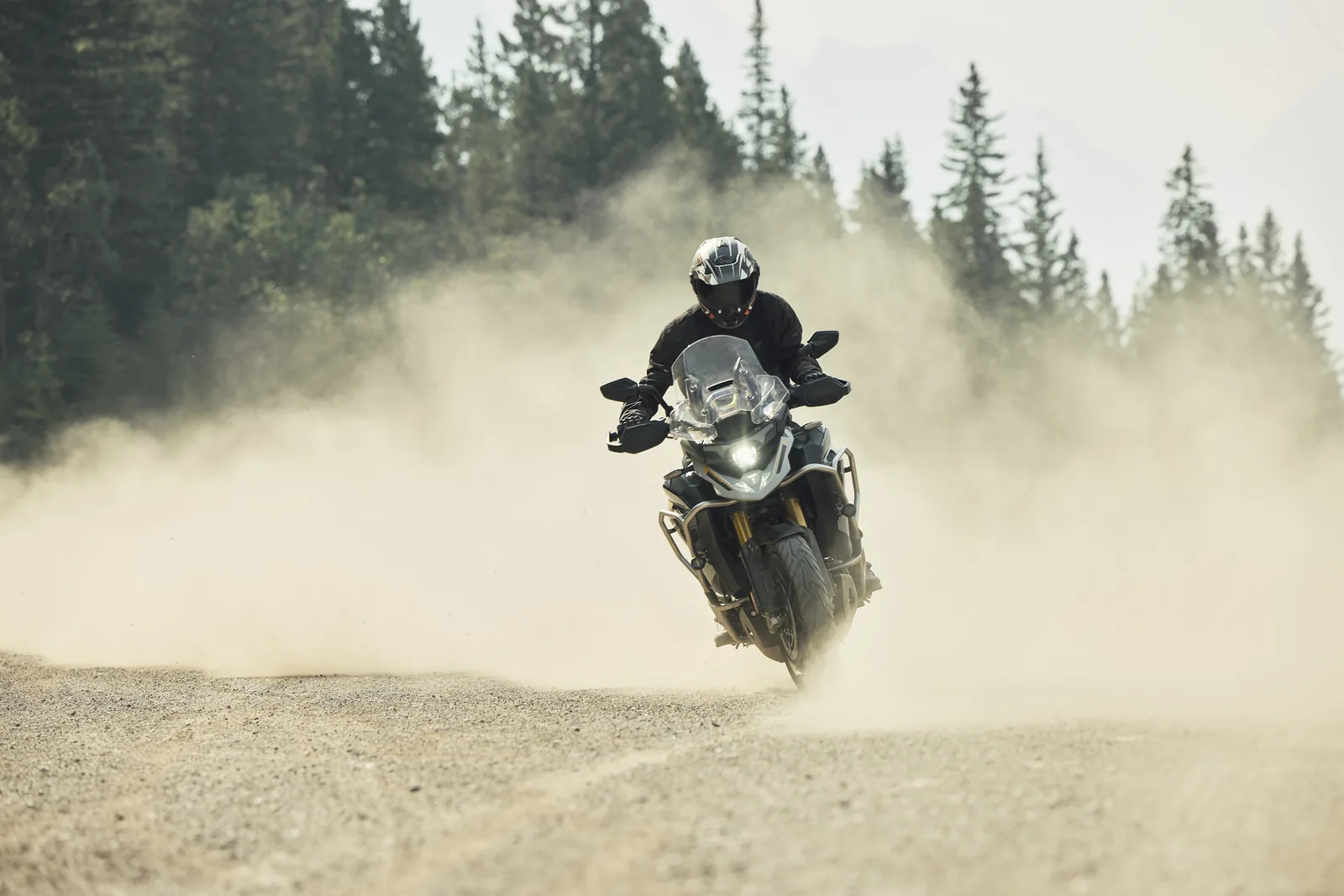
Triumph’s Tiger 1200 Now Kneels When You Stop. Is the Big Adventure Bike Finally for Shorter Riders?
Triumph's 2027 Tiger 1200: 156 hp, Bosch radar front and rear, a seat that lowers as you stop, all four versions, UK prices, and Triumph's other new bikes.
Picture a robot on a Johannesburg afternoon. You are on a fully fuelled adventure bike with a pillion on the back and a camber tilting toward the gutter, and one boot is stretching for tar that sits lower than you hoped. That wobbly half-second is what Triumph has gone after with the 2027 Tiger 1200, revealed on 27 October and brought to EICMA a week later (our EICMA 2026 round-up covers the rest of the show). It also gets more power, radar at both ends and smaller wheels, but for shorter riders the headline is simple: the seat now kneels when you stop.
Triumph’s chief product officer, Steve Sargent, calls it “a real step change for the Tiger 1200”. We find that hard to argue with, although one part will annoy gravel lovers.
Thirty millimetres at the robot
The system is called HEIGHTFLEX, built into Showa’s semi-active EERA suspension, and Triumph says it is the first maker to fully implement it. As the bike slows to a stop, rear suspension pressure is reduced and the seat drops by 30 mm. Pull away and the normal ride height returns within seconds. The drop is identical whether you are riding alone, two-up or loaded, which is the clever part: the preload sorts itself out for the weight on board, so a pillion and panniers do not eat the saving.
Think of a Karoo fuel stop where the forecourt slopes away from the pumps, or a U-turn on a narrow tar road with a drop-off on one side. In our view, 30 mm will not turn a tall bike into a small one, but at a standstill it is the difference between a flat foot and a tiptoe, and the tiptoe is where most dropped bikes begin.
The seat heights in full
The standard seat has two positions, 840 and 860 mm, which become 810 and 830 mm with the lowering active. Fit the accessory low seat and the Tiger comes down to 790 mm at a standstill, according to Triumph UK. The saving is tied to stopping, so once you are rolling the seat is back at full height. And the low seat is standard in some markets and a paid extra in others, one European report says, so what South African buyers get is a detail still waiting on local pricing.
Triumph is not alone in the idea. Motorcycle.com notes that comparable systems exist on the BMW R 1300 GS and the Harley-Davidson Pan America. BMW’s version is an option that needs its Dynamic Suspension Adjustment, and the company quotes 820 mm at a standstill or below 25 km/h and 850 mm above 50 km/h on the standard seat. The Tiger’s 810 or 830 mm at a stop sits in the same territory, and Triumph lists the suspension as common to all four versions.
The same hardware runs Centre Stand Assist, which briefly raises the rear preload as you deploy the stand, so heaving a loaded bike onto it takes less effort.
The Showa behind the trick
HEIGHTFLEX rides on 49 mm upside-down forks and a rear shock, with 200 mm of travel at each end. The damping now has three settings, Firm, Medium and Soft, chosen with a dedicated button, so you can firm the bike up for a loaded tar run and soften it for corrugations. A new hydraulic secondary bump stop adds control when you land harder than planned, and Brembo Stylema calipers on twin 320 mm discs look after the stopping.
Radar for the truck lane
Front and rear radar, developed with Bosch, is the other big step. Adaptive cruise control holds a speed or a gap to the vehicle ahead in Comfort or Dynamic settings, with an Overtake Assist that prepares the bike to pass when you indicate and the blind spot is clear. Curve Speed Control can slow the bike through a long bend.
The front radar also runs Emergency Brake Assist and a Forward Collision Warning that shows an alert on the screen and then pulses the rear brake pedal if the gap keeps closing. At the back, Blind Spot Assist lights the mirrors and Rear Distance Warning tells you when someone is following too closely.
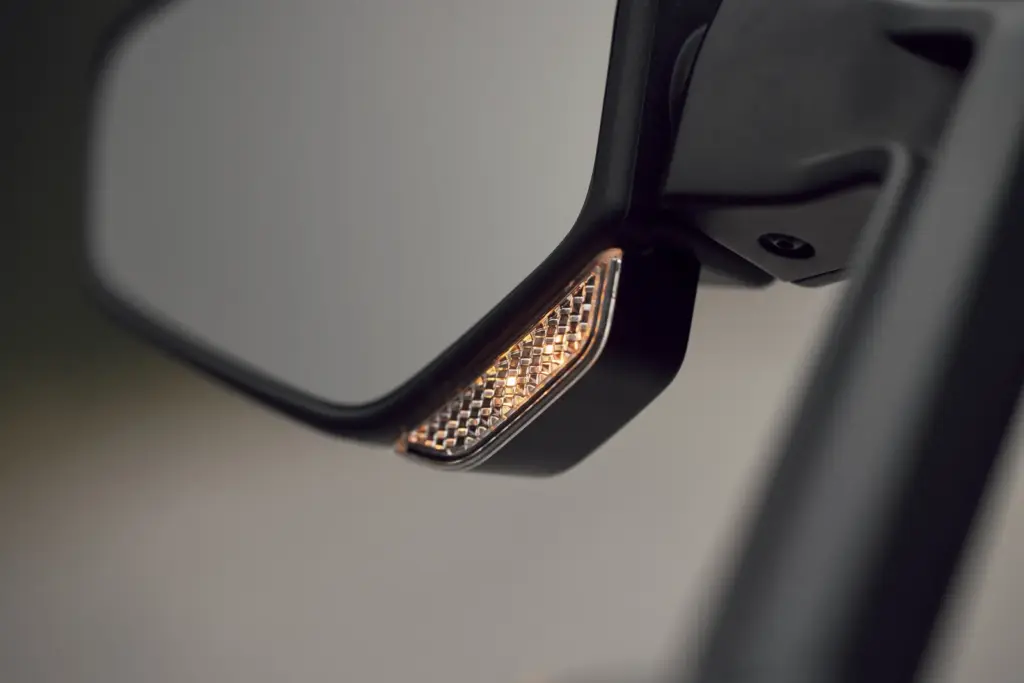
On an N1 stretch with trucks overtaking and holiday traffic bunching behind a slow load, we think adaptive cruise and blind spot warnings are useful rather than gimmicks, though no rider should surrender attention to them.
A stronger triple that creeps better
The current generation was unveiled in December 2021, when the engine shrank from 1,215cc to 1,160cc and the bike lost about 25 kg, according to TimesLive’s launch coverage. For 2027 the T-plane triple now makes 156 hp (116.2 kW) at 9,250 rpm and 130 Nm at 6,750 rpm.
The headline gain is 8 PS, about 8 hp, but the more interesting number is lower down the rev range. There is more torque at low engine speeds, and Triumph says the crawl speed is 6 km/h lower. A redesigned cylinder head, new pistons, lighter valves and revised first three gears do the work. In our opinion, that matters most where the air is thin: anyone who has taken a big adventure bike up onto the Highveld knows how much an engine can lose to altitude, and low-down grunt is the cheapest way to win some back. It also helps on a rocky climb where you want to creep rather than slip the clutch.
Refinement was the other target: the six-speed gearbox and shaft drive are quieter and smoother, and the latest Triumph Shift Assist gives clutchless shifts up and down. Triumph quotes 5.3 litres per 100 km, which on paper gives the Pro models a range of about 375 km and the Explorers about 565 km, enough to shrug off the long gaps between fuel stops in the Northern Cape.
Heat, headlights and a phone with its own fan
A new Bosch 7-inch touchscreen brings wireless Apple CarPlay and Android Auto, and the waterproof phone compartment on top of the tank has a USB-C socket and its own cooling fan, a detail that suits a sunny country. The adaptive LED headlight switches on extra elements at 15 and 30 degrees of lean to light the inside of a bend.
Heated rider and pillion seats and heated grips are standard, which should be welcome on a winter dawn crossing the Free State, and the Evo luggage system, made with GIVI, adds a new 58-litre twin-helmet top box.
Smaller wheels and the gravel argument
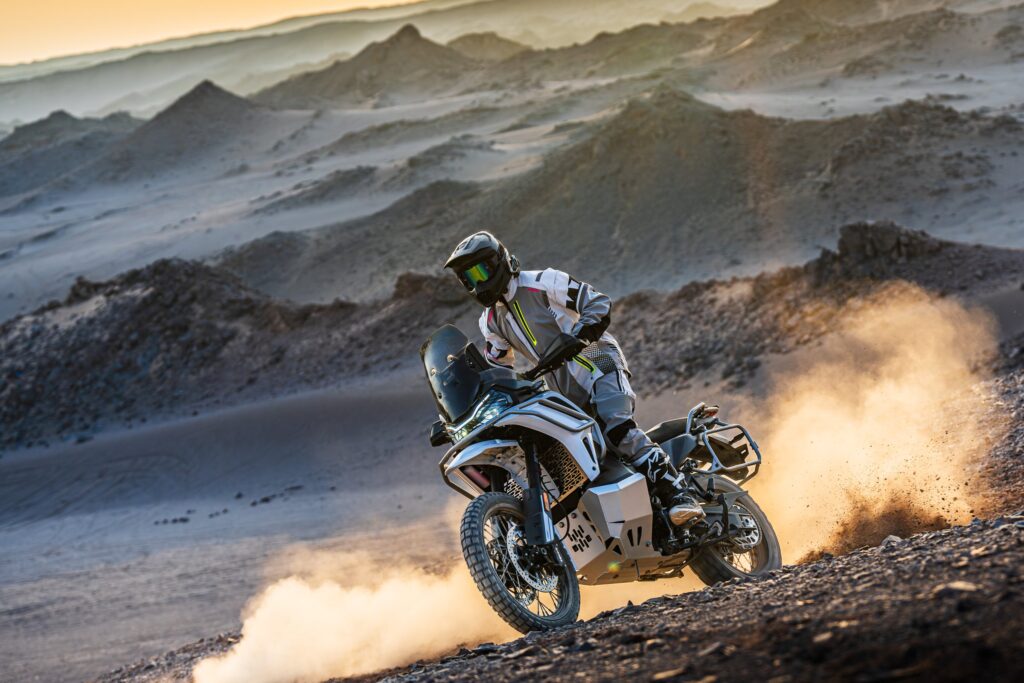
Here is the change that will divide the room. Every Tiger now runs a 19-inch front and a 17-inch rear, with 200 mm of travel at each end. The Rally versions used to wear a 21-inch front and an 18-inch rear and had 220 mm of travel, and even the GT models give up an inch at the back. Triumph says the changes follow customer feedback and aim to improve on-road agility without giving up off-road ability. The tyres are 120/70R19 and 170/60R17.
There is a respectable case for the move. BMW’s R 1300 GS, the segment’s benchmark, also rolls on a 19-inch front and a 17-inch rear with the same tyre sizes, according to BMW Motorrad’s technical data. Most big adventure bikes here spend their lives on tar, where a 19-inch front turns in more keenly and offers more road tyres. On the wide, hard-packed Karoo gravel that joins one tiny town to the next, we expect the Tiger to be perfectly happy.
The argument starts where the road stops. A 21-inch front is generally favoured for serious off-road riding because it rolls over rocks and ruts more easily, and the widest choice of proper off-road tyres comes in the 21 and 18 sizes. Anyone planning rocky Lesotho passes or deep sand should weigh that before signing for a Rally. Triumph has tried to soften the blow with Off-road Pro mode, engine protection and side-laced spoked wheels, but first off-road tests are still to come. Our view is that the Tiger has become a better tourer for the many and a slightly worse explorer for the few.
Choosing between GT and Rally, Pro and Explorer
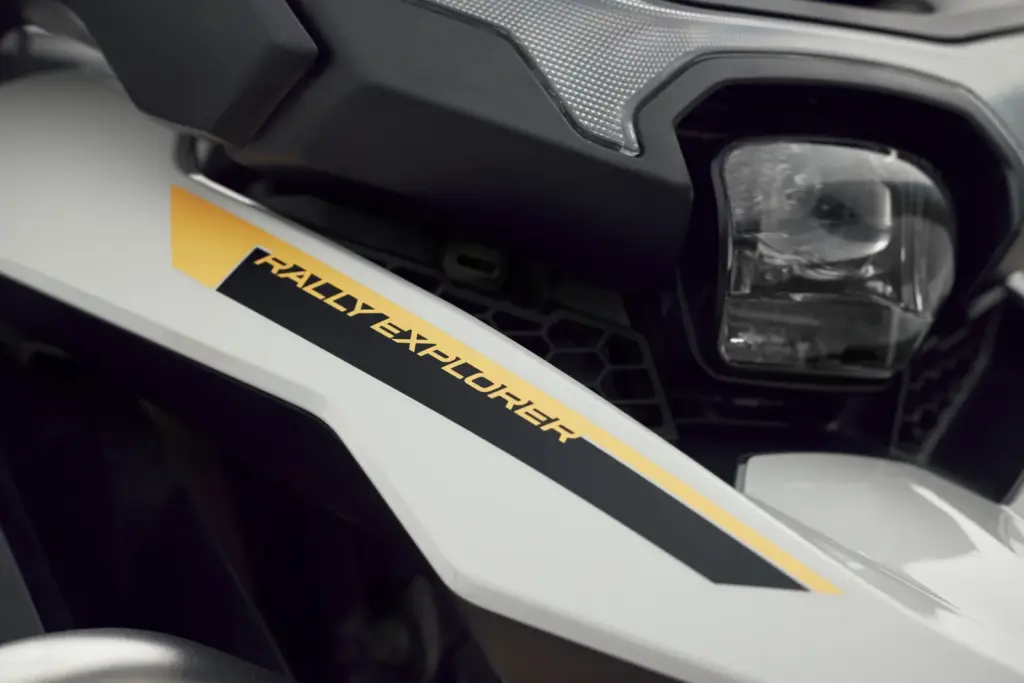
Every version shares the engine, radar, suspension and screen. The GT models have cast wheels; the Rally models have spoked wheels and add the Off-road Pro mode, engine protection and a folding brake pedal. The Pro models carry 20 litres of fuel and the Explorers 30 litres, along with tyre pressure monitoring, lower engine bars and a handlebar 10 mm higher and wider. The Rally Explorer adds upper engine bars too.
| Wheels | Fuel | Wet weight | UK price | |
|---|---|---|---|---|
| GT Pro | Cast | 20 litres | 250 kg | £18,295 |
| Rally Pro | Spoked | 20 litres | 255 kg | £18,995 |
| GT Explorer | Cast | 30 litres | 260 kg | £19,875 |
| Rally Explorer | Spoked | 30 litres | 268 kg | £20,575 |
In our view, a shorter rider who mostly commutes and tours will be best served by the GT Pro, the lightest at 250 kg. The Rally Explorer is 18 kg heavier, so it asks the most of the lowering trick. Service intervals are 16,000 km, and UK deliveries start in December.
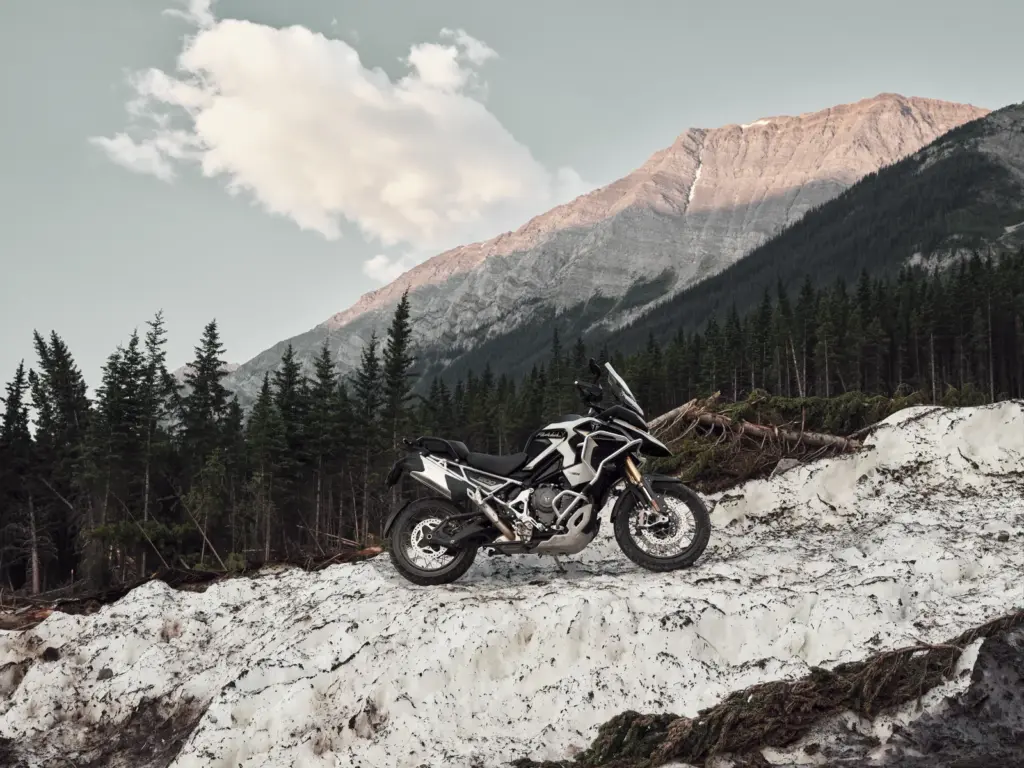
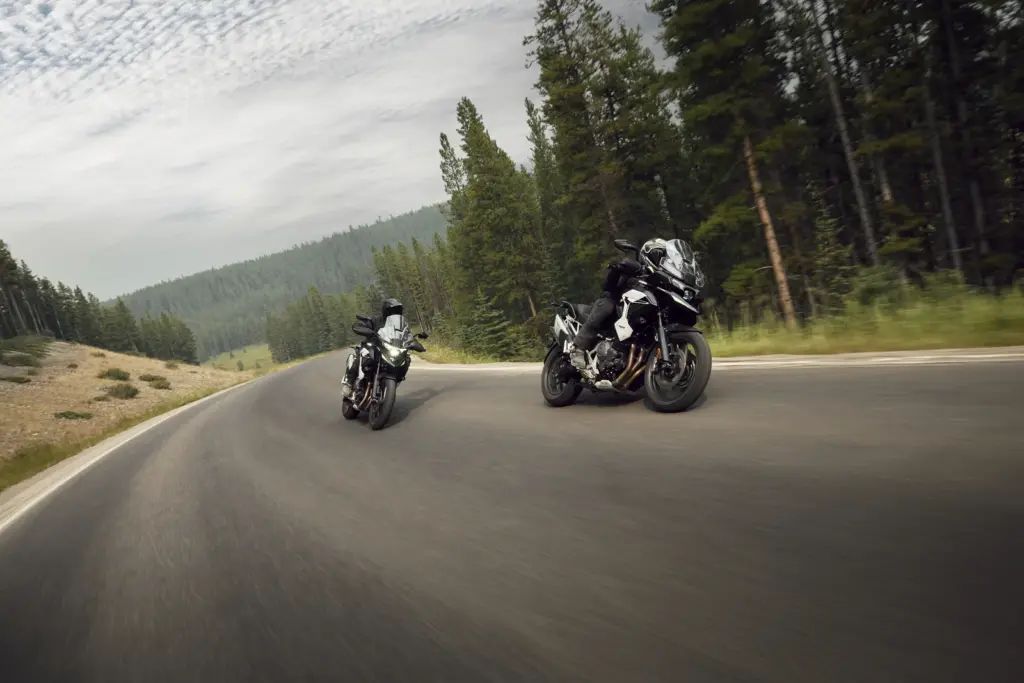
Every version now runs a 19-inch front and a 17-inch rear wheel. Image: Triumph Motorcycles 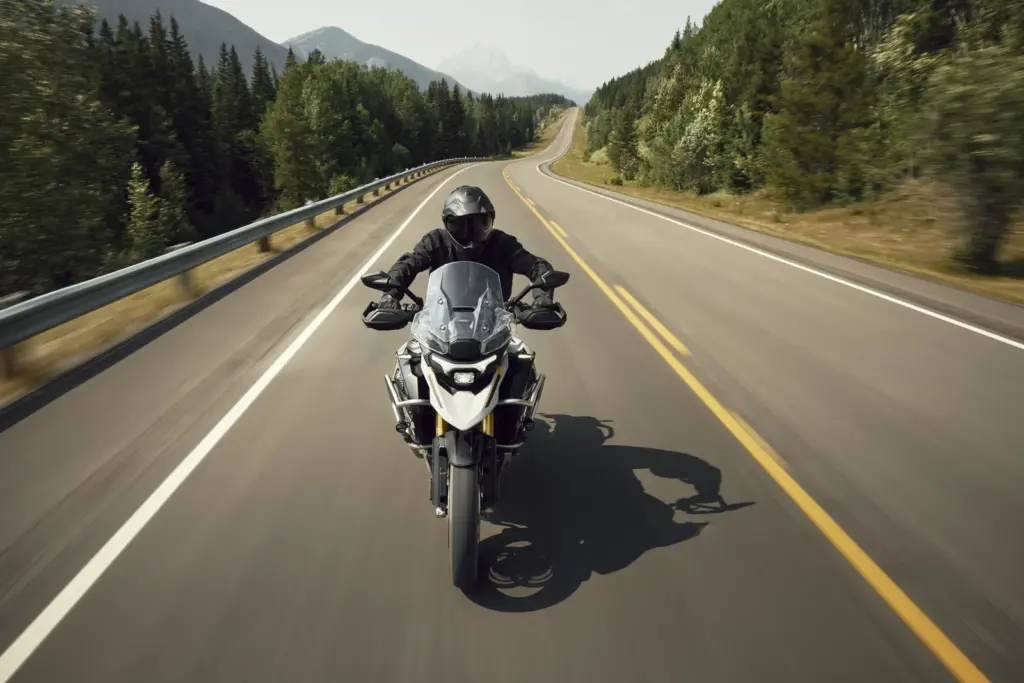
Front and rear Bosch radar run the adaptive cruise control and blind spot assist. Image: Triumph Motorcycles 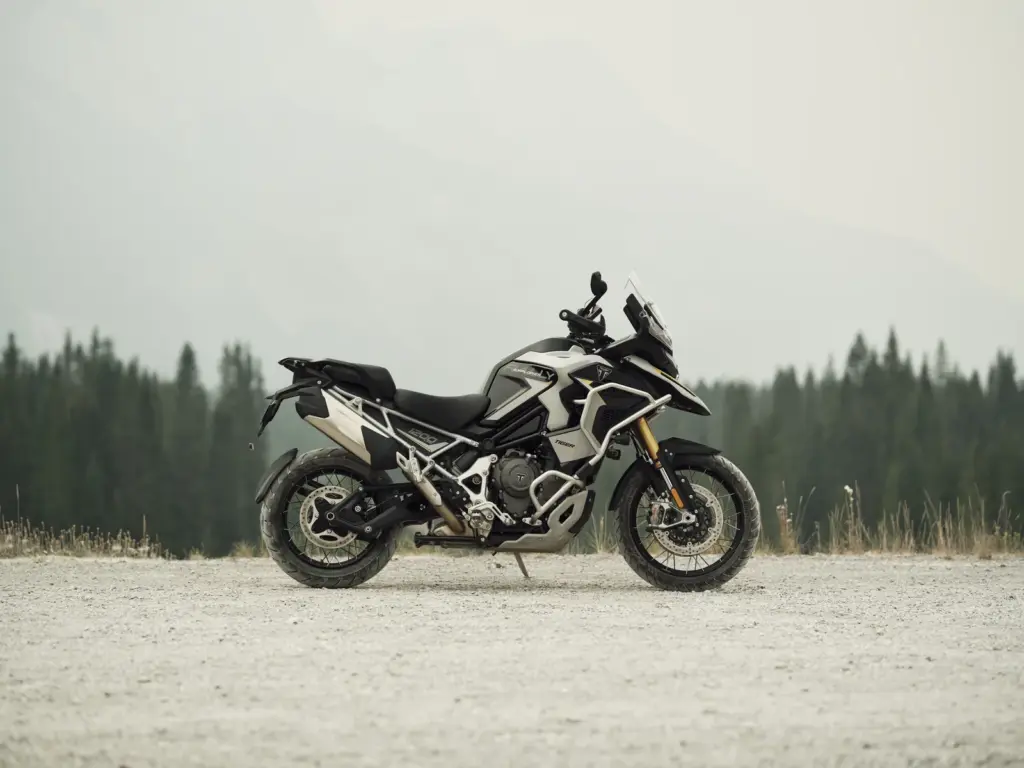
The Explorer models keep the 30-litre tank. Image: Triumph Motorcycles 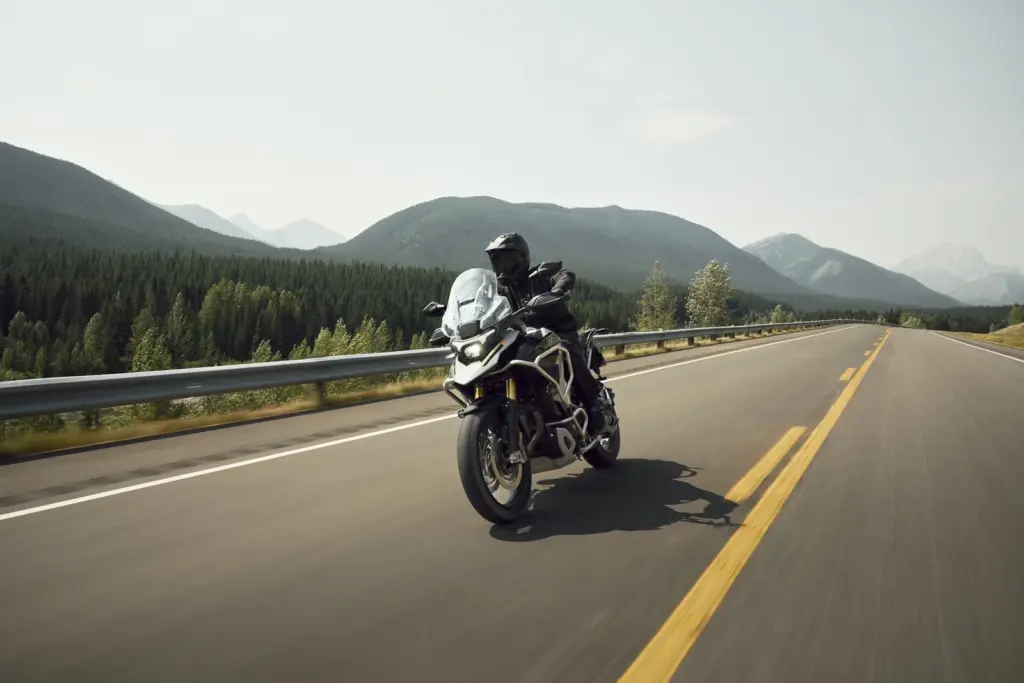
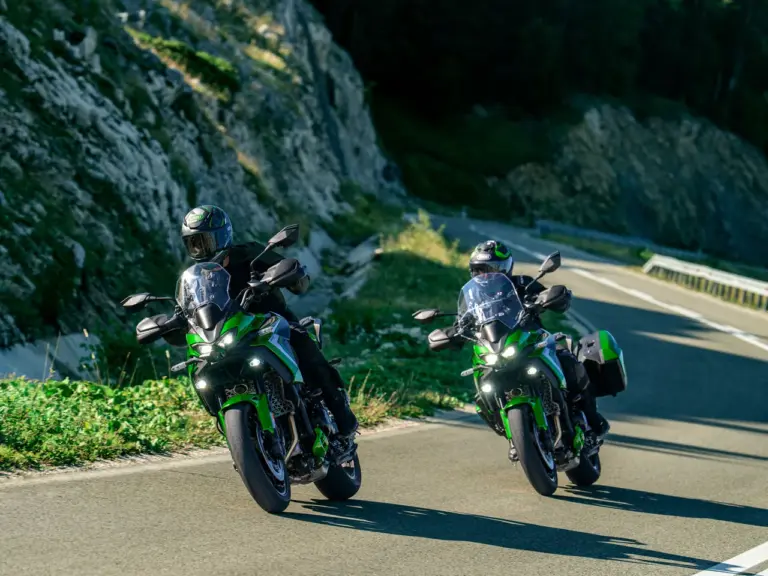
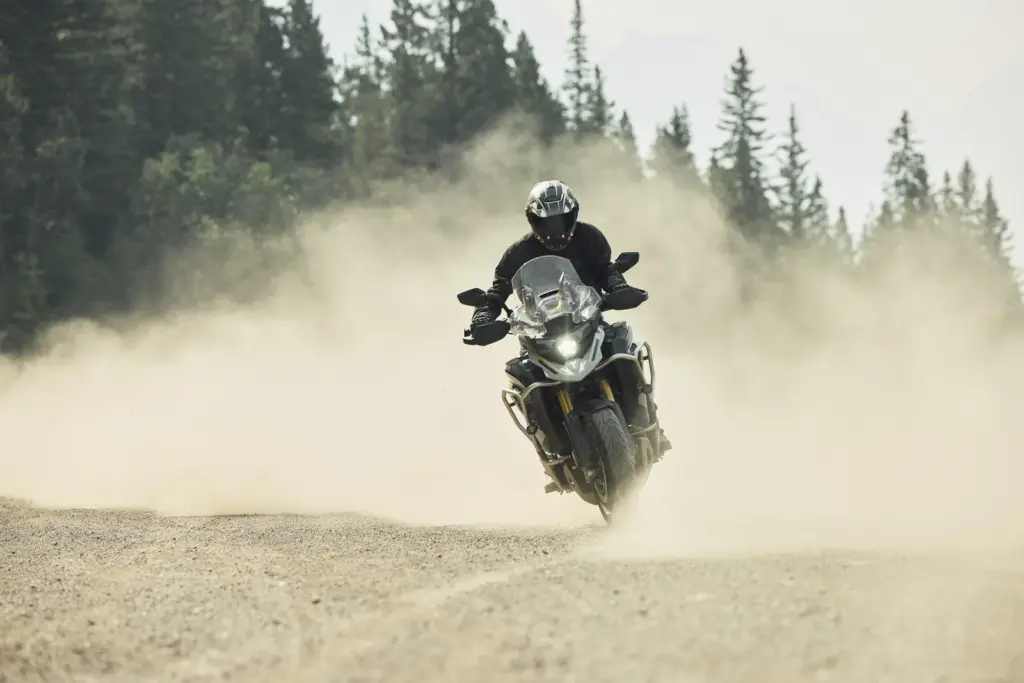
On the open road, adaptive cruise control holds a speed or a gap to the vehicle ahead. Image: Triumph Motorcycles
Waiting on a rand price
Triumph’s dealers here, including Triumph Cape Town on Daily Rider, sell the current Tiger 1200. Triumph has not yet announced South African prices or an arrival date for the new bike, and a straight conversion of the UK prices would be a guess. When local figures arrive, the question for a dealer is simple: is the low seat included?
Triumph’s other new bikes
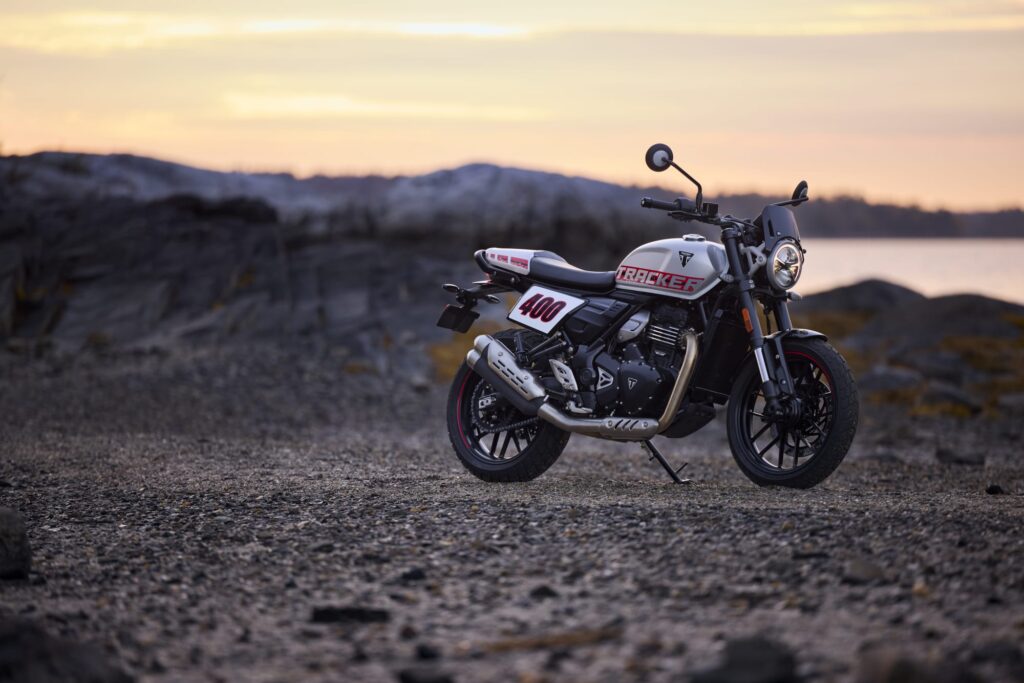
The Tiger was not Triumph’s only news. On its EICMA stand, according to Il Sole 24 Ore, it is showing the Bonneville T40 and T40 Black, a 400cc entry to its Modern Classic range built around a new version of the TR-series engine used in the Tracker 400 and its stablemates, due on sale in late spring 2027. Triumph is also spreading its launches beyond the show: the paper reports that the Street Triple 798, with a new 798cc triple developed alongside Triumph’s Moto2 engine programme, will be revealed on 17 November, and a new Tiger 900 with an updated engine and chassis on 15 December. Shorter riders will watch the 900 most closely, to see whether it gets any of the big Tiger’s tricks.