
Share your love
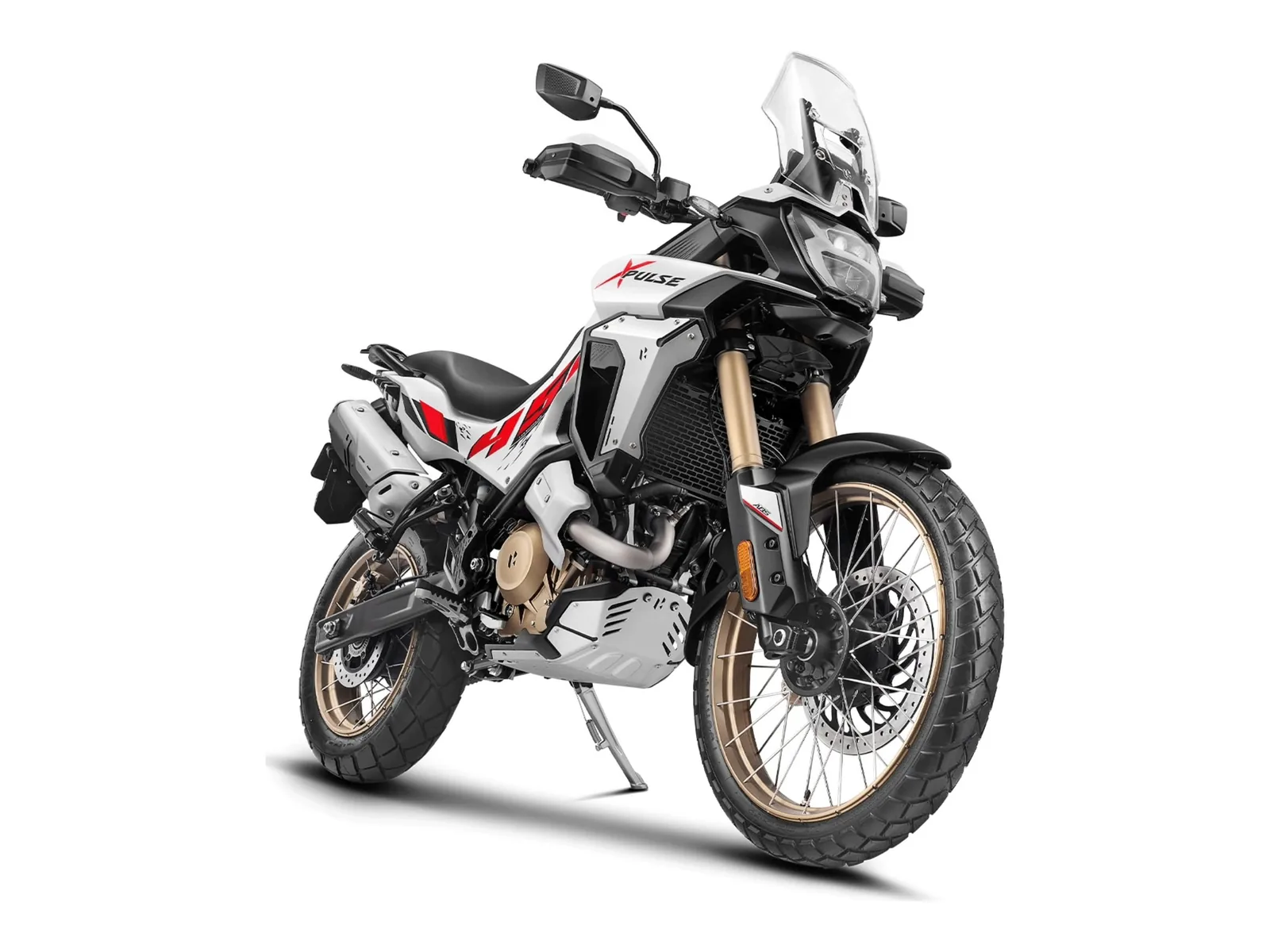
From Commuters to Dakar: Hero’s XPulse 450 Is Its Most Serious Bike Yet
Hero's XPulse 450, revealed at EICMA 2026: a new 421cc single with 46 hp, 21-inch front, KYB suspension and CarPlay, and what we know for South Africa.
Hero MotoCorp builds more two-wheelers than anyone else on the planet. Its own February 2026 release says it has held the title of world’s largest two-wheeler manufacturer for 25 consecutive years, and an October 2025 release counts 51 countries on its map, Africa among them. Most of what leaves those factories is a sensible commuter. On 3 November in Milan the company showed something different. The XPulse 450 is the biggest and most powerful motorcycle Hero has ever made, and the first time the brand has asked to be taken seriously in the busy 400 to 450cc adventure class.
From a 200cc runabout to a 421cc contender
To see how big the jump is, look at where the XPulse name started. The XPulse 200 4V, which Autocar India lists at 199cc and 19.1 hp (14.2 kW), was an honest little trail bike for people who wanted gravel without paying KTM money. Its liquid-cooled successor, the XPulse 210, was on sale in India by March 2025, according to Autocar India, with 24.6 hp (18.3 kW). That is a fine bike for a farm road, but nobody was going to cross the Free State on one at 130 km/h.
The new bike makes close to double the 210’s power. Despite the 450 badge, the engine is a new 421cc, liquid-cooled single with four valves and twin overhead cams. Hero’s figures, as reported by ZigWheels and BikeDekho, are 46.6 PS, about 46 hp (34.3 kW), at 9,100 rpm and 38 Nm at 7,500 rpm. BikeWale quotes 45.5 bhp, so treat the last decimal as provisional. A six-speed gearbox with a slip-and-assist clutch sends the power to the rear wheel, which should help after four hours of Karoo corrugations, when your left hand has had enough of a heavy lever.
What does 46 hp mean on South African roads? On paper it is enough to make a pass on the N1 near Beaufort West a decisive affair rather than a prayer. Hero has not published gearing, final drive or a top speed. A single of this size suits the rider who spends half the week on tar and half on gravel, not someone crossing the continent at the national limit with a pillion and three bags.
The rally team that did the homework
The part of the story Hero most wants you to hear is the Dakar link. The bike was developed with direct input from Hero MotoSports Team Rally, which has real credentials. In January 2022, Joaquim Rodrigues won Stage 3 on the Hero Rally 450, which Autocar India described as the first Dakar stage win for an Indian team. At the 2026 rally, Nacho Cornejo finished seventh and Ross Branch eighth, putting two Hero riders in the top ten, according to Autocar India.
There is a southern African thread in that result too. Branch is from Botswana, and the Botswana Daily News reported his eighth place, so a rider from just north of our border is one of the two Hero riders who finished in the top ten.
Hero has been careful not to say which parts or ideas travelled from the rally bikes to this one. BikeWale makes the same point: the maker talks about learnings from its international rally programme, not specific components. What rally experience realistically gives a road bike is the boring stuff that matters: where the bash plate sits, how the suspension behaves on a rocky track, and how easy it is to reach things when you are tired.
How it stacks up against the Himalayan and the 390
The two bikes Hero has to beat are Royal Enfield’s Himalayan 450 and KTM’s 390 Adventure. Autocar India’s comparison of the pair gives the benchmarks, and the new Hero lines up closely with both on paper.
| Hero XPulse 450 | Royal Enfield Himalayan 450 | KTM 390 Adventure | |
|---|---|---|---|
| Engine | 421cc | 452cc | 399cc |
| Power | 46 hp (34.3 kW) | about 40 hp (29.4 kW) | 44 hp (33 kW) |
| Torque | 38 Nm | 40 Nm | 39 Nm |
| Seat height | 848 mm | 825 to 845 mm | 830 mm |
| Ground clearance | 230 mm | 230 mm | 227 mm |
| Front fork travel | 225 mm | 200 mm | 200 mm |
| Kerb weight | Not announced | 196 kg | 183 kg |
| Fuel tank | Not announced | 17 litres | 14.5 litres |
Hero’s figures come from ZigWheels and BikeWale, the rivals’ from Autocar India, with power converted from the makers’ PS figures. Two things stand out. First, Hero edges the KTM for peak power and beats the Himalayan by roughly six hp, yet it makes slightly less torque than either, and it makes that torque higher up the rev range: 7,500 rpm, against 5,500 rpm for the Royal Enfield. In our view that points to a livelier engine than the Himalayan’s relaxed thump, which suits a quick run up a pass in Lesotho but may ask more of you when you are loaded with luggage at altitude.
Second, the missing numbers matter. Weight and fuel capacity decide whether a bike works on a 600 km day in the Northern Cape. Until Hero publishes them, the XPulse 450 is only half a comparison.
Tall, long-legged and built for rough roads
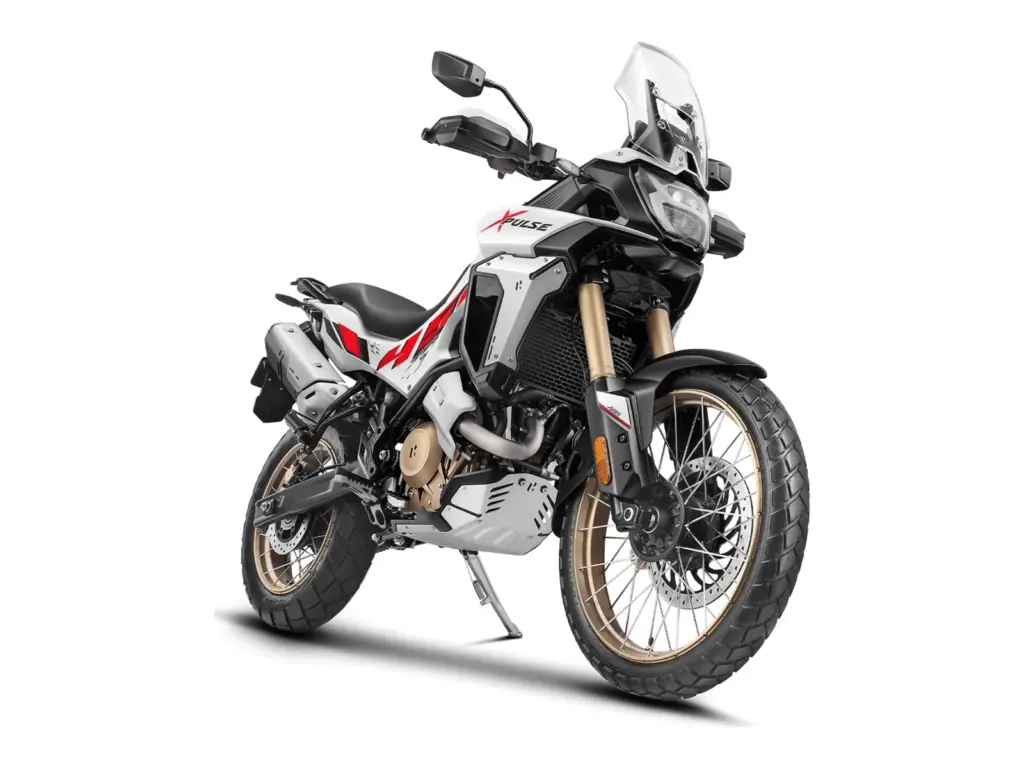
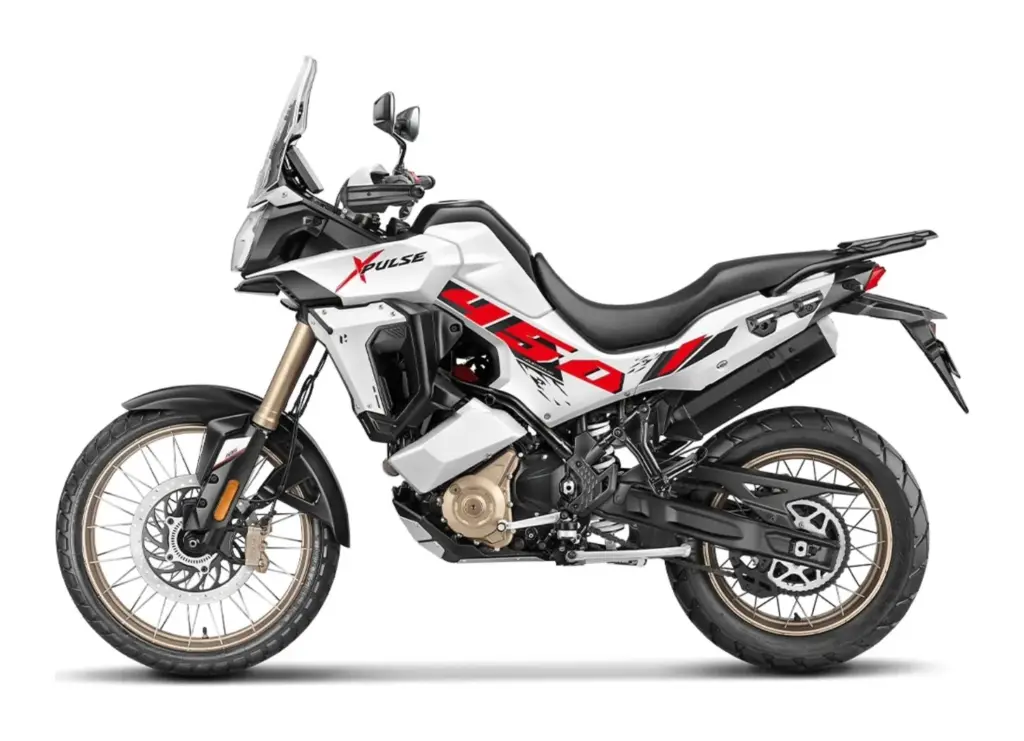
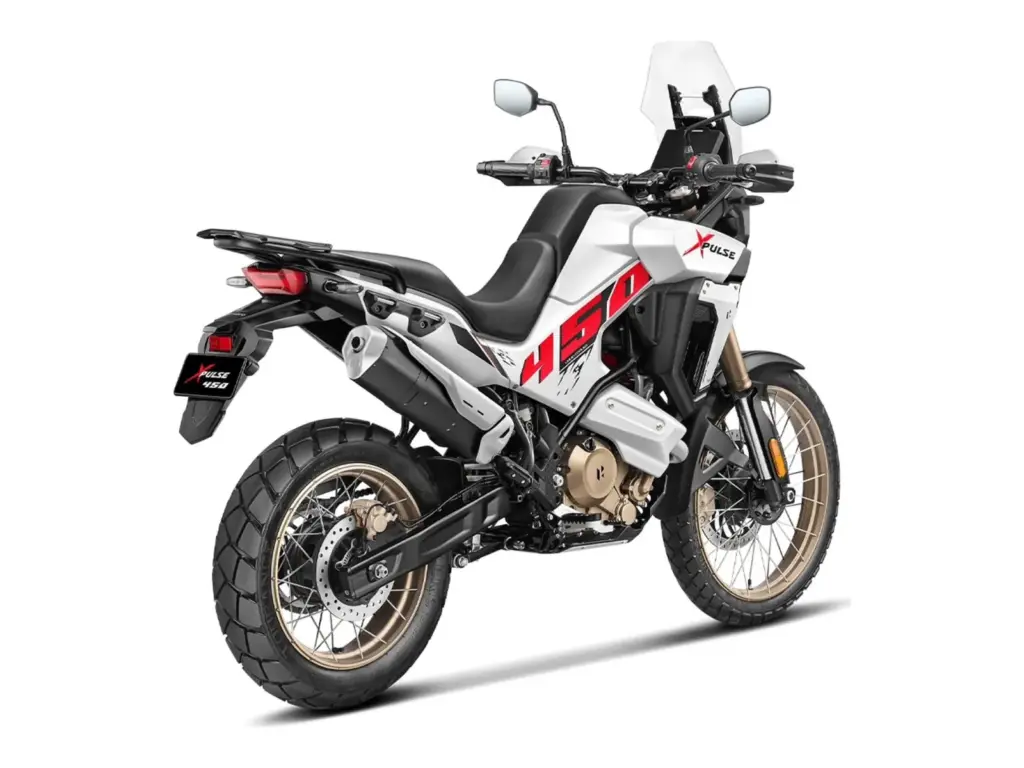
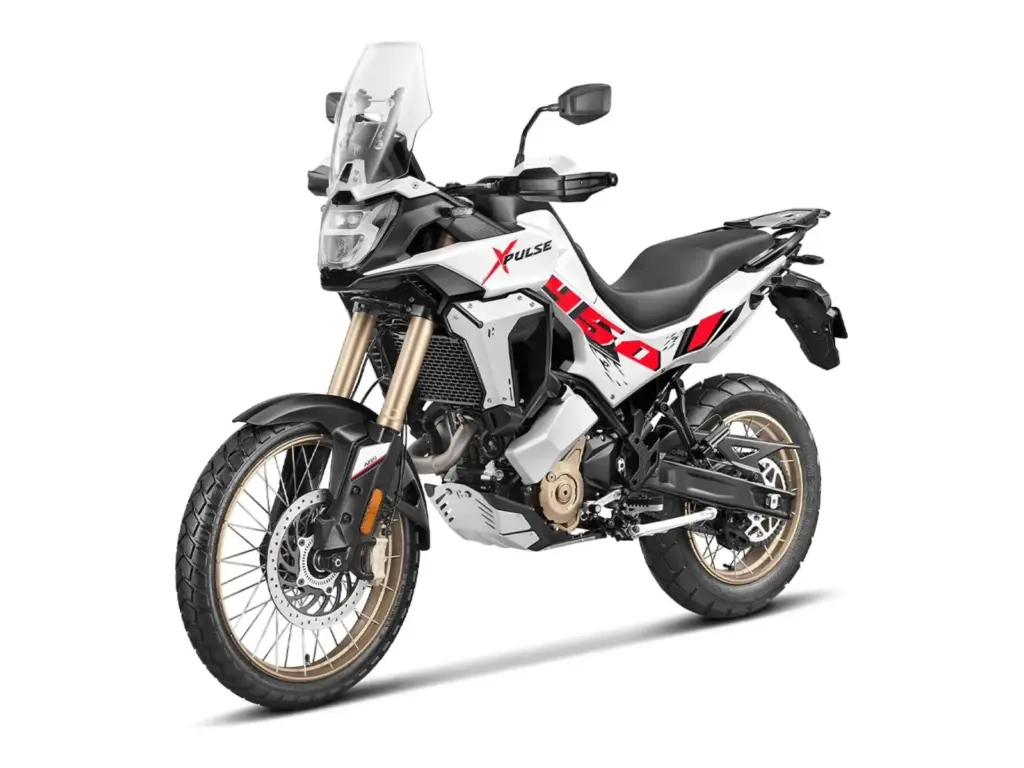
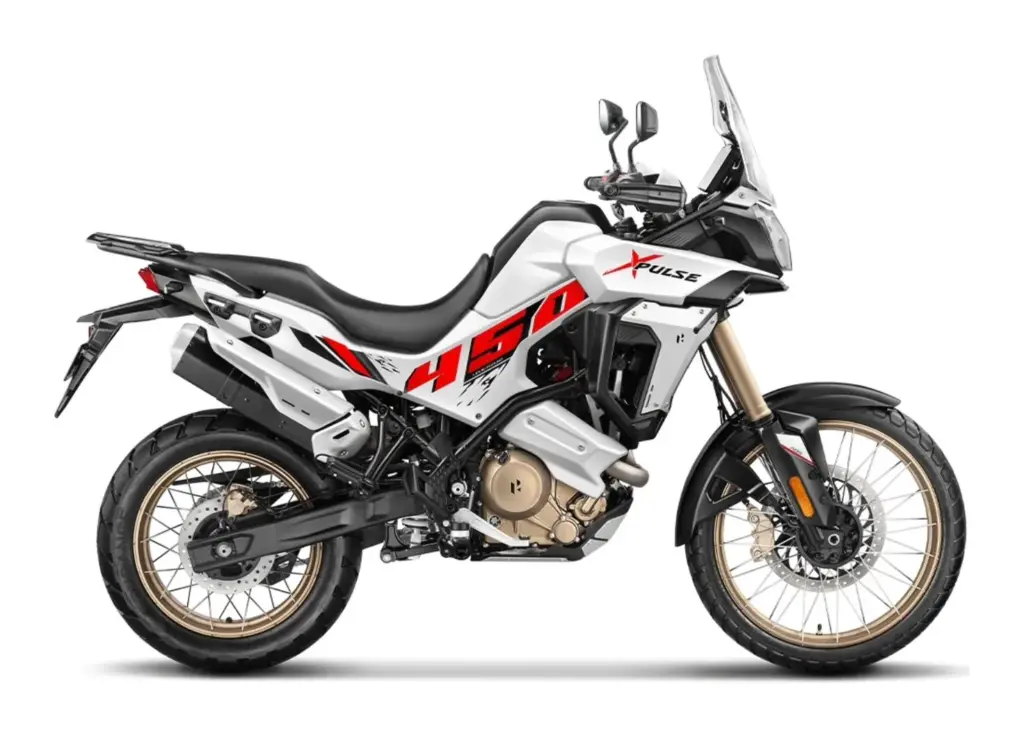
The XPulse 450 runs on tubeless spoked wheels, a 21-inch front and a 17-inch rear, the combination serious off-road riders want, and the same wheel sizes as both rivals. Up front is a 43 mm KYB upside-down fork with 225 mm of travel and 22 steps of compression and rebound adjustment, and Hero describes the suspension as fully adjustable. Hero has not said anything about the rear shock. That 225 mm of fork travel is more than either the Himalayan or the 390 offers, and it matters when a gravel road in the Eastern Cape turns out to have a washed-out donga across it.
Tubeless wheels also let you plug a puncture on the roadside without taking the wheel off, a practical advantage over tubed rims on roads where a sharp stone can end your day long before the nearest town. Carry a compressor and a plug kit all the same.
The price of all that travel is height. BikeWale reports a seat 848 mm off the ground, taller than the KTM and above even the Himalayan’s highest setting. For a shorter rider that is a real consideration at robots, and Hero has not mentioned a lower seat option.
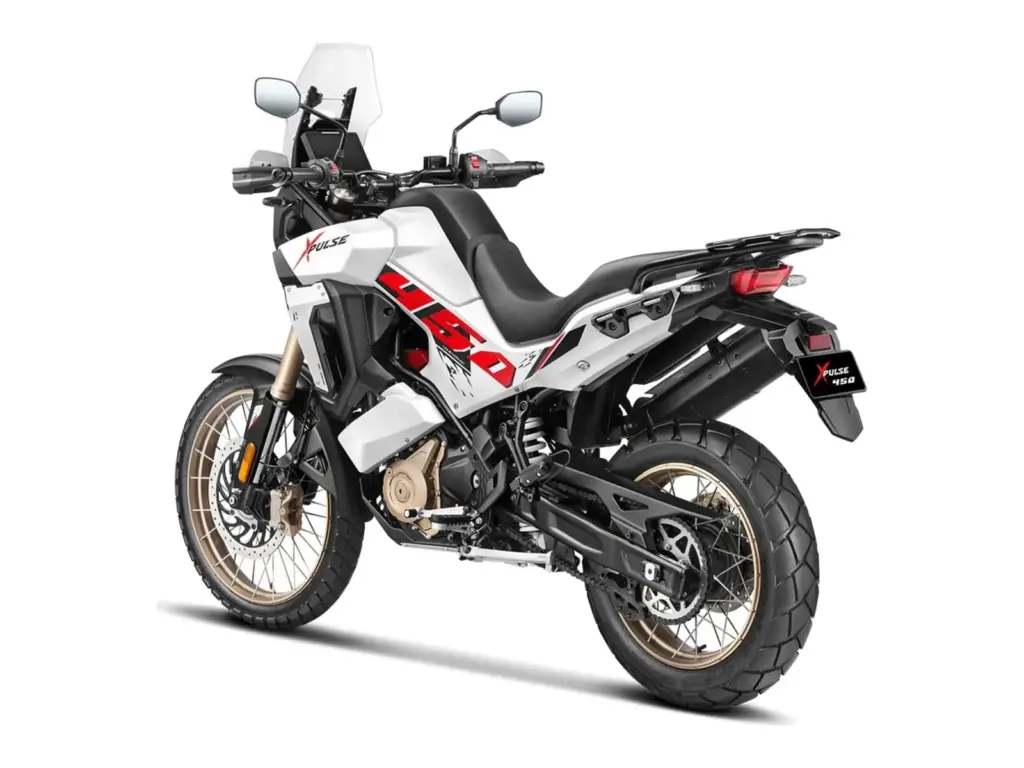
Protection is thoughtfully done. There is a large bash plate, a radiator guard, tubular bars around the front bodywork and, as Rushlane notes, a high-mounted exhaust with a heat shield. Rushlane also reports a rear rack with mounting points along the tail for luggage.
Apple CarPlay on a gravel bike
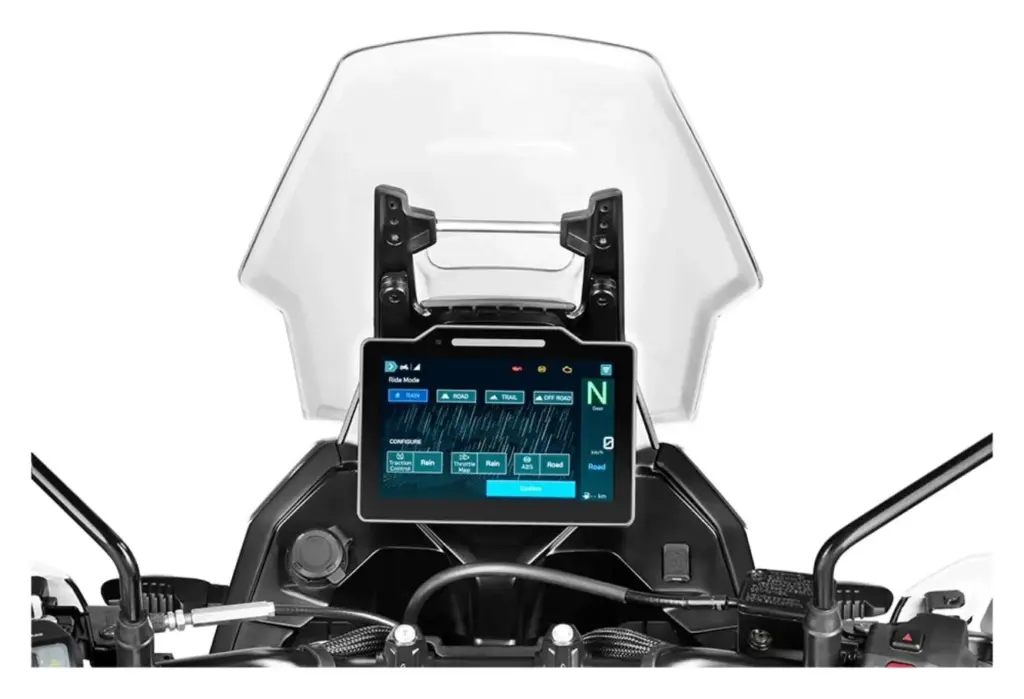
The electronics are where Hero goes beyond its rivals. A large landscape TFT screen runs Apple CarPlay and Android Auto, which ZigWheels calls a first for the category. There are 12-volt and USB sockets for charging a phone or running a GPS.
There are four riding modes, Rain, Road, Trail and Off-road, with adjustable traction control, throttle maps and ABS settings. A Rain mode that softens the throttle is welcome on a wet Durban morning. Whether the settings are intuitive with gloves on, and whether a screen this big reflects in bright African sun, are things only a test ride can show.
Think about where this equipment earns its keep. A rider leaving Gauteng for the Drakensberg spends the first three hours on the N3 in traffic, where a phone map on a decent screen is worth more than any suspension setting. Then comes the dirt road up the pass, where the same rider wants traction control that can be turned down. A bike that does both jobs is the strongest argument for Hero’s approach. The risk is complexity, because dust and vibration are hard on electronics.
Open questions: weight, price and when you can buy one
Hero has not given the weight, the fuel capacity, the rear suspension details or a price. Reports differ on production timing. BikeWale describes the show bike as a prototype, with production versions in the second half of 2027, while ZigWheels expects it to go on sale outside India first and in India early next year. ZigWheels also guesses at a price of around 3 lakh rupees in India, which would put it in the same territory as the Himalayan at 2.85 to 2.98 lakh rupees, according to Autocar India. That is an estimate, not Hero’s number.
Until the missing numbers arrive, there are three things to watch. The kerb weight comes first, because a bike heavier than the Himalayan loses the one advantage a smaller engine should give it. Next is the rear suspension, since a fully adjustable fork does little if the shock is basic. Last is the switchgear and screen after a season of Highveld sun and dust.
Rushlane reports that Hero also showed a smaller XPulse 150 and an XPulse Scrambler concept based on the new platform, which would make the 450 the flagship of a family.
Who the XPulse 450 is really for
The Himalayan 450 has become the sensible choice for riders who want a tough, easy-to-fix adventure bike with a relaxed engine and a generous 17-litre tank. The KTM 390 Adventure is the lighter, sharper choice, for people who care about weight and want the brand. The XPulse 450 appears to be aimed at a third kind of rider: the person who reads the spec sheet closely, wants a big screen and a fully adjustable fork, and is not especially loyal to either badge.
That is a risky position for a maker whose name has been on commuters for decades. Adventure riders are a conservative lot, and a Hero badge on a 21-inch front wheel will raise eyebrows at the Saturday-morning coffee stop. The Dakar association helps, and so will honest long-term reports from owners. If Hero prices it sharply and backs it with parts and service, it could win people over. If it prices it like a premium European bike, it will struggle against badges that already have trust.
Could Hero South Africa bring it here?
Hero is already established in South Africa. Hero South Africa has grown steadily in the commercial and private markets, received new investment from Astoria Investments in 2025 and announced a new leisure range of motorcycles for 2026. It has not said whether the XPulse 450 will be part of that range, and local pricing is still to come. If it does arrive, it would give South African riders another alternative to the Royal Enfield Himalayan 450, which Moto Royale sells here, and the KTM 390 Adventure. Our EICMA 2026 round-up covers the other bikes revealed in Milan.
Our verdict, with the caveat that nobody outside Hero has ridden it, is that the XPulse 450 is the most convincing argument yet that a mass-market maker can build a proper adventure bike. The spec sheet is strong, and the rally programme gives it a story. What will decide it for South African riders is price, weight and whether the dealer network is ready when a customer arrives with a flat on the way to Sani Pass.