
Share your love
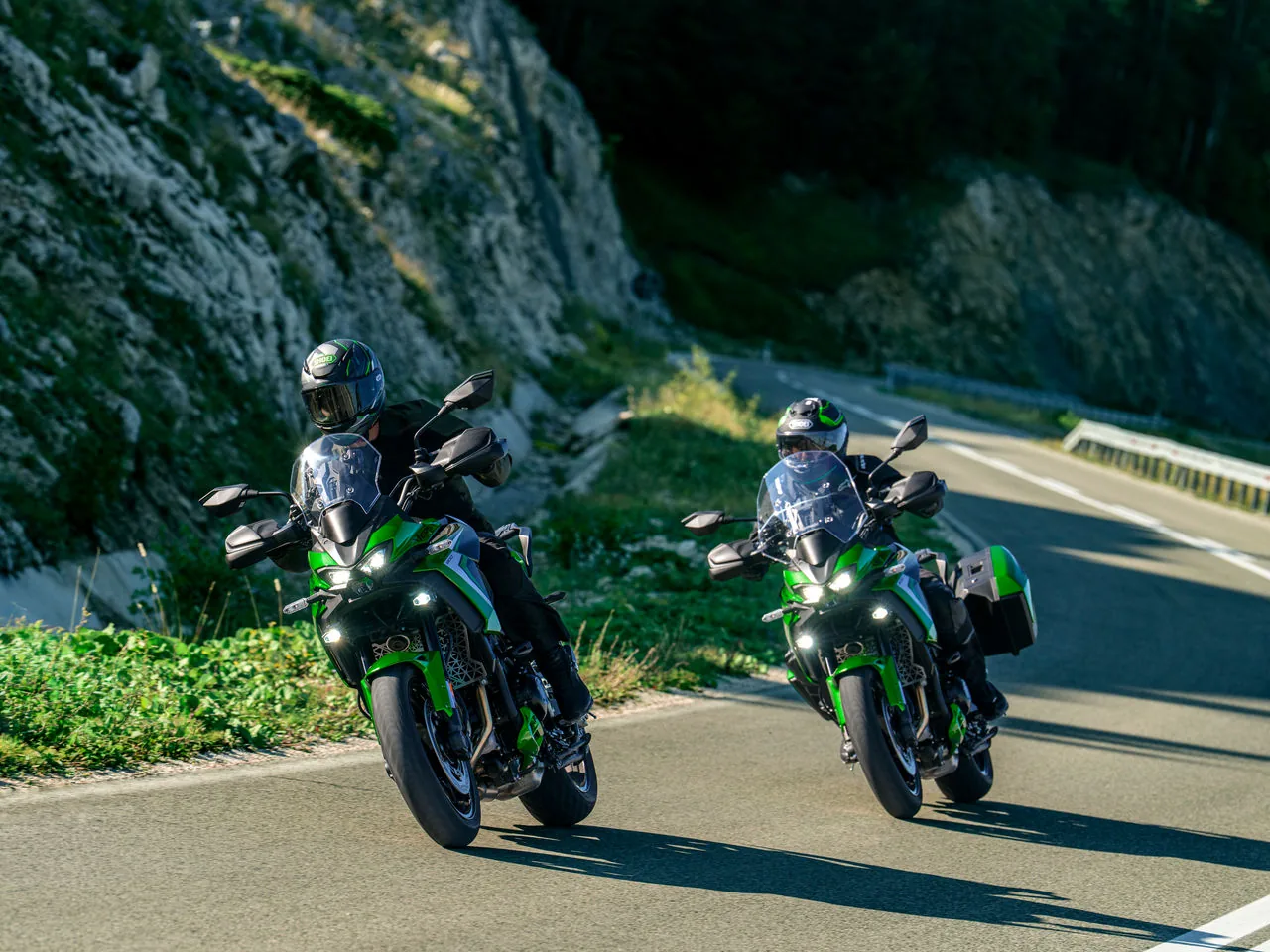
A Z900 You Can Tour On: Kawasaki’s New Versys 900
Kawasaki's new Versys 900: the Z900's 948cc four with 120 hp, a new trellis frame, radar cruise and blind spot detection, the SE, UK prices and local news.
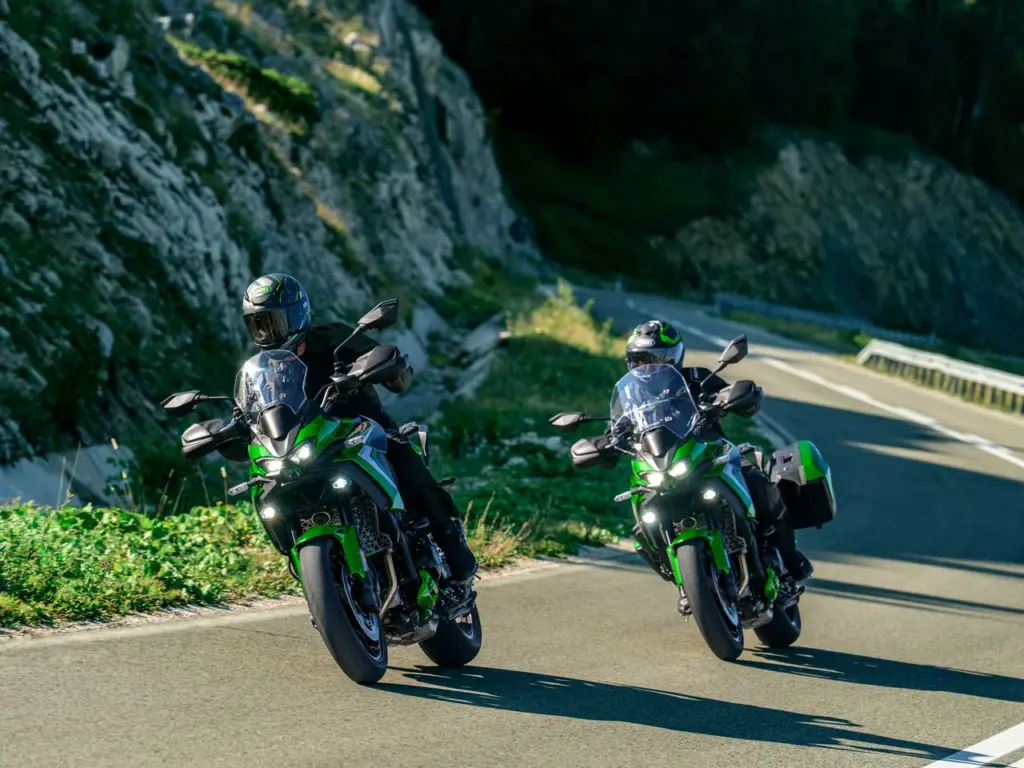
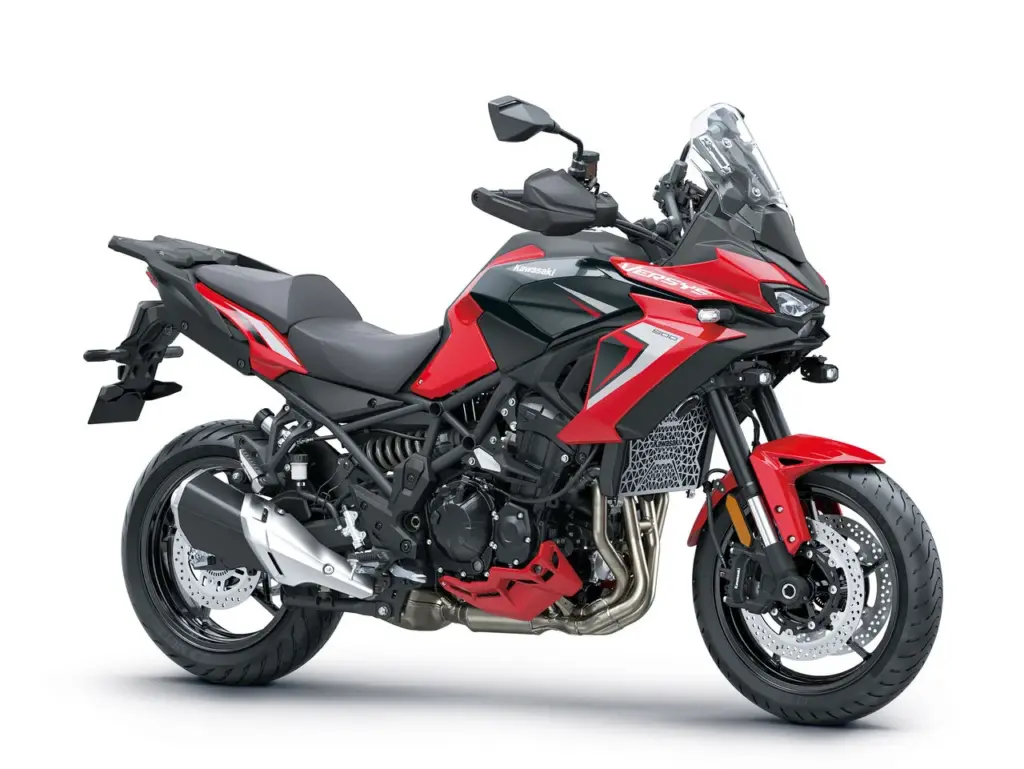
A smooth inline four is the odd one out in a class of twins and triples, and that is the whole case for Kawasaki’s new Versys 900. It brings the Z900’s four-cylinder engine to the touring class, together with radar cruise control and blind spot detection. The Versys line has long had a gap in the middle: the Versys 650 arrived in 2007 as the cheerful twin, and the Versys 1000 followed in 2012 with a four-cylinder engine borrowed from the Z1000. Kawasaki announced the new bike on 13 October, and it is now on show at EICMA in Milan. It is among the more sensible machines in our round-up of the new bikes from EICMA 2026, and in our opinion one of the more interesting.
Kawasaki has taken the engine from the Z900 super naked, which has spent years being a hooligan, and asked it to behave. The company calls the result the most sporting Versys yet. Strip away the marketing and you have a Z900 with a screen, a long-travel chassis, a 20-litre tank and room for a passenger and three cases.
Why a four-cylinder matters in a world of twins and triples
Yamaha’s Tracer 9 and Triumph’s Tiger Sport 800 are both triples, and plenty of other bikes in the class are twins. A triple has a pleasant growl and a punchy middle. A four spins up with a long, even, rising pull, and hums at motorway speed rather than thrumming.
On paper the numbers are close to the Z900: 120 hp (89.6 kW) at 9,500 rpm and 97.3 Nm at 8,000 rpm. The figures that matter to a tourer sit lower down. Motorbox lists the Tracer 9 at 93 Nm and the Tiger Sport 800 at 84 Nm, so the Kawasaki’s torque is no afterthought. It gets a touring tune: long, narrow intake funnels to build low and midrange pull, and a 4-into-1 exhaust voiced to match. Above 6,000 rpm, Kawasaki promises a more direct, linearly rising power delivery.
That matters here. Highveld altitude thins the air and costs every engine some bite, and an N1 overtake behind a truck is when you want an answer without a trip to the redline. In our opinion, a four that pulls from low in the range should suit that job, though we have not ridden it, so treat this as expectation and not a verdict.
Taller gearing, a clutch that forgives and a quickshifter that works in town
Kawasaki has also made the engine lazier on the motorway. According to 1000PS, the final drive is 42/15, against the Z900’s 44/15. That works out to roughly 4.5% fewer revs at the same road speed, which means less buzz through the bar and pegs after two hours at 120 km/h.
A slip-and-assist clutch is standard, so the lever stays light in traffic and a clumsy downshift will not lock the rear wheel. The two-way quickshifter works from as low as 1,500 rpm, so it is useful rolling up to a robot in second gear as well as at full throttle.
The riding modes are Sport, Road, Rain and Rider, there are two power modes, and the Low Power setting trims output to about 75%. Traction control has three levels plus off, and an IMU feeds cornering ABS and Kawasaki’s cornering management.
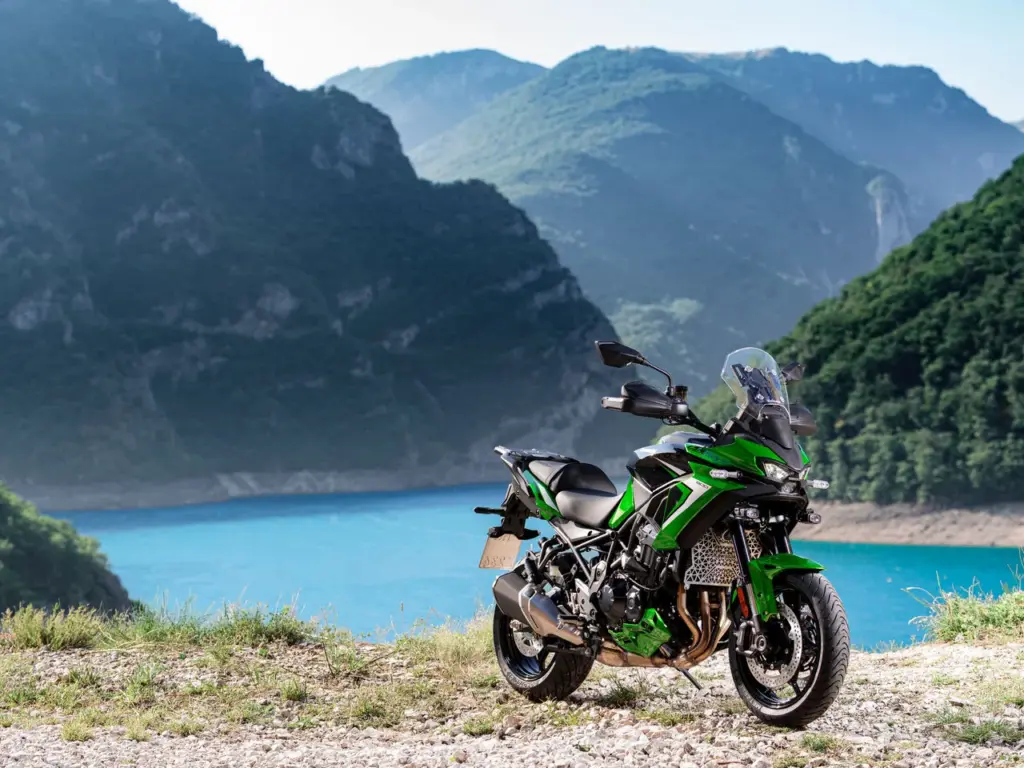
A new trellis frame with the engine bolted in as part of the structure
Under all this is a new steel trellis frame, and Kawasaki has used the engine as a stressed member, bolted in at five points. The rear subframe is a heavy-duty unit, and 1000PS quotes a maximum payload of 220 kg for rider, passenger and three cases together. Weight distribution is aimed at close to 50:50. Kawasaki has not published a weight; 1000PS estimates 225 to 230 kg wet, so expect a bike heavier than the Z900, which 1000PS puts at 213 kg wet. The bigger tank, screen and luggage mounts are the likely reasons.
The suspension is where the Versys name earns its keep. The adjustable 43 mm upside-down fork has 150 mm of travel and the shock 159 mm, with preload and rebound adjustment at both ends and a remote preload adjuster at the back. The remote adjuster sounds like a brochure line until you are crouched beside a loaded bike in a lay-by. Add a wheelbase of 1,550 mm, which is 100 mm longer than the Z900’s, and a rake of 24.5 degrees with 106 mm of trail, and you have a bike meant to stay settled over broken tar while still turning in crisply.
That is relevant. Between one Karoo town and the next the road may run dead straight for 80 km and then turn to patched tar and potholes. Long travel at both ends helps you keep your speed. To be clear, 17-inch wheels and Metzeler Roadtec 01 road tyres mean this is not a gravel bike.
Braking is by twin 310 mm front discs with radial four-piston monobloc calipers and a 260 mm disc at the rear.
Reading the radar: what ACC Lite will and will not do
The Versys 900 is the first Versys with Kawasaki’s ARAS rider aids, and the names are easy to misread.
A radar at the front runs Adaptive Cruise Control Lite and Forward Collision Warning. A radar at the back runs Blind Spot Detection, with lights in the mirrors that flash if you signal while a vehicle is in your blind spot. That is welcome on the N1 or N3, where a taxi can appear alongside you from nowhere.
The word to focus on is “Lite”. The cruise control holds a speed you set and lets you choose one of three following distances. When a slower vehicle appears ahead, it eases the throttle to hold the gap. What it does not do is use the brakes. 1000PS contrasts it with the fuller system on the Ninja H2 SX, and says the Versys “does not apply the brakes on its own”. In practice, if traffic ahead slows more sharply than the engine alone can manage, the job of braking is still yours.
Forward Collision Warning follows the same logic: it warns, and that is all. It is a second pair of eyes, not an automatic emergency brake. We think the honest way to view the pair is as a fatigue-reducer for long stints, such as Beaufort West to Colesberg, and not a replacement for attention.
The Emergency Stop Signal is simpler and arguably more useful: it flashes the indicators rapidly under hard braking to warn whoever is behind you, which counts when that is a loaded truck.
Screen, seat, bar and tank: the long-day kit
The handlebar is wide and rubber-mounted, the footpegs are rubber-topped and the rider and passenger have separate seats. The seat adjusts without tools between 825 and 845 mm, and an accessory high seat adds another 20 mm. The screen adjusts through seven positions over 48 mm of movement, and an accessory screen 98 mm taller is available.
The tank holds 20 litres, three more than the Z900’s 17. Against the Tracer 9’s 19 litres and the Tiger Sport 800’s 18.6, that is a small edge, which counts when the next pump is far off. Neither Kawasaki UK nor 1000PS gives a fuel consumption figure, so range stays open until road tests arrive.
A 5-inch colour TFT dash offers two layouts, one built around the rev counter and one that puts navigation first, and connects to the RIDEOLOGY app for turn-by-turn directions, maintenance and ride logs.
The SE, the SHAD cases and the dealer-fitted editions
The standard Versys 900 comes in Metallic Spark Black or Pearl Robotic White. The SE comes in Plasma Lime Green with black, or Firecracker Red with grey, and has the same engine, suspension and electronics. What it adds is the accessory list a tourer is likely to want: LED fog lights, hand guards, heated grips, a radiator guard, frame sliders, a lower fairing and a centre stand. If you would fit most of those anyway, the SE package makes sense, and heated grips are worth having on a winter morning on a Lesotho pass.
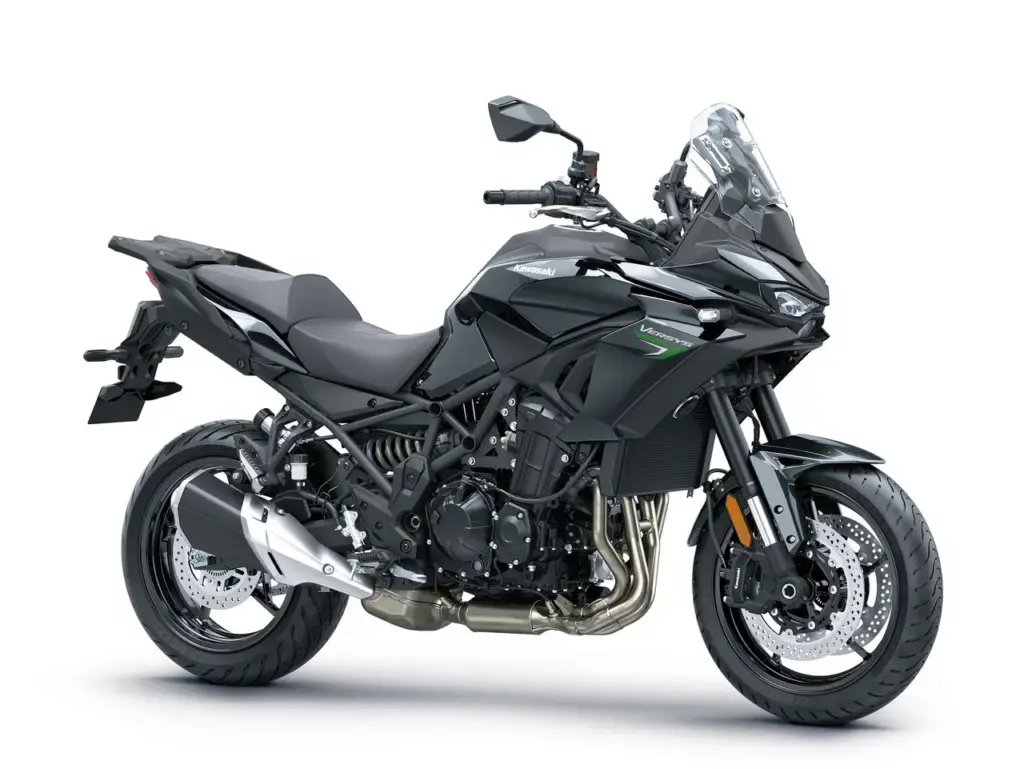
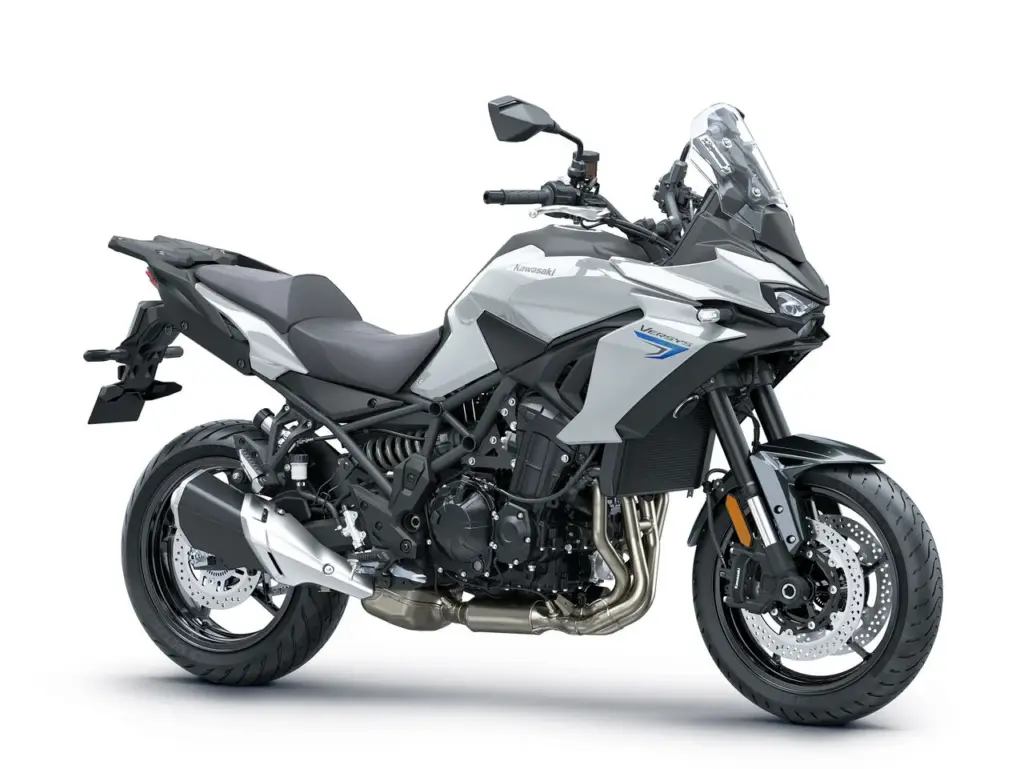
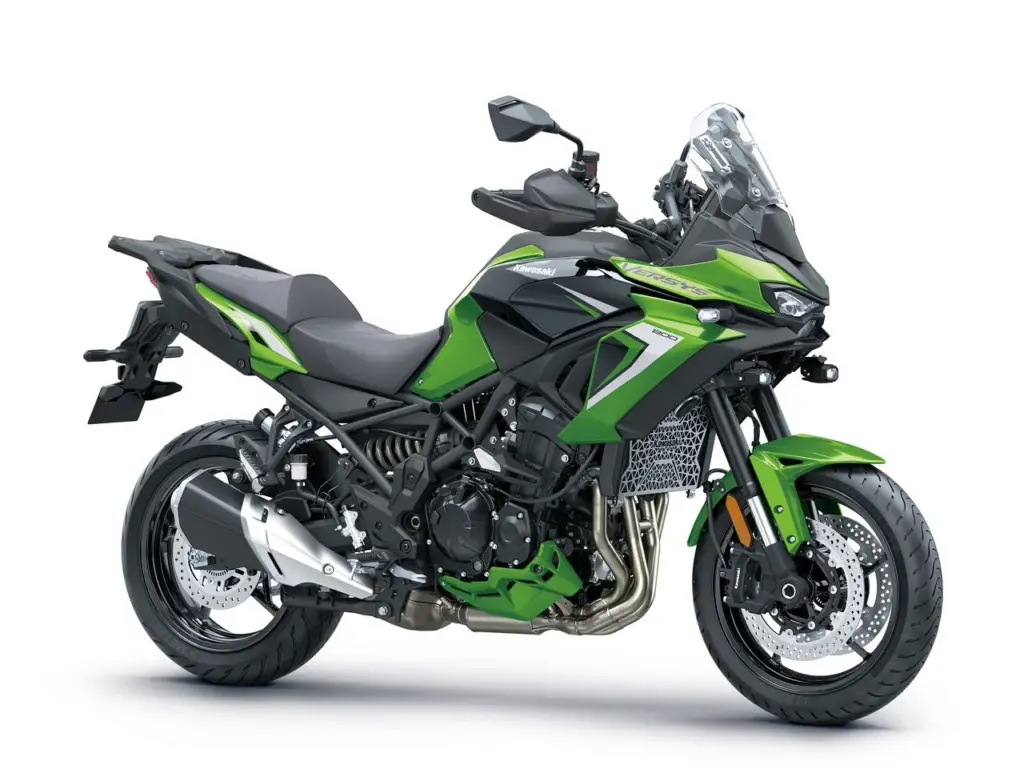
Luggage comes from SHAD. A 47-litre top box and a pair of 32-litre panniers can all be fitted together, which is what that subframe was designed for. 1000PS says the top box takes two full-face helmets, the mounts are damped and all three cases open with the ignition key. Dealers will also offer Tourer and Grand Tourer editions assembled from genuine accessories, though the exact specifications have not been announced.
Against the triples, on price
Kawasaki’s UK prices are £10,899 for the Versys 900 and £11,799 for the SE, with bikes arriving from April 2027. In Germany, 1000PS lists €12,795 and €13,695. Motorbox’s Italian list puts the standard Versys at €12,890, against €12,199 for the Tracer 9 and €12,095 for the Tiger Sport 800, so the Kawasaki is not the cheapest in the class on that list. What you pay for is the four-cylinder engine, the radar and the long-travel suspension. If you have always wanted a Z900 you could take to Namibia, this is that bike.
Is the Versys 900 a South African bike?
Kawasaki South Africa has not announced the Versys 900 or a local price, so there is no rand figure to quote yet. The Versys name is well established here, and on paper the 900 suits long distances, heat and passengers who expect to arrive comfortable.
It is a tar bike, though, and it should be judged as one. If your idea of a tour includes gravel on most days, Kawasaki’s other new machine, the KLE650 with its 21-inch front wheel, is the better fit. If you stay on the blacktop and want a motor with real character and kit that reduces fatigue on long days, the Versys 900 is worth waiting for.