
Share your love
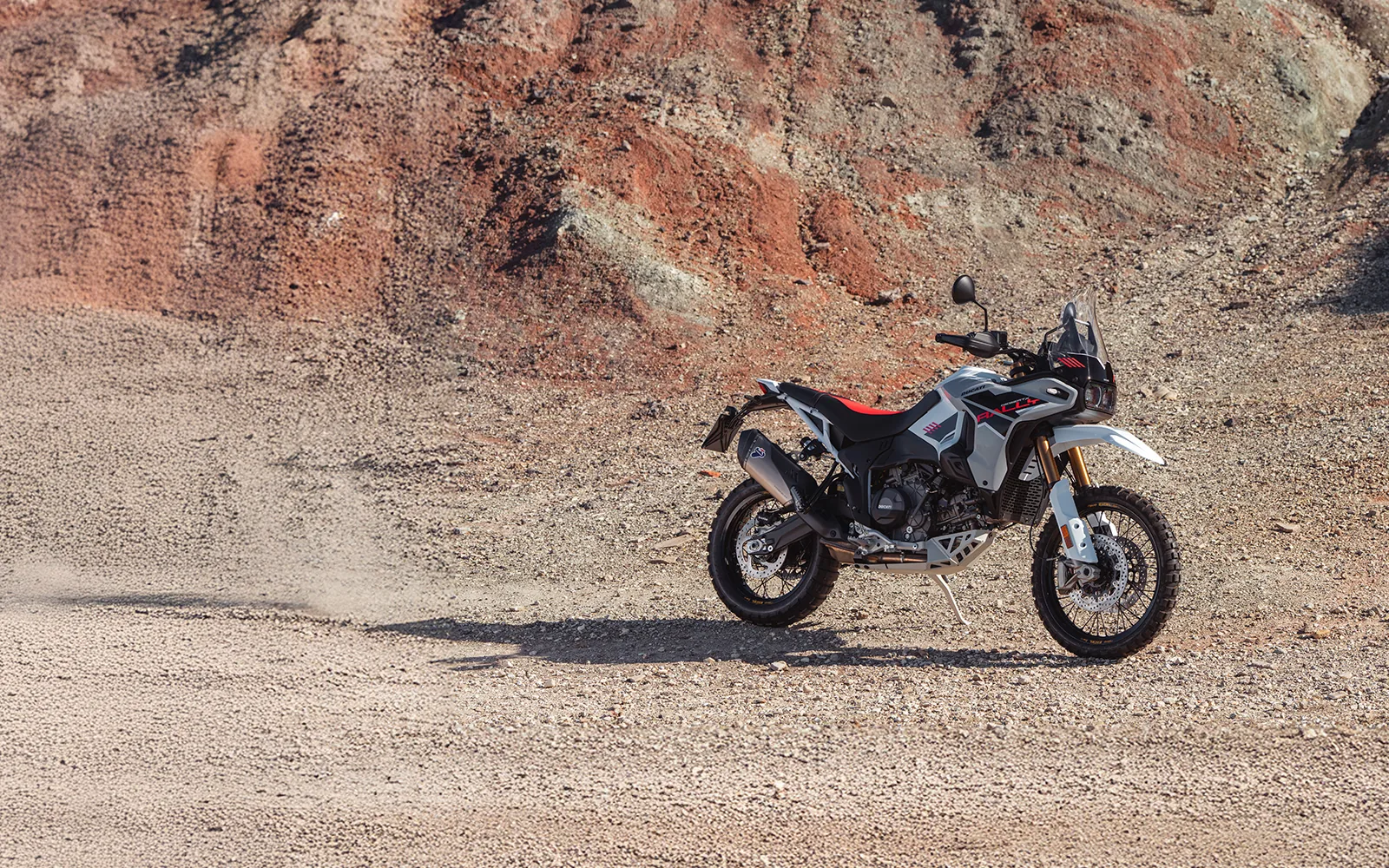
Ducati’s DesertX Rally Trades Its Old Twin for the V2 and Gets Even Tougher
Ducati's second-generation DesertX Rally: the new 890cc V2 with 109 hp, 250 mm KYB suspension, Takasago tubeless wheels, full specs, UK price and local news.
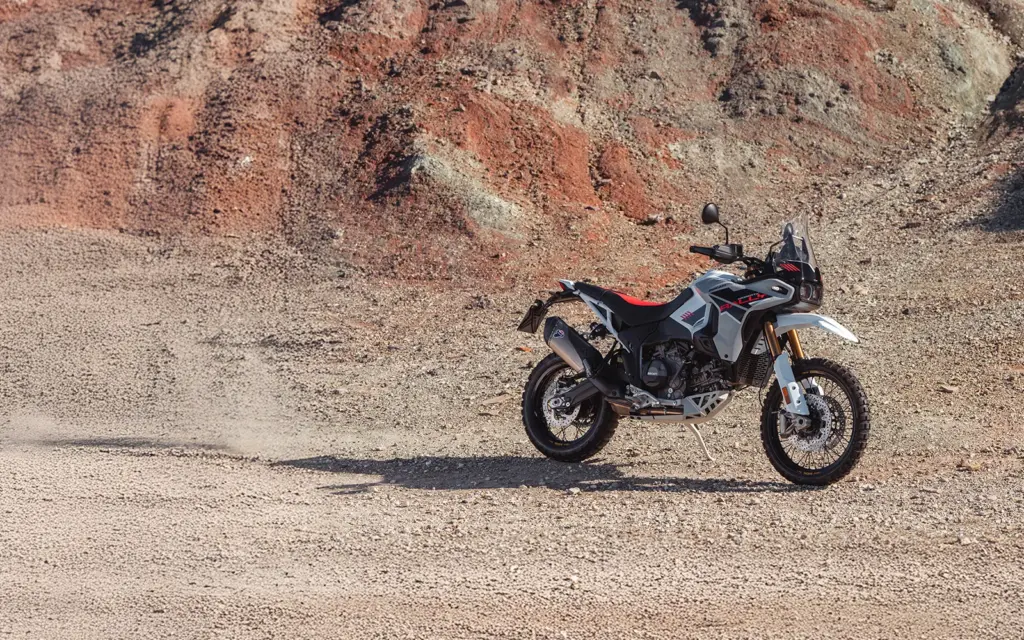
Ducati did not look like a dirt company when it showed the DesertX concept at EICMA in 2019, and plenty of riders expected a Panigale builder to produce a road bike in a dusty costume. The production DesertX was revealed at the end of 2021 and quietly proved them wrong. Two years later came the first DesertX Rally, ridden by the multiple Enduro world champion Antoine Meo, whose prototype won the twin-cylinder class of the Iron Road Prolog at Erzbergrodeo 2023.
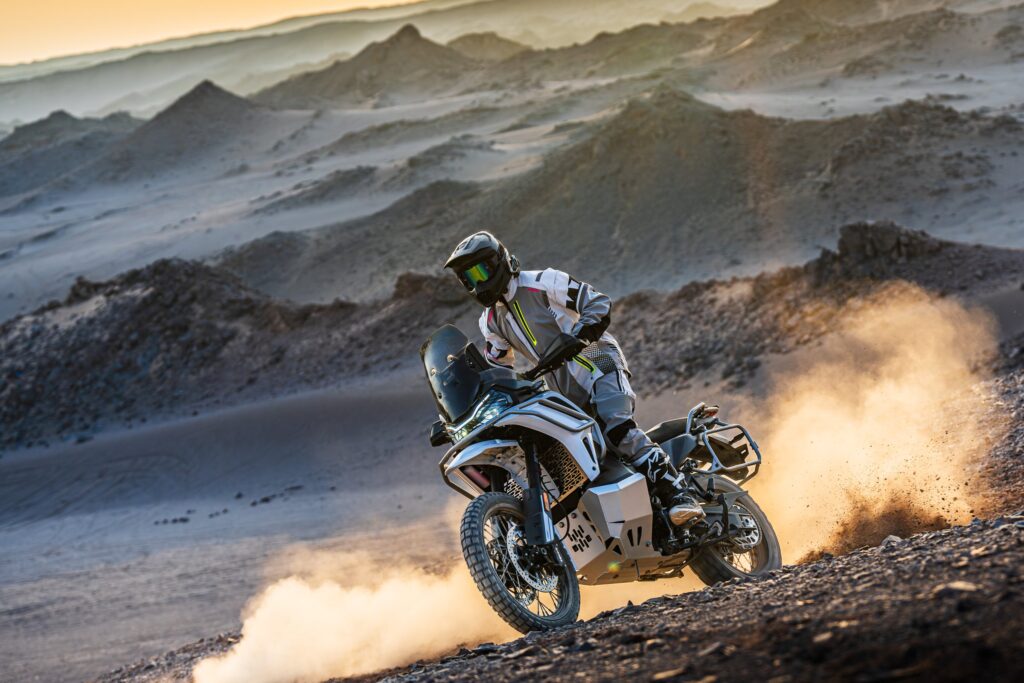
Now there is a second Rally. On Monday evening in Milan, as one of five new models Ducati showed before EICMA opened (the wider story is in our EICMA 2026 round-up), the company revealed the second-generation DesertX Rally. It swaps the old 937cc Testastretta for the 890cc V2 that now powers the standard DesertX, and it keeps everything that made the Rally the extreme end of the range. What follows is a gravel rider’s reading of the spec sheet. Every figure is Ducati’s own claim, taken from its UK pages, and none of it has been tested by us.
A lighter twin that pulls from walking pace
Ducati calls the new 90-degree, 890cc V2 its lightest four-valve twin yet. On paper it makes 109 hp (81.1 kW) at 9,000 rpm and 92 Nm at 7,000 rpm, but the peak numbers are the least interesting part of the story. Ducati says 70% of the torque is available from 3,000 rpm, and its Intake Variable Timing system keeps the engine smooth and controllable from as little as 2,000 rpm.
Picture what that is for. You are on a loose, rocky climb above a Lesotho pass, in second gear, standing on the pegs, with the front wheel looking for a line between two boulders. A twin that pulls cleanly at 2,000 rpm lets you creep up the climb instead of blipping and lurching, and the hard part becomes choosing the line rather than fighting the throttle. Whether the V2 really delivers that manner is something only a ride will settle, but the intent suits a bike that spends most of its working life below 40 km/h on bad ground.
There is a Highveld angle too, and this part is our opinion. An engine that makes its useful torque early should cope with thin air at altitude better than one you have to rev hard to feel alive, and a lot of the best gravel in this country sits well above sea level.
Shorter first, taller sixth
The gearbox has been reworked in both directions. First and second are shorter for better low-speed control, especially with luggage on board, while fifth and sixth are taller. At 130 km/h in sixth the engine turns at about 5,800 rpm, lower than before.
That split matches how these bikes are really used here. A typical Karoo day starts with a couple of hundred kilometres of tar to reach the dirt, spends hours in second and third on rutted farm roads, and ends with the same tar back to the guesthouse. Short bottom gears for the rocks and a calm top gear for the N1 are the right compromise, and 130 km/h is a little above our 120 km/h limit, so the sixth-gear figure is a measure of how relaxed the bike should feel at legal speeds. A new flywheel smooths the delivery further, and a Termignoni titanium silencer comes as standard.
Twenty extra millimetres where the corrugations bite
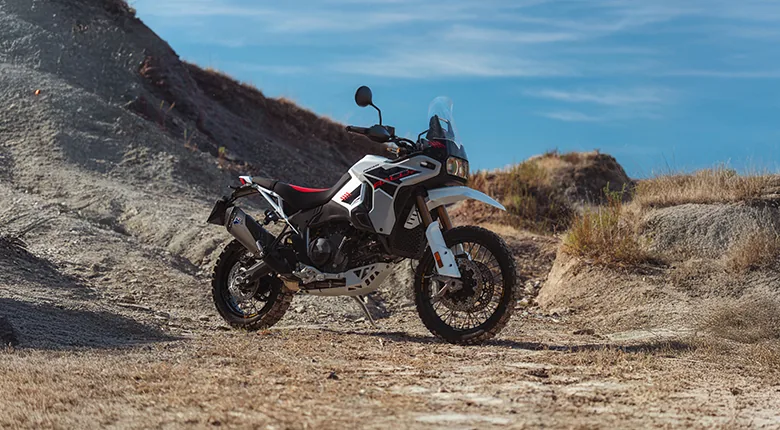
This is where the Rally earns its name. The 48 mm closed-cartridge KYB fork gives 250 mm of travel, 20 mm more than the standard DesertX, with a pressurised oil chamber for a supple start to the stroke and firm support deeper in. It is adjustable for compression and rebound, with a quick compression adjuster that should make changes mid-ride less of a chore. The tubes carry Kashima and DLC coatings to cut friction, which matters most on the small, repeated hits of washboard, where a sticky fork shakes your wrists to pieces.
At the back, a fully adjustable KYB shock with a Full Floater linkage gives 240 mm, again 20 mm more than the standard bike. It has high and low-speed compression, rebound and remote preload adjustment, so changing the setup for a full set of panniers should be easier than on a conventional preload collar. An adjustable Öhlins steering damper is standard, the sort of component you only appreciate when the front wheel hits a rut at speed and tries to wrench the bars out of your hands.
Set against the standard bike, the Rally’s bash plate is 1.5 mm thicker, while the 18-litre tank stays the same.
Tubeless spokes tucked away from the rocks
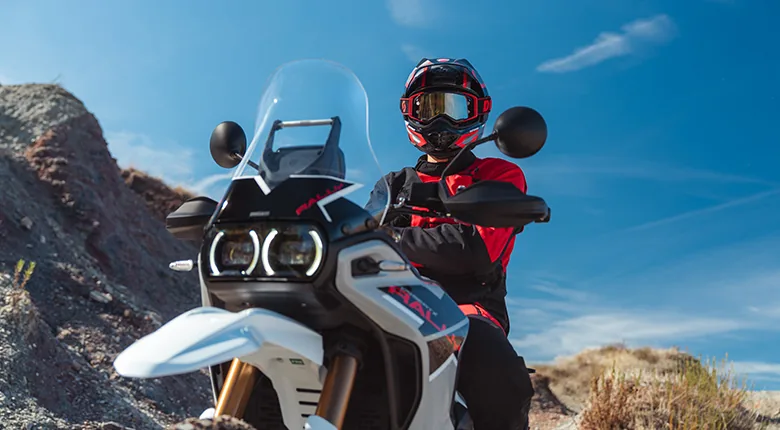
The wheels are Takasago Excel spoked rims, 21-inch at the front and 18-inch at the rear, and they are now tubeless. That is a genuine help for anyone who has ever sat beside a Karoo track in forty-degree heat, levering a tyre off a rim after a thorn went through. The spokes are mounted inside the rim to protect them from rocks, the wheels are lighter than the standard DesertX’s, and the 36-spoke pattern has four more spokes at the back than the previous Rally. Pirelli Scorpion Rally STR tyres are fitted as standard.
Tubeless spoked wheels are not magic, and a hard hit can still dent a rim or break a bead. But being able to plug a hole and pump the tyre up beats a roadside tube change, and that is the kind of boring improvement that decides whether a long trip ends on schedule.
Built to survive the first fall, and the second
Ducati has clearly thought about what happens when a loaded bike goes over at 15 km/h in a sandy riverbed. The 18-litre plastic tank has built-in impact protection. The 4 mm aluminium bash plate is 1.5 mm thicker than the standard bike’s and gains an extra mounting point. The body panels are coloured right through rather than painted, so scratches do not show the way they would on a painted panel, which is useful when the bush scrapes along the side of the bike for hours.
Maintenance has been considered too. The air filter is easy to reach for cleaning, which counts for a lot on dusty gravel, and the rear axle nut no longer needs a special tool, so fixing a puncture far from home is much simpler. A high front mudguard, a one-piece rally seat and the Rally livery complete the package.
The bike weighs 209 kg without fuel, and the seat is a tall 900 mm, or 880 mm with the low seat. Tank capacity is the one place where our opinion is a little less enthusiastic: 18 litres is not huge for the distances between fuel stops in the Northern Cape. For comparison, Triumph lists 240 mm of front travel, 230 mm at the rear and a 20-litre tank for its Tiger 900 Rally Pro, the rival that BRM names alongside the KTM 890 Adventure R. On paper the Ducati has the longer travel, and the Triumph has the bigger tank.
Enduro mode and what 74 hp is for
A six-axis IMU runs cornering ABS with four levels, eight-level traction control, four-level wheelie control and three-level engine brake control, along with the second-generation Ducati Quick Shift. There are six riding modes, and two of them matter here. Enduro cuts power to about 74 hp with sharp throttle response, sets ABS low with the option of switching it off, and turns off wheelie control. Rally gives full power, sets traction control low enough for controlled slides and also lets you switch the ABS off. Sport, Touring, Urban and Wet cover the tar.
Our reading is that Enduro is for technical work, such as wet rocks, tight switchbacks and sandy turns where a handful of throttle would be a mistake, while Rally mode is for fast, open gravel where you want every one of those 109 hp (81.1 kW) and room to hang the rear out. Wet mode will earn its place after a Drakensberg thunderstorm turns the tar into glass.
A 5-inch colour TFT screen with Road, Road Pro and Rally display modes sits where you can read it standing up, with a utility bar above it for a GPS, and there are USB-A and USB-C sockets to keep devices alive.
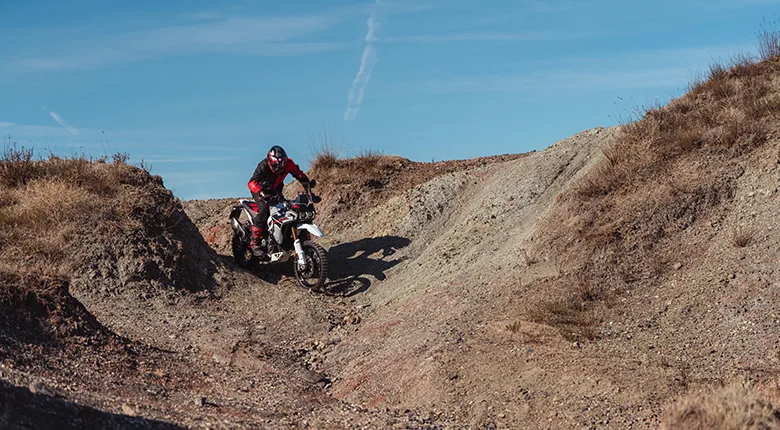
Enduro mode cuts power to 75 hp and lets you switch the ABS off. Image: Ducati 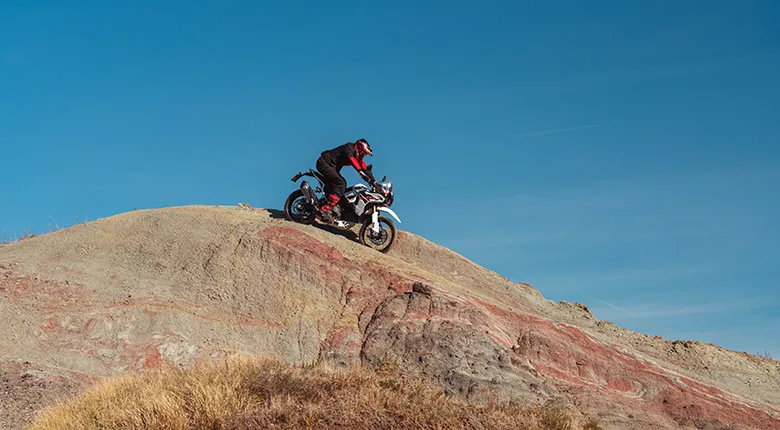
Ducati says 70% of the torque is there from 3,000 rpm. Image: Ducati 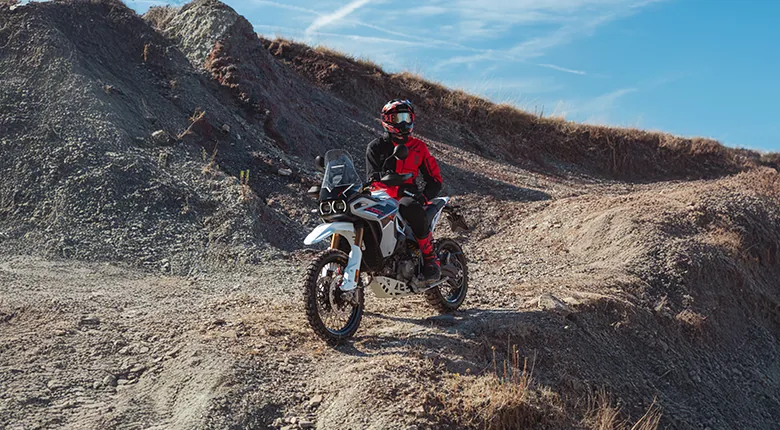
Takasago Excel tubeless spoked wheels, 21-inch front and 18-inch rear. Image: Ducati 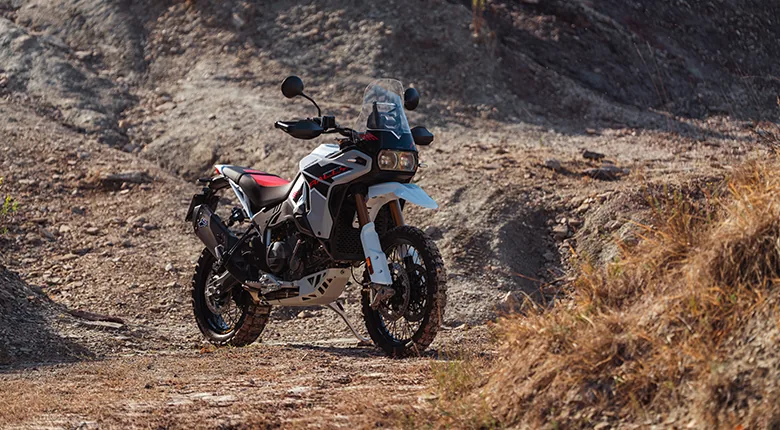
The seat is 900 mm, or 880 mm with the low seat. Image: Ducati 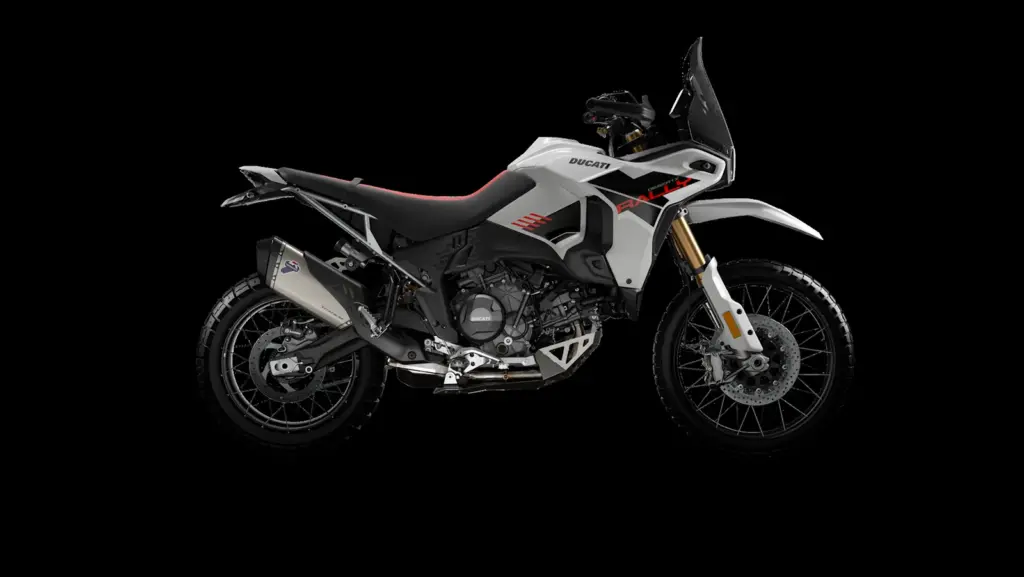
The new DesertX Rally, now on Ducati’s 890cc V2. Image: Ducati 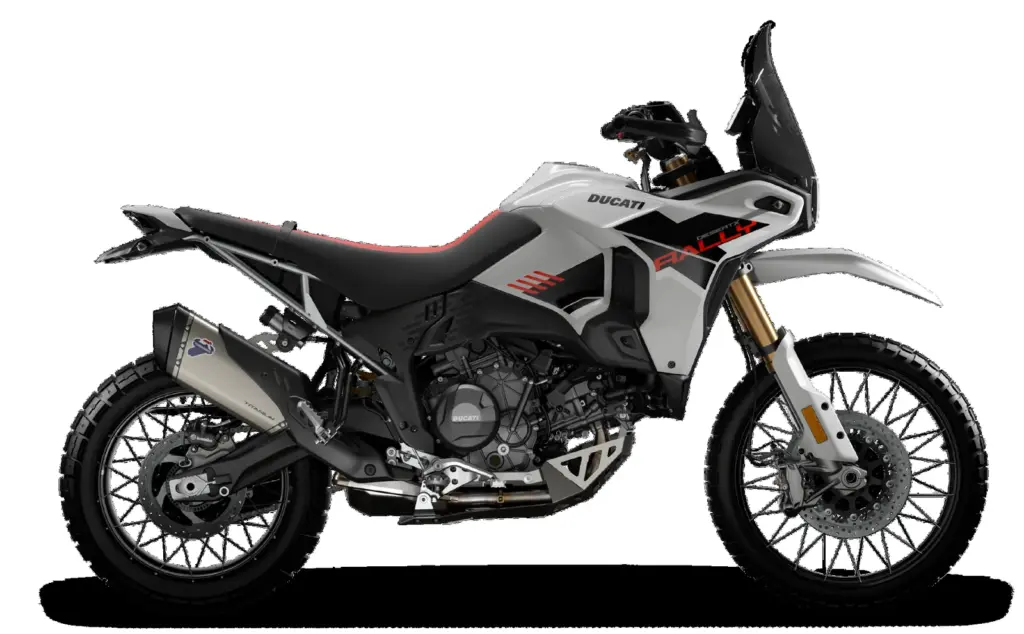
Tubeless Takasago Excel wheels and an Öhlins steering damper come as standard. Image: Ducati
Who should pay for the Rally, and who should not
In the UK the DesertX Rally costs £17,995 and carries a four-year warranty with unlimited mileage. Ducati also offers a version restricted to 35 kW for European A2 licence holders, which has no bearing on riders here.
Ducati is now imported into South Africa by Volkswagen Group South Africa, which acquired the local import and sales rights in 2025 and works through existing dealers in Centurion and Cape Town. Its dealers sell the current DesertX range, but the new Rally has not been announced locally, and there is no South African price or date yet.
Our view is that the Rally makes the most sense for riders who spend real time on rough gravel, sand and mountain passes, who want a fully adjustable machine and who will use the extra travel and protection regularly. If you plan trips such as Lesotho, Namibia or the Transkei, and you ride the rough roads between them rather than the tar, the Rally’s long travel and tubeless wheels are made for you. If most of your riding is on tar with the occasional dirt road, the standard DesertX, with its lower seat and road-friendlier setup, may be the better buy and should cost less.
Whichever you lean towards, the seat height will be the biggest question. At 900 mm, or 880 mm with the low seat, a test sit at a Ducati dealer is essential before any money changes hands.