
Share your love
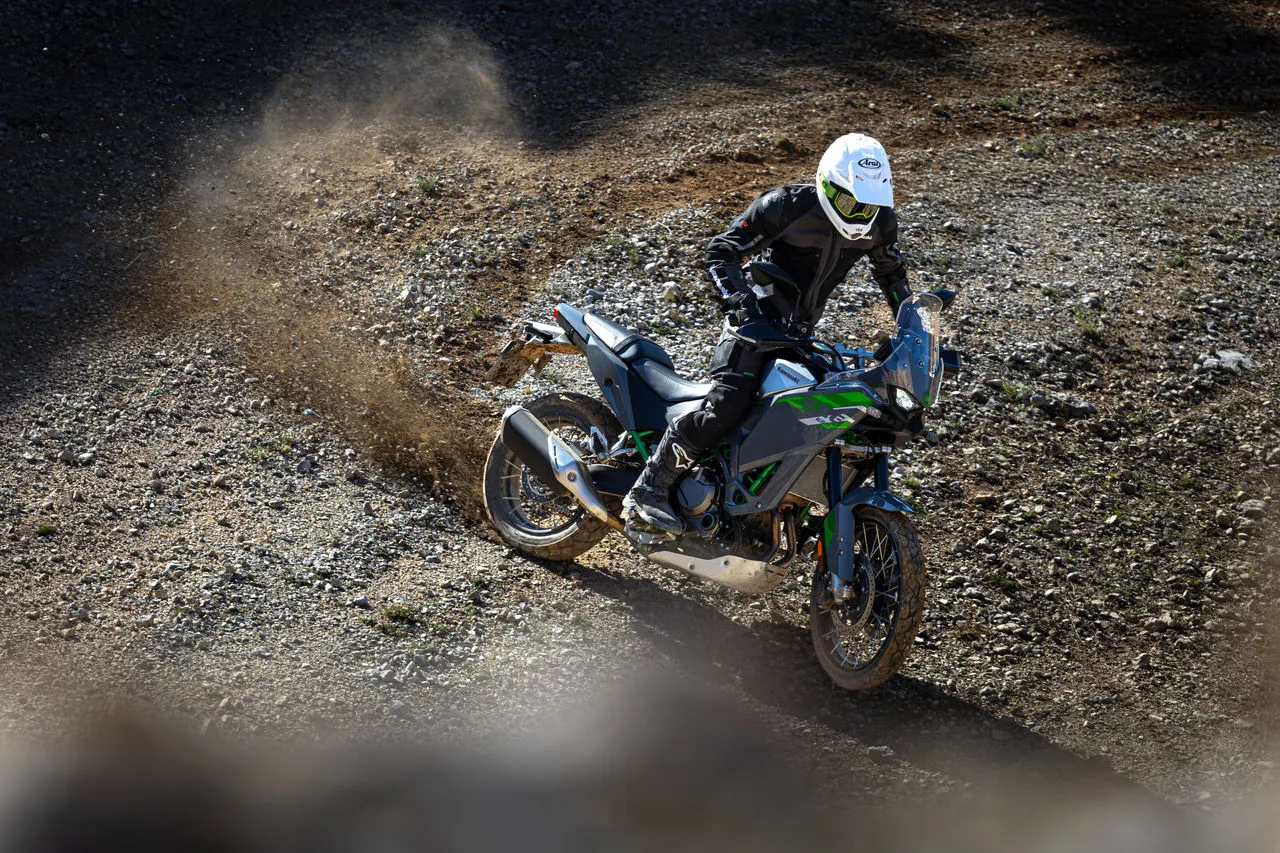
Kawasaki’s KLE650 Takes Aim at the Ténéré 700
Kawasaki's new KLE650: the 649cc twin with 70 hp, a 21-inch front wheel, cruise control and traction control, the SE version, UK prices and the local picture.
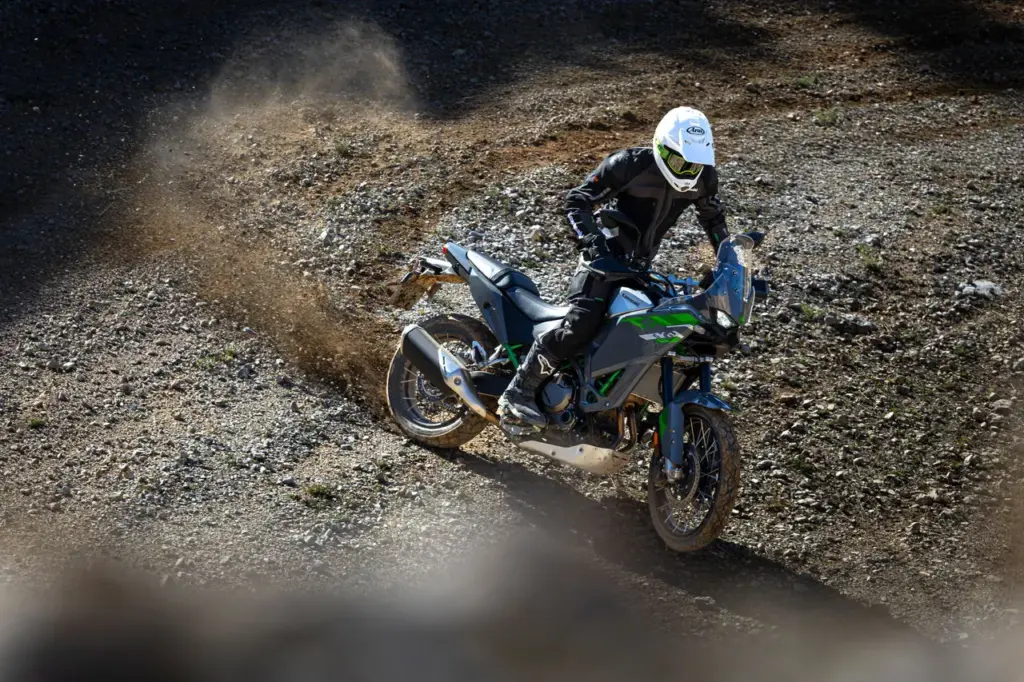
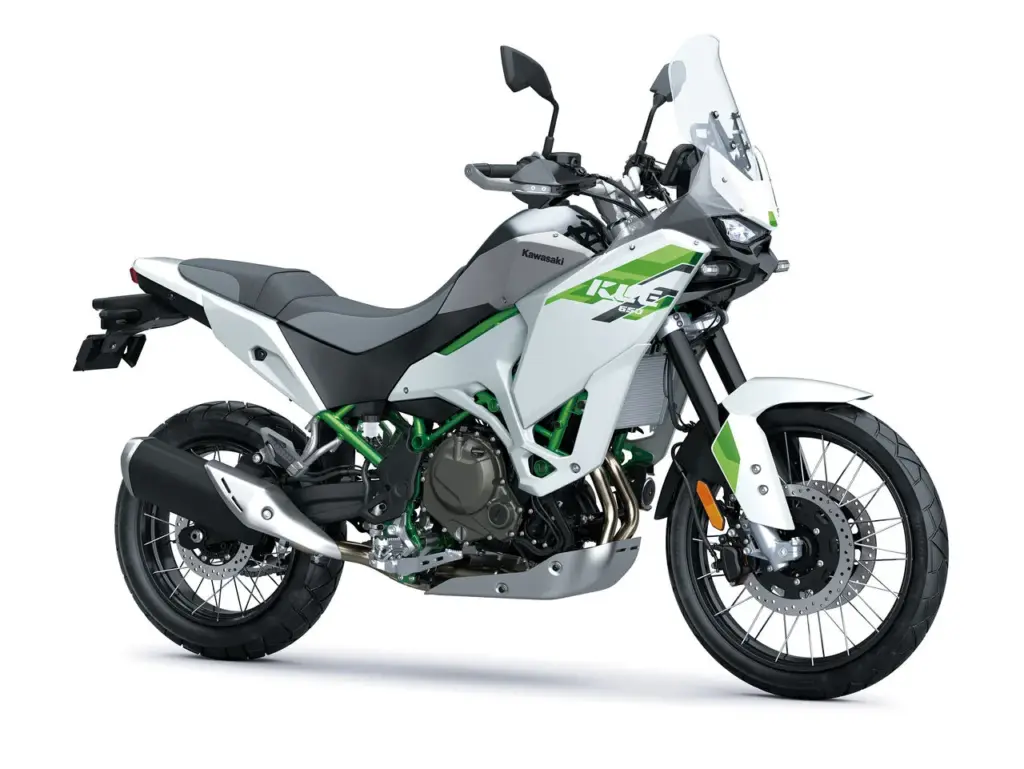
Walk through a Kawasaki showroom in South Africa and the adventure corner has a hole in it. The Versys 650 is a road bike with long legs, not something you point at a Lesotho pass on purpose. The KLR650 is a tough single from another era. The newer KLE500 is a friendly, light bike for people taking their first steps off the tar. What Kawasaki never had was the machine Yamaha’s Ténéré 700 has owned for years: a middleweight twin, a 21-inch front wheel and enough comfort to cover a few hundred kilometres before lunch. On 27 October it finally built one. The KLE650 is on show at EICMA in Milan this week, and there is no mystery about whose lunch it wants to eat.
Kawasaki is refreshingly direct about the brief. Its European page says the bike is built to deliver “the highest level of touring comfort” among 600 to 800cc models with a 21-inch front, and Kawasaki UK calls it the company’s first rally-inspired adventure tourer to use a next-generation middleweight engine. Read that as a statement of priorities: a long-distance bike first, a dirt bike second. For most of us that is the honest order anyway. A typical adventure bike here spends its year on the N1 and N12 and a handful of weekends on gravel.
Why a 21-inch twin is the sweet spot
The recipe works because it is forgiving at both ends. A big front wheel rolls over Karoo corrugations and pothole edges that would stop a smaller one, and a twin in the 650 to 700cc range is light enough to pick up when you drop it in sand, yet strong enough to hold 120 km/h with a loaded bike and a headwind. In our opinion, that balance is why the Ténéré 700 became the class reference. Visordown, reporting the launch, expects Royal Enfield’s Himalayan 750 to be another natural rival, so the KLE650 arrives into a class that is getting more crowded, not less.
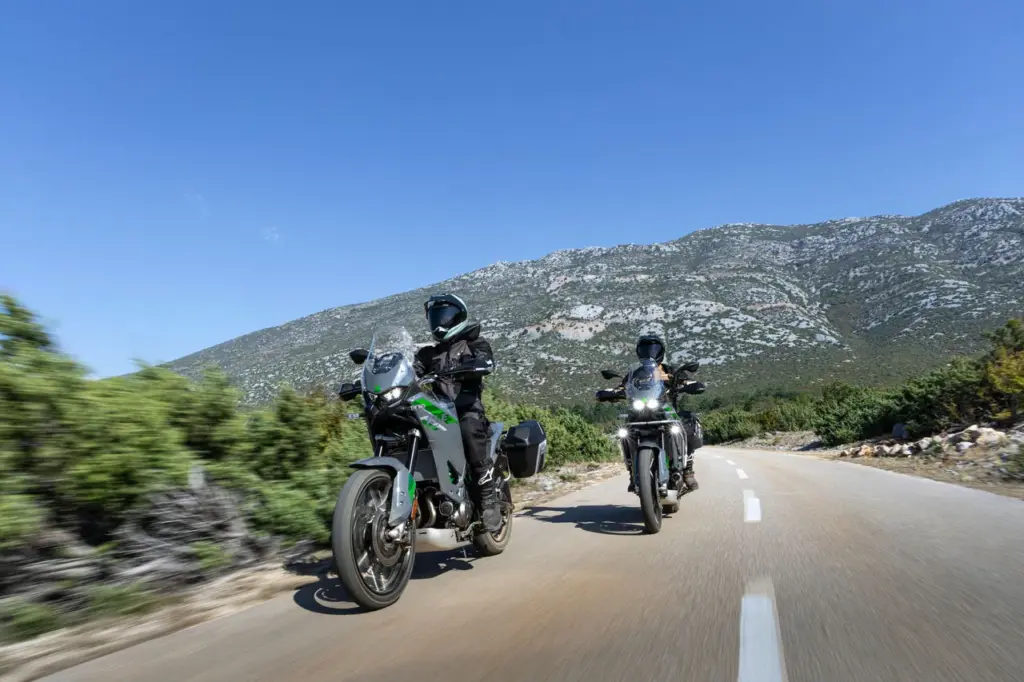
A familiar twin with a new job
The engine is Kawasaki’s 649cc liquid-cooled parallel twin, the same family that powers the Versys 650, Z650 and Ninja 650, and it has built a long record of reliability in those bikes. For the KLE650 it gets electronic throttle valves and a retuned intake and exhaust. Kawasaki quotes 70 hp (52 kW) at 8,600 rpm and 64 Nm at 7,500 rpm, and promises strong low and midrange torque with smooth, linear response. A six-speed gearbox drives a sealed chain.
Here is where we reserve judgement. The torque peak sits high in the rev range, and Yamaha’s 689cc twin, by Yamaha’s published figures, makes roughly 72 hp (54 kW) and 68 Nm, with the torque arriving at 6,500 rpm. A thousand revs is a lot when you are crawling up a rocky Lesotho switchback in second gear, or overtaking a truck on the Highveld, where the thin air at 1,700 metres takes its cut from every naturally aspirated engine. Only a ride will tell us whether the midrange really delivers.
Cruise control for the N1, an ABS switch for the gravel
Traction control and electronic cruise control are standard on both versions. Cruise control is the quiet star. Anyone who has crossed the Free State on the N1 with a throttle hand slowly going numb knows what it is worth, and on a bike at this price it is a genuine advantage.
Gravel riders get a different piece of electronics to think about. The ABS can be switched off with a switch on the left handlebar, which matters on loose surfaces, where experienced riders often want the rear wheel free to slide into a turn or to stop short on a steep, gravelly descent. It is a small thing, and also exactly the sort of detail that decides whether a bike is pleasant on a long Karoo day.
A KLE500 frame, reworked for the road
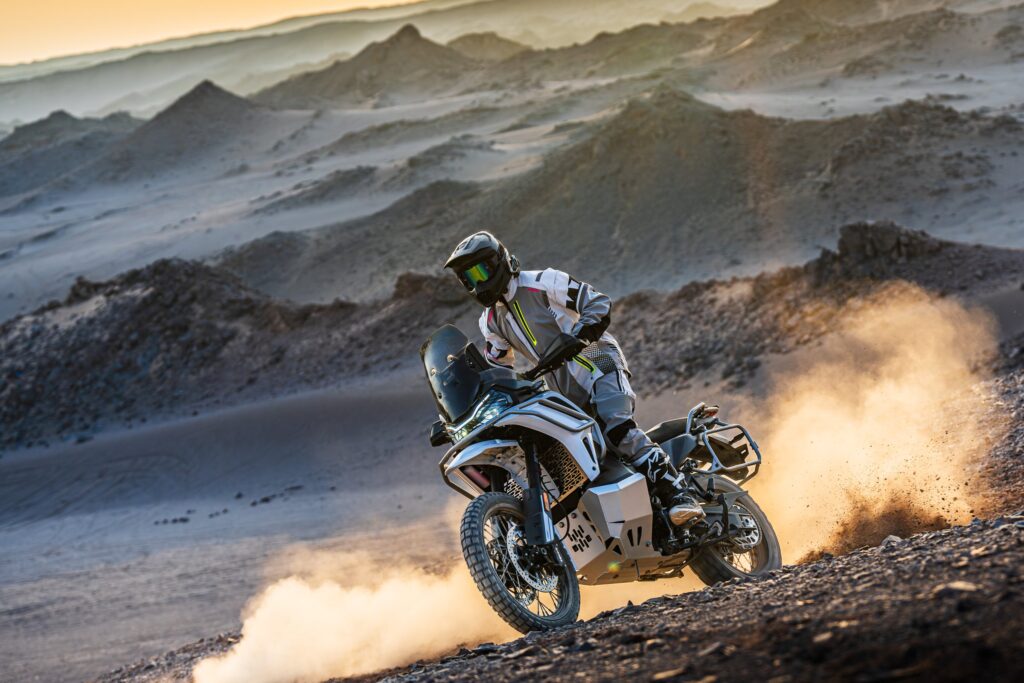
The steel trellis frame is based on the KLE500’s, reworked with more emphasis on comfort and stability on the road, and Kawasaki Europe adds that the swingarm is newly designed for paved-road comfort. The KLE650 rolls on a 21-inch front and 17-inch rear spoked wheel. A 43 mm KYB upside-down fork gives 210 mm of travel, and a linked rear shock with adjustable preload gives 196 mm. Twin 300 mm front discs and a 230 mm rear disc do the braking.
In the US specification the SE wears Dunlop Trailmax Mixtour tyres in 90/90-21 and 150/70-17 sizes, a road-leaning mixed-use compromise. Serious off-road riders will start pricing alternatives. Everyone else gets a bike that grips on wet tar and copes with a gravel detour.
Standing up, sitting down, loading up
Kawasaki used what it learned from its KX motocross bikes to place the handlebar and footpegs for standing, and it kept the bodywork and engine covers smooth so you can slide around on the bike. Standing on the pegs is how you survive the long washboard stretches before a Karoo farm gate, and how you spot a donga before it spots you.
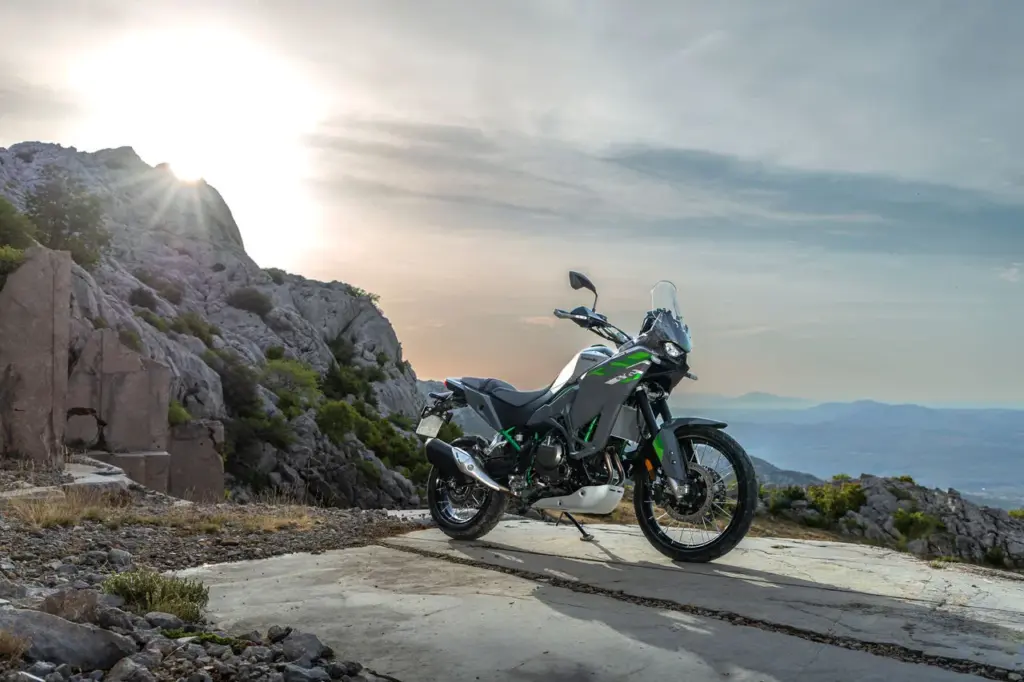
Sitting is not neglected either. The seat is built for long days. Four seat combinations are possible using the accessory low front seat and low pillion seat, including a flat setup for off-road riding. The SE gets a taller windscreen. The bike can carry two panniers and a top box at the same time, and for a South African rider planning a loop through Lesotho or a run up to Namibia, that is not a footnote.
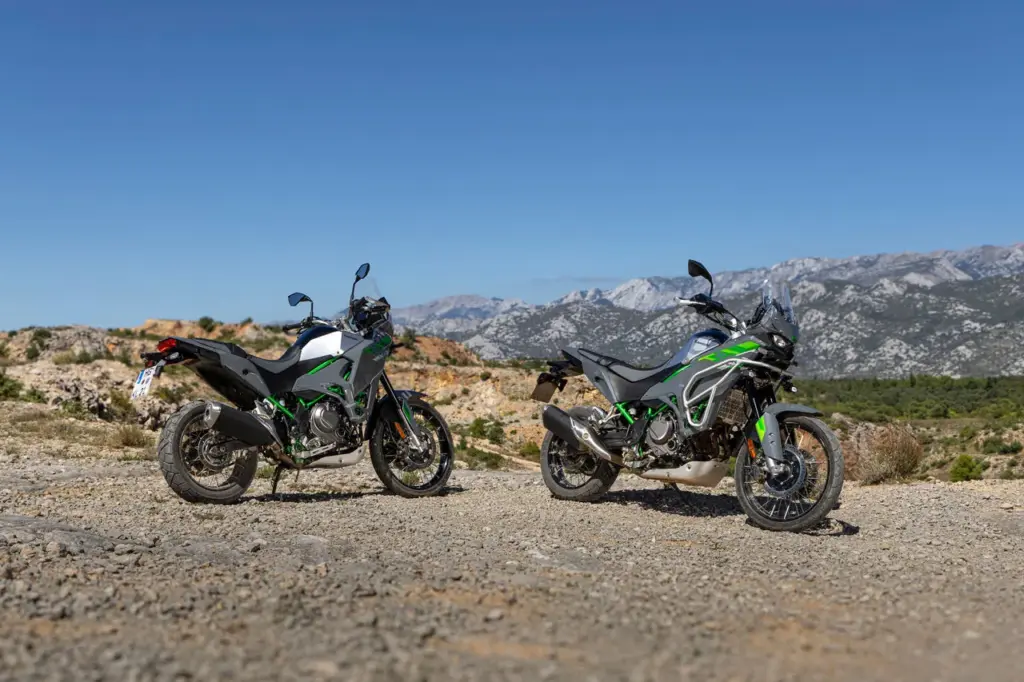
KLE650 SE against Ténéré 700, on paper
The numbers are closer than you might expect. Weight, fuel and seat height for the Kawasaki are US figures from Kawasaki USA, and the Yamaha’s are from Yamaha’s US site, so the comparison is like for like, with the Yamaha power and torque taken from Yamaha’s published figures. The Yamaha’s rear wheel size is inferred from its tyre size.
| Kawasaki KLE650 SE | Yamaha Ténéré 700 | |
|---|---|---|
| Engine | 649cc parallel twin | 689cc parallel twin |
| Power | 70 hp (52 kW) | about 72 hp (54 kW) |
| Torque | 64 Nm | 68 Nm |
| Weight, fuelled | about 212 kg | about 208 kg |
| Seat height | about 870 mm | about 874 mm |
| Fuel tank | about 16 litres | about 16 litres |
| Suspension travel | 210 mm front, 196 mm rear | about 211 mm front, 201 mm rear |
| Wheels | 21-inch front, 17-inch rear | 21-inch front, 18-inch rear |
On paper the two are near twins, which tells you the benchmark Kawasaki chose. The Yamaha has a few more horses, a bit more rear travel and an 18-inch rear that gives more tyre choice off the road. The Kawasaki has cruise control, traction control and, on the SE, a quickshifter and a TFT screen. Neither bike carries a big tank, so on the long gaps of the Northern Cape, plan your fuel stops.
SE or standard: tubeless tyres decide it
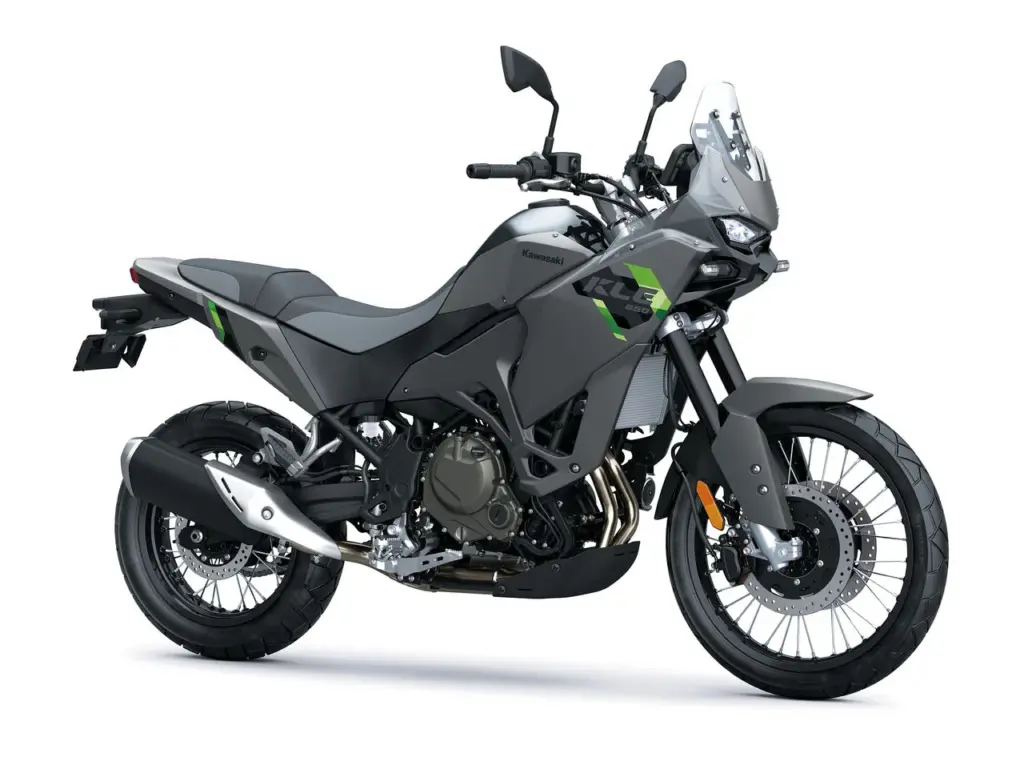
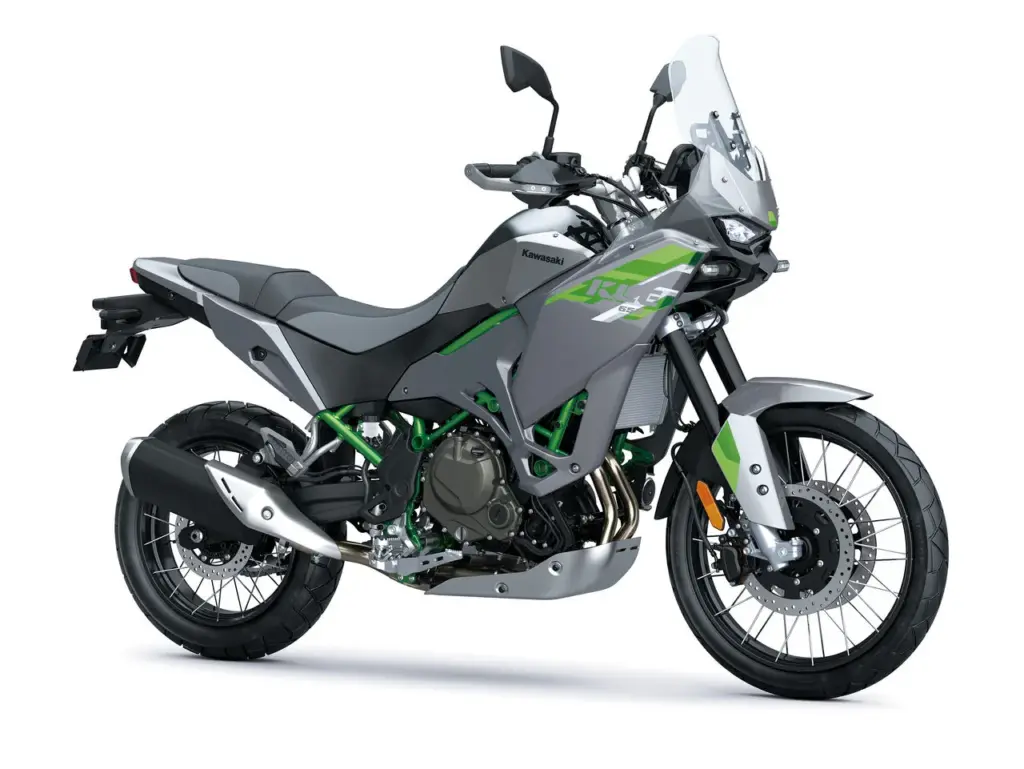
There are two versions. The standard KLE650 comes in Metallic Matte Graphenesteel Gray. The SE, in Pearl Storm Gray or Pearl Blizzard White, adds a two-way quickshifter, a 5-inch colour TFT screen with smartphone connectivity through Kawasaki’s RIDEOLOGY app, tubeless tyres, a USB-C socket, hand guards, an aluminium bash plate and a taller windscreen.
Our view: if you plan to ride anywhere remote, take the SE. Tubeless tyres alone are worth the premium, because a thorn puncture 200 km from the nearest town is a plug and a pump rather than a wheel off and a tube out. Kawasaki dealers will also offer three Edition models built from genuine accessories: a Top Case version, a Rally version and an Adventure Tourer.
What KLR650 riders should and should not expect
Many South African riders still have a soft spot for the KLR650, and with good reason. Kawasaki launched the 650cc KLR in 1987, billed it as a “triple-sport” for street, dirt and touring, and by Rider magazine’s estimate built nearly 150,000 of them. One Rider contributor called it “the ultimate workhorse”, and the reputation is deserved. Owners here tell the story in the KLR650 ride experience and life with the mighty KLR.
The KLE650 does not replace the KLR, and it should not pretend to. The KLR’s 6.1-gallon tank holds about 23 litres, against roughly 16 for the new bike, and Rider noted a 35-inch seat height, which is about 890 mm, so the Kawasaki is a touch lower. There is no big single thumping away here. What you get instead is a smoother twin, electronic aids and a more modern chassis. Even so, for many South African KLR650 riders this is the spiritual successor they have been waiting for: a Kawasaki you can ride to Cape Town and back without your hands buzzing.
Money: £7,499, and a rand question mark
In the UK the KLE650 costs £7,499 and the SE £8,899, with bikes arriving from April 2027. In the United States the prices are $8,799 and $9,999. Those prices put the KLE650 noticeably below most of the European middleweight adventure twins, which is part of its appeal.
Kawasaki South Africa has not announced the KLE650 or a rand price yet. What it does sell is the smaller KLE500 SE, which at the time of writing was on promotion at R129,995, down from R164,995. That is a guide to how the brand prices here, not a forecast. The competition is not standing still either: on CFMOTO South Africa’s price list the 450MT sells for R125,900 and the 700MT for R140,900, while Yamaha’s Ténéré 700 remains the bike riders measure the class against.
The bike many KLR650 riders have waited for
Strip away the specification sheet and the KLE650’s appeal is simple. For the KLR650 riders who have wanted a modern Kawasaki adventure twin, it is the one they have waited for. Kawasaki has a comfortable, sensible, electronically modern twin with a 21-inch front wheel and the accessories to go the distance, in a class where South African riders already spend their money. It will not beat the Ténéré 700 at being a rally bike, and we doubt Kawasaki wants it to. If it beats it at being a bike that carries you from Joburg to the Wild Coast without drama, that may be enough. The rest of the Milan reveals are in our EICMA 2026 round-up, though few are as relevant here.