



Royal Enfield Himalayan 750: What We Know So Far About the Brand’s Upcoming Adventure Twin
Share your love
9 min read
1,622 words
165 views
The Anticipated Royal Enfield Himalayan 750: What South African Adventure Riders Need to Know
Today, we are diving deep into a highly anticipated machine that has the South African motorcycling community buzzing. The global motorcycle industry is seeing a massive shift right now. Riders are moving away from heavy and expensive large-displacement adventure motorcycles, instead seeking capable and versatile middleweight machines.
For decades, the adventure touring segment was dominated by motorcycles with engines larger than 1200cc. As these flagship models grew heavy and intimidating for the everyday rider, a huge vacuum emerged for robust middleweight alternatives. Royal Enfield positioned itself at the absolute forefront of this movement, building a fiercely loyal following by engineering machines that prioritize pure mechanical engagement and reliability over overwhelming electronic complexity.
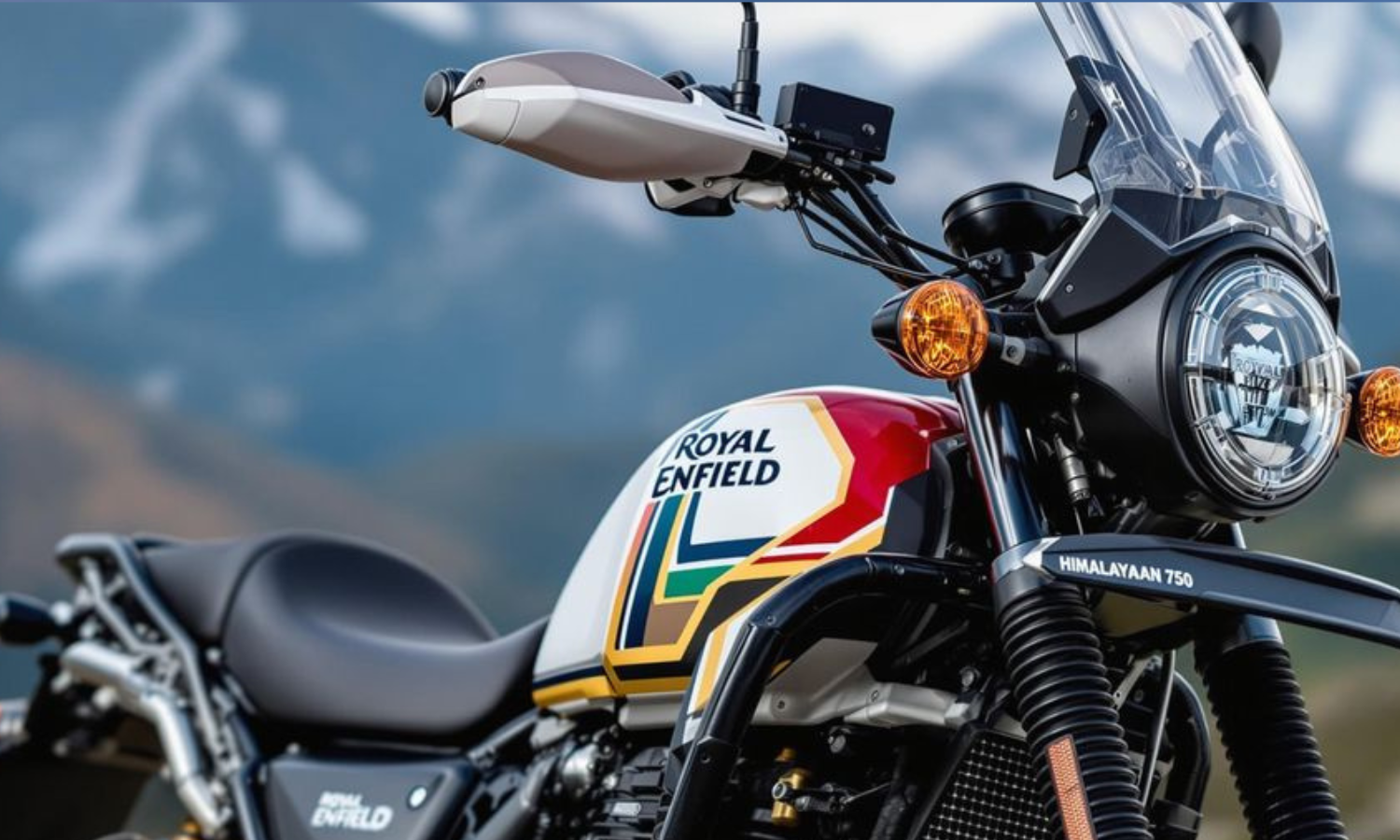
The Himalayan name is the central load-bearing pillar of that specific brand reputation. Originally an austere, utilitarian machine designed to traverse the most unforgiving terrains on earth, it established Royal Enfield as a legitimate contender in the adventure arena. Now, attention in the South African market is shifting toward their next big strategic move: the upcoming Royal Enfield Himalayan 750. The prototype recently unveiled at the EICMA 2025 exposition in Milan, Italy confirms that a larger twin-cylinder adventure tourer is firmly on the way. If this motorcycle arrives in the production configuration that the current prototype suggests, the Himalayan 750 is positioned to become a highly disruptive and economically significant motorcycle in Southern Africa.
Tackling South African Terrain
South Africa presents one of the most rigorous testing grounds for adventure motorcycles globally. Our beautiful topography includes vast paved highway networks connecting densely populated urban centers, alongside hundreds of thousands of kilometers of unpaved, corrugated gravel routes. You will find these challenging tracks in desolate regions like the Karoo, Namaqualand, and the Eastern Cape.
Adventure touring here imposes incredibly strict demands on both the machine and the rider. Fuel management is a critical operational factor. Service stations in rural and desert regions can frequently be situated 200 to 400 kilometers apart. An adventure motorcycle deployed in this environment must inherently possess a sustained operating range of at least 350 to 400 kilometers to safely navigate these remote terrestrial corridors without inducing severe range anxiety. The Himalayan 750 features a substantially larger fuel tank, estimated to hold around 20 liters. This capacity is perfectly suited for extensive transits across the country.
South African adventure riders also frequently encounter extreme climatic variations within a single day of riding. Temperatures can soar to a scorching 40°C during daytime transits through desert regions like the Kalahari or Namib, then plummet to near-freezing conditions at night or when ascending elevated topographies such as the Lesotho highlands. A motorcycle designed to thrive here must provide robust wind protection to mitigate severe crosswinds and prevent rapid dehydration caused by hot air rushing over the rider. The Himalayan 750 transitions toward a retro-adventure semi-fairing and a tall adjustable windscreen, directly addressing our localized necessity and promising a critical reduction in rider fatigue.
From 411 to 750: The Evolution
To fully grasp why the Himalayan 750 represents such a pivotal moment for Royal Enfield, we must trace the evolutionary trajectory of the platform. The original Himalayan 411, powered by a simple air-cooled single-cylinder engine, established a unique market footprint by offering a rugged and highly affordable entry into adventure riding. It possessed the low-end torque of a tractor, allowing riders to easily paddle out of deep mud and technical rocky ascents.
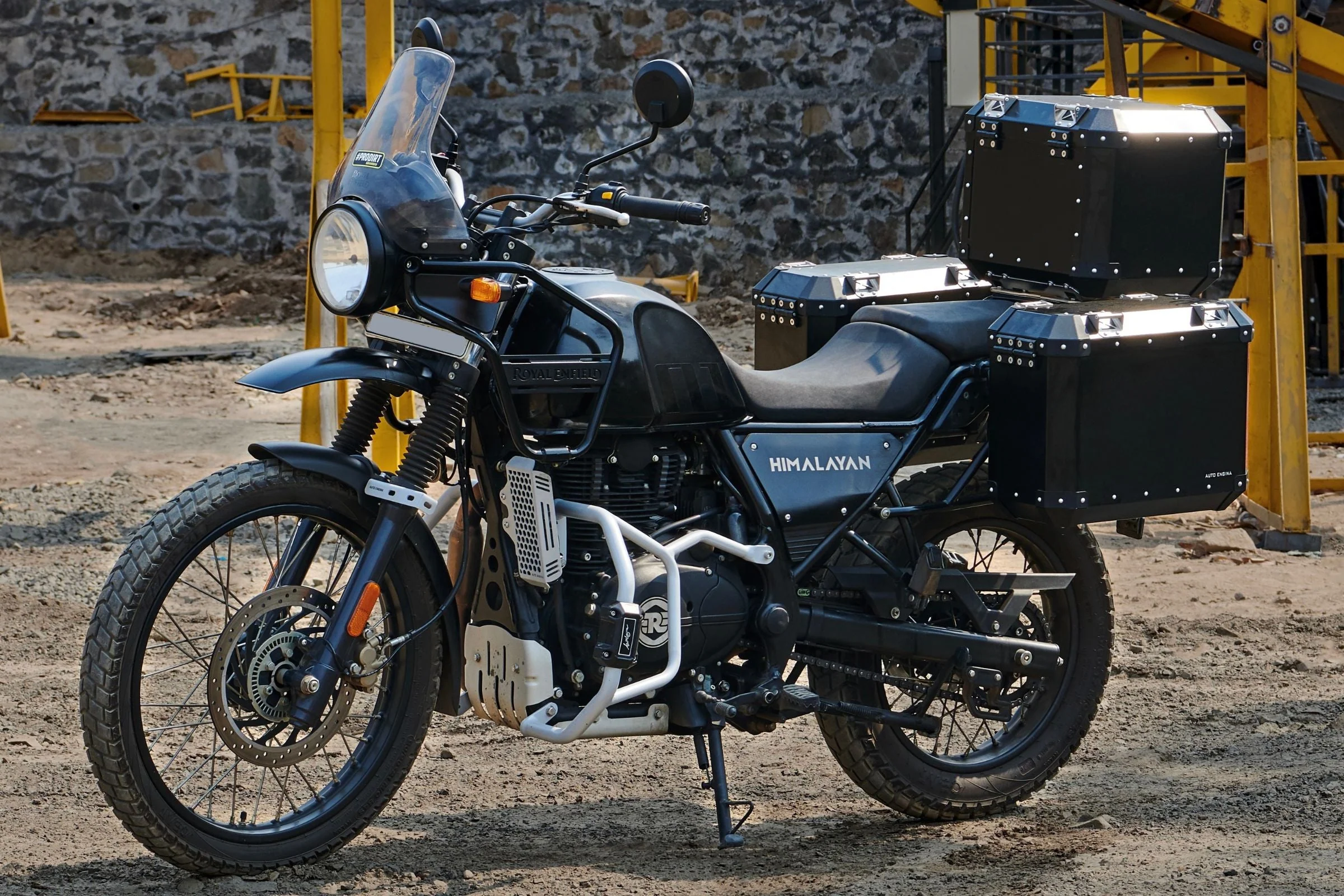
However, as the demographic of riders matured and increasingly sought to cover vast distances at sustained highway speeds, the 411cc engine’s peak output proved mechanically insufficient. The subsequent introduction of the highly acclaimed Himalayan 450 demonstrated that Royal Enfield was absolutely serious about engineering a technologically modern adventure machine, introducing a state-of-the-art liquid-cooled engine platform and vastly improved suspension architecture.
The anticipated Himalayan 750 represents the logical apex of this evolution. Rather than replacing the 450, the 750cc platform is explicitly engineered to target a distinctly different demographic. This target audience comprises riders who demand enhanced highway comfort, superior long-distance touring performance, effortless two-up riding capabilities, and significantly increased luggage capacity. By fulfilling these criteria, the Himalayan 750 purposefully shifts its primary identity to a substantial, road-oriented adventure tourer.
Engine and Performance
The mechanical heart of the upcoming adventure tourer is a newly developed 750cc parallel-twin engine, derived from the highly acclaimed 648cc platform. Royal Enfield did extensive work to bore and stroke the existing unit to create a larger, more potent powerplant specifically tuned for adventure touring.
This strategic engine expansion holds profound significance for long-distance riders. Key performance indicators include:
- Estimated Power: 54 to 55 horsepower
- Peak Torque: Up to 65 Nm
- Cruising Tech: Electronic cruise control (a first for Royal Enfield)
- Exhaust: High-mounted, upswept system for excellent off-road clearance
The resulting performance profile will ensure immediate thrust for executing safe highway overtakes against long articulated trucks on the N1. It offers robust load-carrying capacity for extensive aluminum luggage systems and a relaxed, unstressed engine demeanor. Crucially, the engine’s inherent smoothness will practically eliminate the high-frequency secondary vibrations that typically cause neurological fatigue in the hands and feet during multi-day expeditions.
Chassis Dynamics and Handling
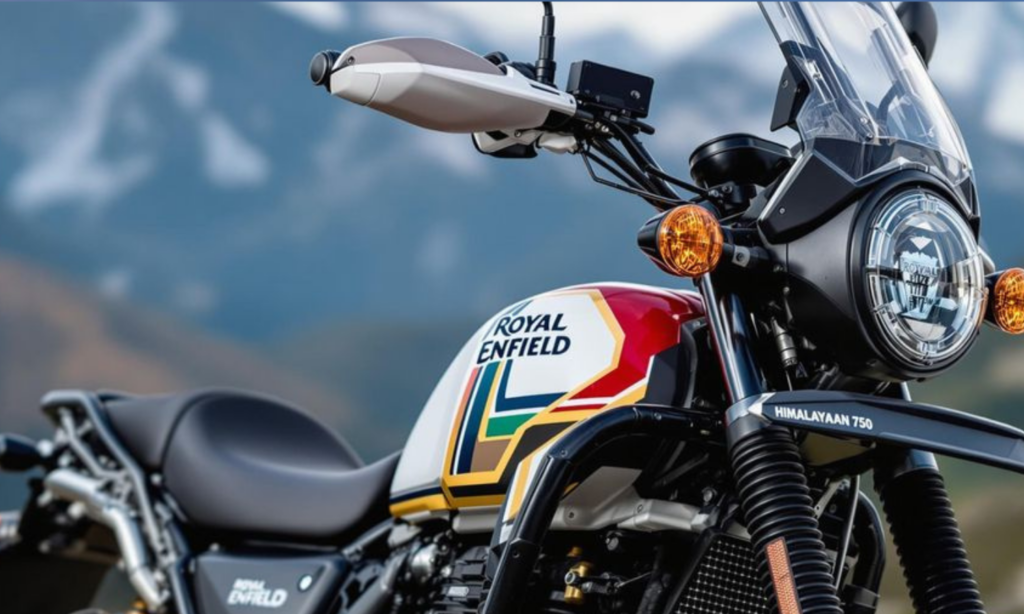
Photographic evidence from testing and the EICMA prototype reveals that the Himalayan 750 departs significantly from traditional hardcore enduro geometry in favor of a highly pragmatic, stability-focused architecture. The motorcycle features a completely new chassis, utilizing a redesigned headstock and subframe to manage the increased dynamic stresses of the larger engine and substantial luggage payloads.
The most critical indicator of its intended operational envelope is its wheel configuration:
The Himalayan 750 prototype utilizes a 19-inch front and 17-inch rear tubeless wire-spoked wheel setup. This unequivocally signals a deliberate prioritization of road stability and overall touring comfort.
While a 21-inch front wheel is universally favored for aggressive dirt riding, it often compromises high-speed tarmac stability. The 19/17 setup retains more than enough geometric capability to confidently dispatch broken, potholed roads and mild dirt trails. For the local rider, this translates to a machine that excels on the beautifully paved, winding coastal roads of the Garden Route, yet remains entirely unphased when the tarmac abruptly transitions into the loose, corrugated gravel of the Cederberg region.
Complementing this wheel setup is a massive upgrade in suspension sophistication. The Himalayan 750 features fully adjustable inverted front forks and, for the first time on a twin-cylinder Royal Enfield, a linked rear monoshock complete with a remote preload adjuster. To handle the increased mass and kinetic energy, the prototype is equipped with a dual-disc front braking system, guaranteeing vastly superior stopping power and enhanced thermal heat dissipation during steep mountain descents.
Technologically, the cockpit is shielded by an expansive front fairing housing a modern circular TFT instrument display. This dash will seamlessly integrate with the company’s proprietary Tripper navigation system, allowing for intuitive smartphone connectivity and turn-by-turn routing—a crucial tool for navigating unfamiliar African routes.
Pricing and Market Impact
The middleweight adventure segment under 900cc in South Africa is currently experiencing unprecedented saturation and incredibly fierce competition. Consumers are migrating away from hyper-expensive flagship models in search of versatile, manageable, and economically accessible motorcycles. To accurately understand the Himalayan 750’s potential economic impact, it must be evaluated against the established benchmarks.
| Motorcycle Model | Approximate Pricing (ZAR) |
|---|---|
| Honda XL750 Transalp | R219,990 |
| Suzuki V-Strom 800DE | R201,500 |
| Royal Enfield Himalayan 750 (Est.) | R160,000 – R170,000 |
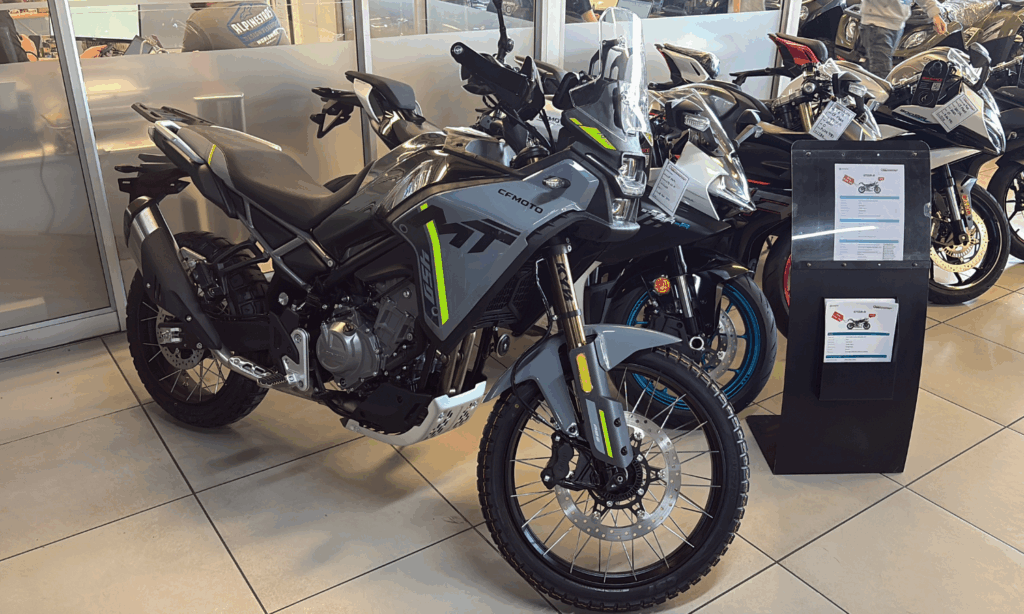
| CFMOTO 450MT | R124,990 |
| Royal Enfield Himalayan 450 | R105,500 – R121,800 |
This macroeconomic data indicates a vast, highly exploitable pricing chasm. If Royal Enfield can leverage its massive global economy of scale to position the Himalayan 750 near the R160,000 to R170,000 mark, it will effectively create a monopoly within a highly lucrative, unoccupied pricing vacuum. This aggressive, value-driven pricing strategy would attract existing brand owners looking for a logical upgrade, as well as veteran touring riders seeking to downsize from intensely intimidating, electronics-laden 1200cc machines.
Furthermore, market success is inexorably linked to the strength of local distribution. In South Africa, Royal Enfield operates through a strategic partnership with Moto Royale. With flagship dealerships in Woodstock, Cape Town, and the World of Motorcycles in Centurion, Gauteng, they have established comprehensive technical coverage across the country’s largest economic epicenters.
Moto Royale mitigates consumer anxiety by offering a comprehensive three-year manufacturer warranty accompanied by three years of dedicated roadside assistance. In adventure motorcycling, a robust recovery network is a non-negotiable prerequisite, ensuring the Himalayan 750 is supported by a sophisticated logistical backbone.
Final Thoughts
The Himalayan 750 was officially unveiled to the global public as a “Testing in Progress” prototype at the prestigious EICMA 2025 exposition in Milan, confirming it is in the advanced final stages of its development cycle. Industry projections indicate that Royal Enfield will likely finalize the global launch at EICMA 2026. For the South African market, factoring in international shipping, localized homologation, and internal distribution timelines, it is reasonable to project the Himalayan 750 reaching local showroom floors by mid-to-late 2027.
The anticipated Royal Enfield Himalayan 750 is rapidly shaping up to be the most strategically important and commercially viable upcoming motorcycle from the historic brand. By moving beyond the constraints of the 650cc platform, engineering a larger 750cc parallel-twin, implementing adjustable suspension, adding twin front disc brakes, and prioritizing a stability-focused 19-inch front wheel, Royal Enfield is building a highly formidable transcontinental tourer.
For the South African rider, this translates to a machine perfectly tailored for the specific topographical and climatic realities of the continent. If Royal Enfield can deliver this calculated balance of touring comfort, off-road capability, and real-world performance at a disruptive price point, the Himalayan 750 will undoubtedly become a dominant option for riders seeking a rugged, usable, and charismatic adventure machine.

Jean Murphy
Articles: 15Related Posts
One comment
Leave a Reply
You must be logged in to post a comment.
Really looking forward to seeing where Royal Enfield goes with this one.
One thing worth keeping in mind is that most of the specs floating around (especially power figures) are still estimates at this stage. From what’s been shown so far, it seems more like a heavily reworked version of the 650 twin rather than a completely new engine platform.
Also, the 19/17 wheel setup suggests this might lean more toward a touring-focused adventure bike rather than a hardcore off-roader like the Himalayan 450.
The biggest question for me is weight, if it carries over the 650 platform DNA, it could end up being quite a heavy machine, which might impact its off-road ability.
That said, features like expected cruise control would be a huge win for long-distance riders. Definitely one to watch.